
“Hell, yeah, I carry a weapon. It’s my best friend!” shouts “Scarface” (not his real name), a 12-year-old from Brooklyn. “Basically, I carry my piece because it’s easy to use, and it’s always ready. I carried a piece since I was nine.”
“Yes, I carry a .38 Magnum. I used to carry a knife, but a gun is much easier to handle,” said “Lois Lane,” 16, a student from South Shore HS. “I’ve been carrying some kind of a weapon for about three years now.”
‘80% Carry a Weapon’
Tracy, 17, from Lafayette HS, claimed, “About 80% of the students carry a weapon in my high school.”
Nichole, 18, from Washington Irving HS, estimated that about half of the students in her school carry weapons.
“I think that about 30% or maybe more [in South Shore] carry some kind of weapon-knives, guns, anything,” claimed “Lois Lane.”
Students say that the reason people carry weapons in their schools is to protect themselves. Tracy from Lafayette said she needed it for protection because “you got crazy people out there.”
A girl from Washington Irving HS said she recently started carrying a knife because she works after school and in her neighborhood, when she comes home after work, people are always bothering her.
A 19-year-old student at Murry Berg-traum HS said, “I carried a knife once last year. A little incident had occurred with a friend of mine; he had gotten in some static, and he asked me if I would bring in a weapon’cause they threatened to jump him.”
He added that, “I brought the weapon to protect me just in case they came in my face, ’cause they know that we always be together.”
Playing to Win?
The 12-year-old kid we called “Scarface” said, “The reason I carry a piece is because I know that there’s much niggers ready to f- my s- up! That ain’t no joke. I got to always be ready with my piece, so if niggers want to play `bang-bang, shoot-’em-up,’ I can play and win.
“If I didn’t carry this s-, I’d probably be in some gutter or some alleyway, dead,” he added.
Tracy, from Lafayette, said that she carries a knife for protection. When asked if it made her feel safe, she said, “Yes, to a degree it does. At least I have a chance. But only to a degree, because I’m a girl and there’s always someone out there who’s bigger than me.”
Pane is another 12-year-old kid from Brooklyn who carries a mini Uzi. “Having a gun is great,” he boasted. “Not only are you protected, but it turns most girls on. It gives you that macho look.
“My mom don’t know I carry a toolly [gun] and she’ll never find out. I keep it hidden in a very good place,” he continued, adding that “It’s easy to get a gun if ya got the right connections.”
Students are threatened and sometimes assaulted inside the high schools, and there doesn’t seem to be anything the schools can do about it. Students carry weapons because when they get into a conflict, they know they cannot defend themselves physically against other students carrying guns. Some students feel that they have to prove to their peers that they have some way of protecting themselves.
‘It’s a Trend’
Nichole said, “It’s a trend for now, to be down.”
Students were asked if they’d ever used a weapon or threatened to use one.
“Scarface” said, “I used it a lot of times. I threaten to use it every day, because every day someone f-s with my nerves.”
Tracy said, “I’ve threatened to use it. I’ve threatened a whole lot of people.”
“I threatened to use it on a guy who was getting out of hand, but I never used it,” said “Lois Lane.” “I hope I never have to.”
A student from Washington Irving said she didn’t feel safer with a gun. “Somebody can still hurt you whether you have a weapon or not.”
All of the 10 students interviewed said that they knew someone who carried a weapon in their school.
Asked if kids in his neighborhood carried weapons, “Scarface” said, “Hell, yeah, everybody, even little kids eight years old carry them.”
Marsha Hampton from Wingate HS said, “Yes, kids in the neighborhood carry weapons a lot. More so than in high school. A lot of kids in the neighborhood are on the streets and are more apt to pick fights.”
‘Easy As Carrying Books’
How easy is it to carry weapons into the schools?
Nichole from Washington Irving said, “It’s as easy as bringing your books to school.”
Tracy, a Lafayette student, said, “Very easy. They don’t check you unless they suspect you or there’s rumors around that you have a weapon.”
“It’s easy,” said “Lois Lane,” “you just walk in school [with a weapon]. They don’t check your bags unless it is Halloween and they think you might have eggs or something.
“But if something were to happen, I think that they would start to check them for a while,” she added. “But you know our school-they never stick to anything they set out to do.”
Carol from Washington Irving said, “It’s real easy, all you have to do is put it in your bag and walk in.”
Most of the students felt that there should be metal detectors at the front doors of the schools. The problem with metal detectors is that students would have to come to school about two hours early so that everyone could go through the detectors.
Metal detectors are very sensitive and can be set off by any type of ferrous metal, such as earrings, belts, rings, hair clips, keys, etc. A student wearing such things might have to remove those objects and go through the detector again-a time-consuming process.
A Little Too Late?
If we students could keep weapons from being carried inside the schools, it would cut down on the violence and shootings. It also might cut down on fights, because if a student knows that she doesn’t have a weapon, she’ll stay out of trouble because she doesn’t have anything to protect herself with.
“I don’t think anything can be done now. I think that it’s a little too late,” says “Lois Lane.” “People should have done something to make the schools safer in the past, or at least thought about the chance of there being weapons brought to school.”
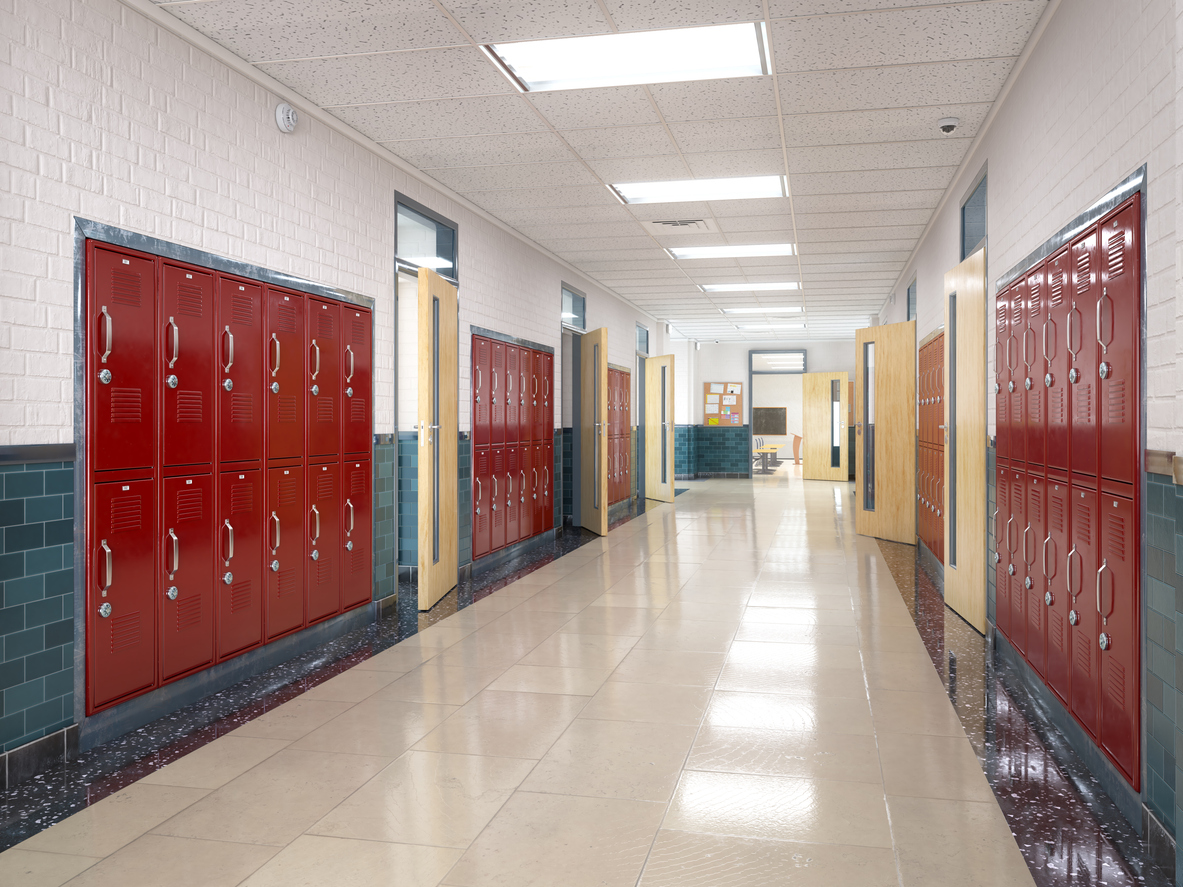
Weapons in Schools
About These Stories
YC runs intensive nonfiction writing programs for teens in New York City, where they’re mentored by a professional editor to write personal stories about their lives and about issues that affect young people. Their stories are then published and read by thousands of teens, educators, policymakers, and other adults who work with and for young people.