
(All names have been changed.)
“Awww, man,” I thought to myself as my cousin Lin handed me my vocabulary list of the day: table, fish, supermarket. But I picked up my pencil and started copying the words. That’s what I did every weekend of 4th grade and the summer after.
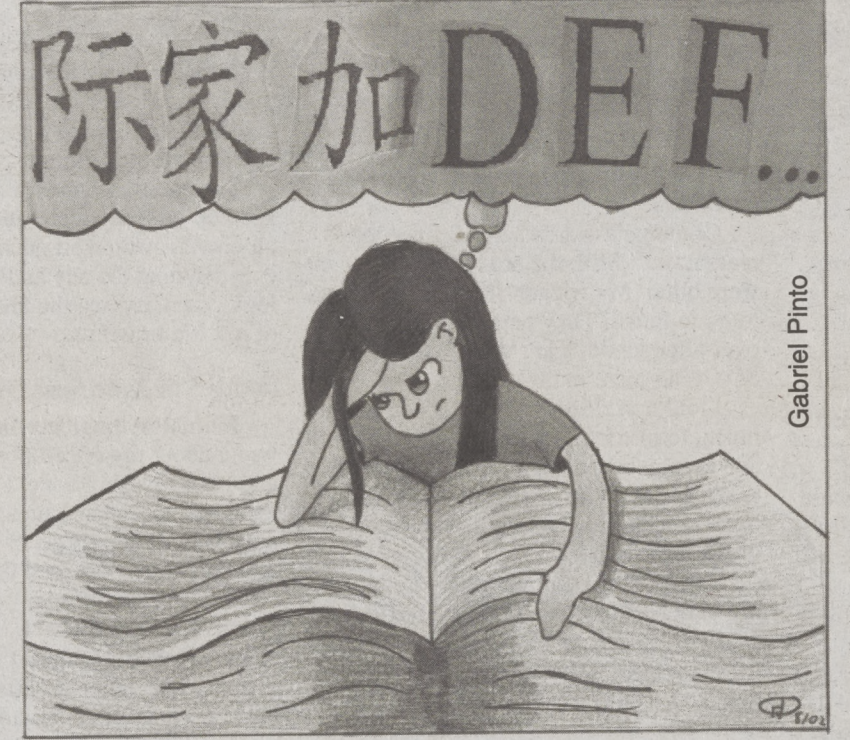
When I was 9, my family moved to the U.S. from China. I didn’t know any English, but because of my age, I was put into 4th grade. I was scared; I didn’t even know the alphabet! My other cousin, who spoke English, asked the school officials to put me in a lower grade, but they refused.
I Could Only Talk to Three Girls
So I was relieved to meet three Chinese American-born girls in my class: Sue, Linda and Marie. They were the only ones I could communicate with because they spoke Chinese. So the teacher told them to show me around the school and help me adjust.
Nobody else in my class cared to talk to me or be friendly. I felt unwelcome, but I wasn’t surprised. I mean, why would anyone talk to a stranger who can’t speak the language? Why help someone learn?
Linda, Sue and Marie seemed nice at first. I felt good being able to speak to kids from the same culture because it made me feel like I fit in and had friends.
A few weeks later, though, I found out that they made fun of me behind my back. I was sitting next to Sue when I saw her writing a letter to her friend, telling her how she hated me and how stupid I was. Although I couldn’t read English well, I knew enough to figure out what she wrote. I felt betrayed because I thought she was my friend.
Then it got worse. Sue called me “Sei chuen,” which is like a Chinese version of dumbass, right to my face. And several times, Linda deliberately spilled water on me from her water bottle.
Tormented at Recess
That made me angry. I wanted to tell the teacher to get Linda in trouble, but I had no idea how to express myself. I had no choice but to try to avoid her.
What really made me upset was what they did to me during recess. Sometimes Sue, Linda and Marie would come up to me with three other Chinese-American friends. One of them would sneak up behind me and grab my scrunchie.
Then they’d run around and toss my scrunchie from one person to another to keep it away from me. The torture didn’t stop until the end of recess. I felt I was like playing monkey in the middle with enemies that I couldn’t beat.
All I did was weakly tell them in Chinese, “Give it back.” I was frustrated because I couldn’t do anything else and I felt alone because I didn’t have anyone there to help me.
Betrayed by My Own People
I felt like crying, but I didn’t. I refused to give them the satisfaction that they’d hurt me. Plus I felt embarrassed about letting other students see my tears.
I felt betrayed and disappointed because people from my own culture had turned against me. It felt like being smacked across the face by my own hand.
I wondered why they had to pick on me. Maybe they thought it was fun to pick on a new kid, or maybe they felt superior to me because they were “Americans” and I was a foreigner.
I Felt Helpless
I hated myself for not being able to speak English, and that I couldn’t do anything about my bullies because of that. I didn’t say anything to my teacher because I thought, “What chances do I have against Sue, Linda and Marie, who can speak English and probably deny everything I’d say?”
I tried telling my parents about it, but that was like going to a dentist when I have a stomachache. “Just tell them to stop bothering you and stay away from them,” they advised. I thought to myself, “Yeah, right, like they’ll do what I say.”
Worked Hard to Learn English
So I was forced to put up with their bullying the rest of the year. That summer, though, I worked hard to learn English. Every day, I memorized my vocabulary and was tested on it by my cousin. As I learned more vocabulary, I asked my cousin to speak English around me, instead of Chinese. A few weeks later, I was able to talk to her in English.
When I entered 5th grade, I was able to express myself and make friends, which made me feel more American. I felt like I was fitting in. I was a lot happier. And fortunately, none of my tormentors were in my class.
I also progressed in school. In 4th grade, when I was still struggling with the language, I was unable to complete my classwork and homework. Since I couldn’t understand my teacher, I paid no attention to what she said.
In 5th grade, I found myself listening carefully to my teacher’s words. I did my homework every night and had a strong desire to achieve. I found myself going to the library and opening a new world as I borrowed and read books like The Baby-Sitters Club and the Goosebumps series.
Reading those books improved my reading skills and introduced me to American culture. I learned that Americans are into sports like baseball and football. American kids roller-skate and hang out at parks, movie theaters and pizzerias.
I found myself being slowly absorbed into American culture, watching baseball and eating hamburgers and hot dogs. I liked becoming Americanized. It led me to make friends outside of my own background.
The memory of being bullied was distant. But because of what I went through in 4th grade, I told myself, “I will never make fun of anyone who can’t speak English.” Since then, if my friends make a comment about a person who can’t speak the language well, I ignore them and try to change the subject.
Translating for My Family
Ironically, however, I can’t help but sometimes feel annoyed at my own family members who can’t speak English. Every month, when the bills arrive, I have to explain to my mom or dad what they say.
I often get frustrated because I’m not very good at translating business terms like “interest” or “suspension” into Chinese, and my parents seem unable to understand what I’m saying.
“Shame on you! How can you not know how to translate after all these years you have been to school?” my parents yell when I can’t give them a full translation.
“Going to school doesn’t mean that I know everything,” I say angrily.
I Got Frustrated With My Dad
A few months ago, my dad asked me to help him prepare for his naturalization exam. I didn’t like doing it because I had to repeat myself many, many times before he managed to understand or memorize what I’d said.
“How do you read this question?” my dad asked.
“It says ‘Who wrote the Star Spangled Banner?'” I said.
“What? Say that again. Say it slower,” he said.
“Who… wrote… the… Star… Spangled… Banner?” I repeated.
“Who wrote deh Sta Spangul Banner?” my dad repeated.
“No dad, it’s ‘Star Spangled Banner,'” I said with gritted teeth.
“Star Spangled Banner,” he repeated again.
“Yes, that’s it,” I said.
“What is it again?” he asked.
“It’s ‘Who wrote the Star Spangled Banner?’ THE STAR SPANGLED BANNER.” I was really annoyed and angry because I couldn’t understand why he was so slow in understanding me.
My mom noticed how impatient I was and got extremely upset with me. Not for the first time, she gave me a lecture on being nice and helping people. “Don’t think you’re better than others just because you know some English,” she scolded. “You needed help getting where you are too.”
I Need to Remember How I Felt
But I felt guilty even without my mother’s scolding. I feel really bad when I look back on that moment because I should’ve been more understanding.
I am impatient and find it hard to stay calm when I’m asked to repeat the same thing over and over again, even though the way I learned English was through constant repetition.
I should’ve thought about how much harder it was for my dad to learn English than me, because he’s a lot older and he doesn’t go to school.
I’m hoping that, next time, when I’m asked to make explanations to others who can’t understand English, I’ll be more patient and less irritated. It’s hard to control emotions, but I’ll try. I was helpless once myself and know how awful it felt.
View the lessons based on this story
- I Get You Between You and Me Unit 4 | Session 22