
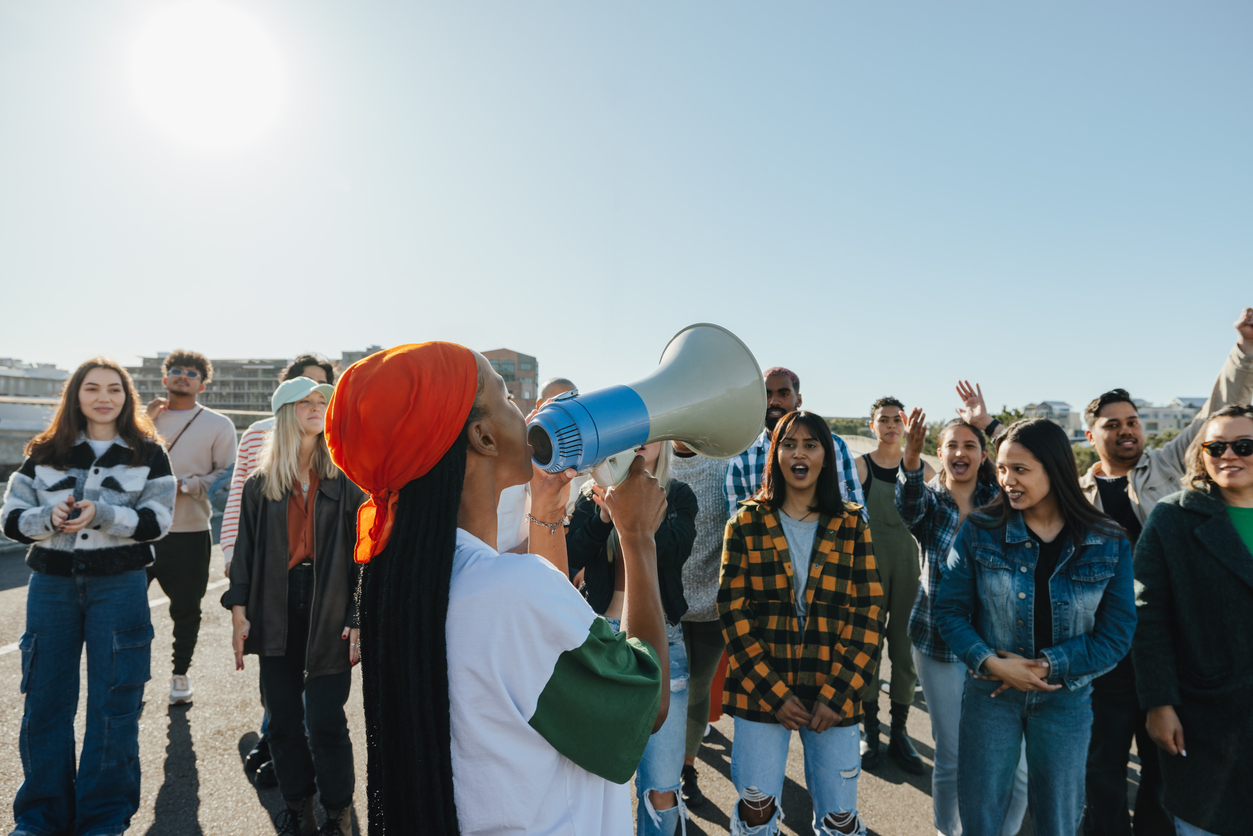
“No justice! NO PEACE! No racist POLICE!” Those were the shouts of several hundred young people who came out to a youth rally on April 5 to protest police brutality and march from Union Square to City Hall.
The rally was organized by youth groups across the city who encouraged high school and college students to organize themselves, walk out of their schools and come to the protest.
As the crowd formed at Union Square, organizers led everyone in various anti-police brutality, anti-Giuliani chants, getting the crowd worked up. The rally officially started with a performance by Brooklyn rapper Skyzoo, a.k.a. Greg Taylor. Then a series of speakers talked about brutality and encouraged youth to take an interest in their communities, stand up for their rights and not let police push them around.
‘Teens Need to Take Care of Their Own’
Members of the Malcolm X Grassroots Movement and SLAM at Hunter College also urged students to protest the government’s spending money to build new prisons instead of expanding our education. Signs, shirts and chants spoke out against the way Mayor Giuliani (called Ghouliani and Fooliani on many signs) supported the police each time brutality charges were brought against them.
Though the issues stayed the same throughout the afternoon, the speakers’ messages varied. Many, such as reps from People’s Justice 2000, just tried to motivate teens and students to take action in their communities. Others urged us to speak up, saying that we are often the victims of police brutality and harassment. Rohan, 31, a supervisor for Youth Force, said teens need to “take care of their own.”
“Youths are the ones primarily targeted and affected by police harassment and brutality. Youths have to speak up, not wait until the brutality is at their door,” Rohan said. “They need to come together, form coalitions. In communities, they should police the police.”
More Than Just Talk
The rally was more than just talk, though. Local musicians and big names like Dead Prez, Mos Def and Rah Digga (of the Flipmode Squad) performed. Several poets read their work, and people shared their thoughts at an open mike. DJs played house music in the background and organizers gave away materials.
With everything going on at once, the rally was a zoo. Anti-Giuliani shirts were on sale, and people gave away tapes, CDs and videos from performing groups. But the crowd was very calm.
‘Our Way of Voting’
The teens I talked to all agreed that they did the right thing by coming to the rally.
“I heard about the rally and wanted to support it. I think it’s an incredible cause,” said Skyzoo, after his performance. “Hopefully, cops and politicians will realize youth are involved and that we care about the issues like adults. This is like our way of voting.”
Nicole Franklin, 16, who had organized 20 students to walk out of her school, had high hopes that the rally would make teens join organizations to improve their communities.
“Teens can help make people understand and change the system,” Nicole said. “I’m sick of seeing news of people getting shot by police. I thought my school should organize, let them know we’re here and we care.”
‘You Need to Do More Than Shout’
Other teens were more skeptical about the effectiveness of the rally. Makeeba Browne, 17, said that at best, the rally would make people aware. But it can’t solve the problem.
“You need to do more than just shout about your problems for anything to happen,” Makeeba said. “New York’s turning into a police state. And all the B.S. cops use to defend themselves insults our intelligence. Thinking a wallet’s a gun! Yeah, right.”
Even though most protests against brutality have accused the cops of racism, speakers and teens tended to steer clear of talking about race. During open-mike time, one speaker tried to blame all problems with police on White people, calling them “Easter Bunnies” and saying that in the ghetto, they should be hunted. Most of the crowd seemed confused, and many people ignored the speech.
Police Brutality Hurts Everyone
Luis Torres, 17, said the speaker was blaming the wrong people by blaming brutality only on Whites.
“Hopefully, some people will get a positive mind, because some activists are setting the wrong example. It’s not White people, Black people, any people,” Luis said, adding that corrupt police are to blame.
The next few speakers went out of their way to say that police brutality isn’t a racial issue, but a human rights issue. Those speakers received a positive reaction from everyone.
The crowd was upbeat, cheering and clapping for speakers’ points, loudly chanting anti-police slogans, and showing solidarity, with strangers talking and chanting together, united by the cause.
The most surprising thing of all was the way the police reacted. To their credit, I’ve never seen the police act better. One cop even pointed out to me that I’d dropped my anti-Giuliani T-shirt!
Finally, around 5 p.m., we started to march to City Hall. Teens hoisted anti-police signs into the air, raised wallets in tribute to Amadou Diallo, and began marching and chanting.
Making Demands
The march took close to two hours, but the only people complaining were the ones who led too many cheers and killed their voices.
When we got to City Hall Park, the families of police victims spoke. The families were very compelling, saying how the mayor gave them no help in their times of grief. Some speakers got very aggressive, almost threatening the mayor.
Overall, the rally seemed to be a success. The organizers got their points across, explaining the brutal acts the police committed in the Diallo, Louima and Dorismond cases and how people could prevent such acts. The organizers also had made a list of demands from the government.
Rohan said the demands are:
1. Federal prosecution for past cases of police brutality.
2. Create an independent prosecutor for police brutality cases.
3. Get rid of the Street Crimes Unit.
4. Get rid of the 24 hour rule for police silence after an incident.
5. Get the police out of schools and turn safety over to the Board of Ed.
Getting Teens Involved
It remains to be seen whether any of these changes will actually happen, of course. All the speakers pointed out that as the leaders of tomorrow, we’d soon have the power to vote for what we want. They also talked about how by organizing our communities, we could force the city government to listen to our complaints and do something about them.
Although it may not change much, the rally was a start, and showed that some young people still care what goes on in their communities and schools.
Rohan said he felt the rally was a success, and that the organizers felt proud of the number of teens who came out to protest, all from different age groups, races and ethnicities.
“We inspired people to come together against police brutality, and spread the word about our demands,” Rohan said. “When you bring people together, it raises awareness. People see all that and think ‘I’m gonna get involved. What can I do to help?’ “
Teens Take to the Streets
About These Stories
YC runs intensive nonfiction writing programs for teens in New York City, where they’re mentored by a professional editor to write personal stories about their lives and about issues that affect young people. Their stories are then published and read by thousands of teens, educators, policymakers, and other adults who work with and for young people.