
With the financial problems this city has been having, the Board of Education has been questioned about its decision to spend $150 million on the new Stuyvesant High School. Is the ultra-modern facility that opened last year really worth all that money? Is it fair to spend so much on a special school for the “best and the brightest,” while so many other schools are falling apart?
As a Stuyvesant student, I can confirm that the old Stuy building needed to be replaced. It was decrepit in the extreme. The wooden floors were splintering and the wooden desks were falling apart. Twice, a seat collapsed right out from under me and armrests came off under my elbows many times. I once saw a piece of graffiti from 1920 on a broken chair.
And for a school supposedly specializing in math and science, there was little in the way of modern technology. The only computer I ever saw was in the attendance office.
In comparison, the new Stuyvesant building has all the amenities. The classrooms have heat when it’s cold, air-conditioning when it’s warm, and almost all of them have beautiful views of the Hudson river.
State of the Art Everything
The building is filled with modern equipment. Many rooms have computers at every desk. There are at least two and maybe three state-of-the-art overhead projectors in rooms around the building, and television sets in every room. There is a state-of-the-art robotics lab and a photography lab that I’ve been told is among the most expensive and sophisticated in the world.
The new building also has excellent physical education facilities, with an entire five story wing devoted to physical activities. There’s a six lane PSAL competition swimming pool; a weight room with very good weight machines; wrestling, dance, and gymnastics rooms; and two 60 foot by 90 foot gyms with basketball nets at either end, one of which also has a handball wall. It all looks great.
But how much of this stuff does a high school need? When I’ve asked teachers why we might need the special facilities, a lot of them have said that “We’re building for the future.” But how can we build for the future when we don’t know what kind of technology the future will bring?
But Who Gets To Use It?
It’s possible that in the near future there will be a place in the public schools for classes to be broadcast over television. But if there isn’t, then in five to 10 years, Stuyvesant will have a load of obsolete video equipment lying around. It is all but guaranteed that in two to four years almost all of the computer equipment will be completely out-of-date.
And to what extent are these new facilities really serving students? I don’t know anybody who’s had access to the robotics lab or the photography lab. The auditorium was closed all of last year except for a couple special events. The swimming pool wasn’t used at all.
Bathrooms were often mysteriously locked up in the middle of the day for no apparent reason. The computers seem to be off-limits after school hours. Without special permission, it is very difficult to use any empty classroom after hours.
Students who are not on a team don’t have after-school access to any of the gyms or the weight room. One gym teacher commented that they didn’t want us to mess up the waxed floors on the basketball court.
The Battery Park City Authority, a partner with the Board of Ed in developing and constructing the new school, says that the building is to be a model for schools in the future. But is it the school that students want?
Even though no expense was spared, many Stuyvesant students still have complaints. “They spent $150 million dollars on the school, at least they could have put in some nice fields around the area,” said Todd Rothman, a junior. “It’ll be ugly in 20 years,” another student told me.
A clear majority of the students do like the building, but many feel that a school is a school is a school, no matter how nice you make it. One junior said, “For those who enjoy plastic food, at least they have a nice place to eat it.”
Technical Difficulties
Many feel that there are too many things wrong with the building. Chima Ellis, a Stuyvesant junior, said that he felt that the city had wasted money on the construction, “’cause half of it don’t work.”
Chima mentioned that the escalators are usually broken, for example. (In fairness, the escalators are often out because a group of evil students choose to run around pressing the emergency buttons on them.)
Examples of the “shoddy workmanship” at the building, including two fire doors that were installed backwards, were also pointed out by State Senator Roy Goodman during a press conference in September.
Another issue is whether the good things about the new Stuyvesant are going to be available to students at other schools. Is the city willing to spend this kind of money on the non-elite schools? A lot of kids feel that they are being left out of the grand scheme of the Board of Ed. The only new high school buildings the city has completed in the past decade or so have been LaGuardia and Stuyvesant-both “special” schools.
What Did We Do To Deserve This?
Should we spend most of our money on the kids who do best on aptitude tests? Are kids who could blossom given the proper educational environment being unjustly left out of some kind of educational inner circle?
Chima Ellis was one of the few Stuy students I spoke to who felt that the Board of Ed should have spread the wealth a little. “Definitely,” he said. “We could have used the money better somewhere else.”
Others felt the city was right to spend money on the “good” students of the city. “If you study enough, and you get in, you … deserve it,” said Michael Pang, a sophomore at Stuy.
Another sophomore, Erin Kil, said she didn’t know what all the fuss was about. “It’s just some computers and some nice rooms, it’s not much more than anyone else,” she said.
Well, just $150 million more. And while it is wonderful that Stuyvesant students are getting a chance to use new equipment in hands-on classes, technology is changing so fast that it may only be useful to the next few years of graduates.
What happens after that? Will the city have enough money to spend on the next generation of technology? And what of the rest of New York’s public school students? They’re left with nothing.
So in 10 to 15 years (to be generous), you’ve got a beautiful building with great students and a truckload of equipment which is far ahead of that of other public schools, but nowhere near state-of-the art.
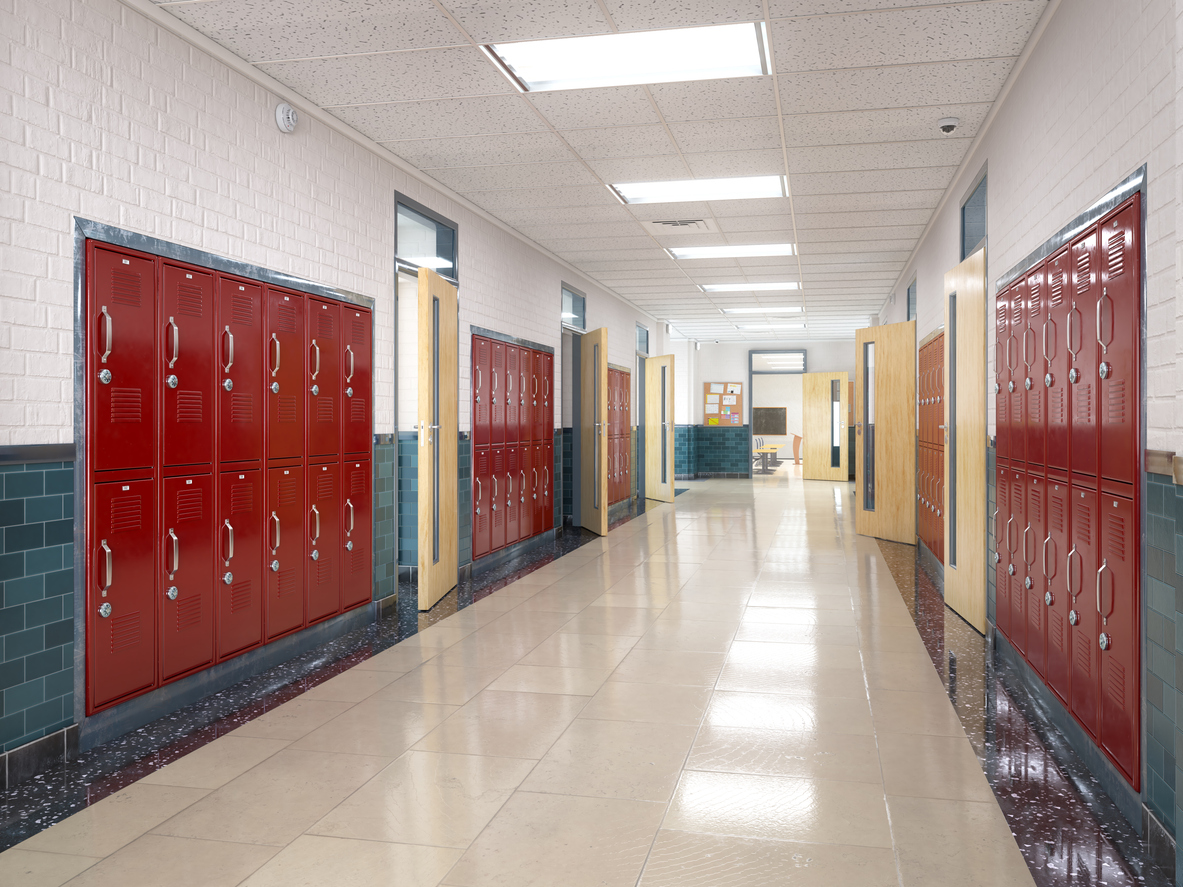
Stuyvesant’s New Building: The School of the Future?
About These Stories
YC runs intensive nonfiction writing programs for teens in New York City, where they’re mentored by a professional editor to write personal stories about their lives and about issues that affect young people. Their stories are then published and read by thousands of teens, educators, policymakers, and other adults who work with and for young people.