
Senior year is finally here and it’s been a long haul-12 years long. Twelve years of homework, studying, and final exams. But now the heat is off. It’s time to kick back and have a good time. At least that’s the popular misconception.
What many people don’t realize is that senior year brings with it a whole new spectrum of stress and worries. On top of going to school and studying, seniors have to make a mass of decisions about their futures. The lucky ones will have a game plan and can rest a little easier. But for many seniors, the last year of high school is one long anxiety attack.
Take Michael Derren, 17, of Springfield Gardens HS. According to him, being a senior is not what it’s hatched up to be. “I can’t wait for this year to be over,” he said. “It’s turning out to be more trouble than anything else, man.” One of Michael’s biggest worries is baseball. Yeah, baseball! Since Michael is on his school’s varsity team, he has to keep his grades up in order to play. This being his last year, he wants to go out with a bang.
College Applications, Yearbook, Prom
And that’s just the first of his problems. “On top of that, I gotta worry about getting these damn applications out, and it’s taking forever,” Michael continued. “My girl wants to go to the prom so you-know-who has to pay for it. Senior trip, yearbook, on and on and on.”
It’s not only guys that find being a senior an expensive proposition. Rosie Velez, 17, of Bushwick Outreach HS, thinks that the worst thing about being a senior is all the money you have to shell out. “They be wanting this much for pictures, this much for yearbook, this much for prom,” Rosie said. “By the time you add all that sh-t up, it’s ridiculous.”
So you think these worries are trivial and unimportant? After graduation, all of these seemingly minor problems will disappear, right? Right. But what then? Unfortunately, seniors have to make plans for the future.
The end of high school is like a new beginning or a crossroads. Because there are so many directions to go in, many will wind up getting confused. Deciding whether or not to go to college is the big question that plagues many graduating seniors.
Jani Shod, 17, of Bishop Loughlin Memorial HS, is someone who is currently unsure about her academic future. Because of her unwillingness to accept change, she has avoided making any decisions about what she’s going to do next year. Jani says, “I know I want to go to college, it’s no doubt about that” but she has yet to send out one application. “I feel a little too stupid for my own good,” Jani admitted. “I always get a burst of get-up-and-go precisely two seconds after it’s too late.”
Crazy Helpless
Even students who are better at taking care of business than Jani can end up spending most of senior year in limbo. “I want to go to college, but that’s not my choice, it’s theirs,” said Rosie. “That makes me feel crazy helpless. I don’t really have no control in the matter. All I can do is just apply and wait.”
Of course, there are a few lucky ones who know exactly what they’re doing. They are the students we all love to hate, the ones responsible for all those stories about how relaxing senior year is. Jenel Beverly, 17, of Manhattan Center for Mathematics and Science, falls into that category. “This is the most stable time in my life,” Jenel said. “I know that I’m gonna graduate and I already know what school I’m going to so I don’t have to worry about class or homework or nothing like that. My biggest worry is what I’m gonna wear to the prom.”
But Jenel is the exception to the rule. Most people experience anxiety and sometimes even fear during senior year. Jani, for example, admits she’s not having an easy time of it. “I can’t deal with losing everybody I love,” says Jani quite bluntly. “I have friends, some of us have been friends since first and second grade. This has been bothering me all school year.”
So Long, Old Friend
Jani calls her problem “pre-separation anxiety” and it has her dreading graduation and wishing senior year would last forever. “My two closest friends have already been accepted to schools in the South. It hurts me because I know things will never be the same between us.”
Alex Myer, 17, of Lafayette HS, agrees. “Most of my friends wanna go away to school,” she said. “That makes me a little sad or whatever. I find myself hoping that certain friends don’t get accepted so that they’ll have to stay home.”
Alex is planning to take a year off between high school and college and then she wants to go to a CUNY school, preferably City College. “I just really do not want to leave home,” she said. “The thought of being in a strange place with a bunch of people I don’t know doesn’t turn me on. [My friends] think it’s gonna be all fun and games, but I don’t think I could take it.”
Other students, like Jenel, are looking forward to going away to school, becoming independent, and experiencing “a different world.”
Dorm Life v. Home Life
“If I stay home, it’ll be just like high school,” said Jenel, who has been accepted to Clark University in Atlanta. “I do have this fantasy of what dorm life is gonna be like: parties every night, breaking curfew, ya know, stuff like that.”
Michael Derren thinks it will be easier for him to concentrate on his studies if he goes away to college. “It’s too much stuff over here to distract me,” he said. “Crazy friends of mine aren’t in school and won’t be. I don’t wanna be one of those people who say they’re gonna go back [to school] and never does.”
But even the students who want to go away know that leaving high school behind is not going to be that easy. Michael, who tries to hide the way he feels, owns up to the fact that he will miss hangin’ out with his homies. Jenel, whose biggest problem is having to choose between taffeta and lace for her prom dress, will miss the school scandals.
“Everyone knows each other and even people who don’t know you, know your business,” Jenel said. “Most people hate that but I think I’ll miss gossiping in the girls’ bathroom.”
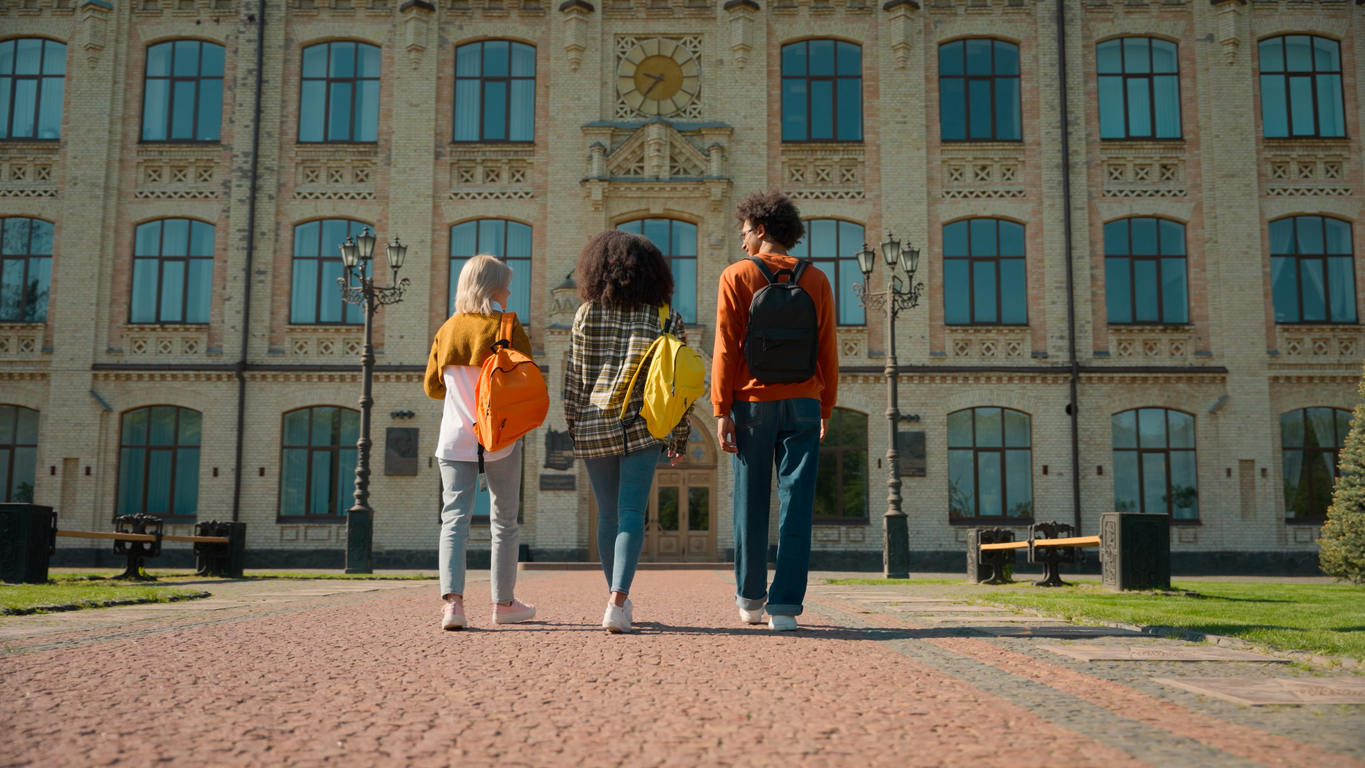
Saying Goodbye to High School
About These Stories
YC runs intensive nonfiction writing programs for teens in New York City, where they’re mentored by a professional editor to write personal stories about their lives and about issues that affect young people. Their stories are then published and read by thousands of teens, educators, policymakers, and other adults who work with and for young people.