
I think that I am a unique person. I prefer the wood paneling in my bedroom to princess pink walls, I like to stick pencils in my hair, and I believe that if you remove the “S” in “Skills” in my school’s name, Science Skills Center HS, you can see what science does to all aspects of one’s imagination. I believe in ghosts, love at first sight and parallel universes.
It’s not just me, though; I believe that everyone is different. Whether you’re Hispanic, White, Black, Asian or something else, you’re unique.
Unfortunately, some people think that because you’re a certain ethnicity, you have to act a certain way. We grow up learning stereotypes about other races and ethnicities. Sometimes these stereotypes come from TV or movies, and sometimes we just hear them from our families and friends, or in the neighborhood.
Stereotypes make some people think that if they encounter a Black person, they’re going to get jumped, or that the Arab-looking person sitting across from them on the subway is a terrorist who’s going to blow everyone up.
Not all stereotypes are so negative. In his article “I’m Not What You Expect Me to Be” (p. 3), Jordan Yue takes on the “model minority” stereotype of Asians as quiet and super smart.
Nearly 25 Years of Stories
Jordan’s story echoes several stories that were published in past issues of New Youth Connections, some of which we are reprinting in this issue. For nearly 25 years, NYC has given young people the opportunity to write about things that matter to us, for an audience of our peers. To celebrate our upcoming 25th anniversary, we’re featuring some of the best stories in NYC’s history.
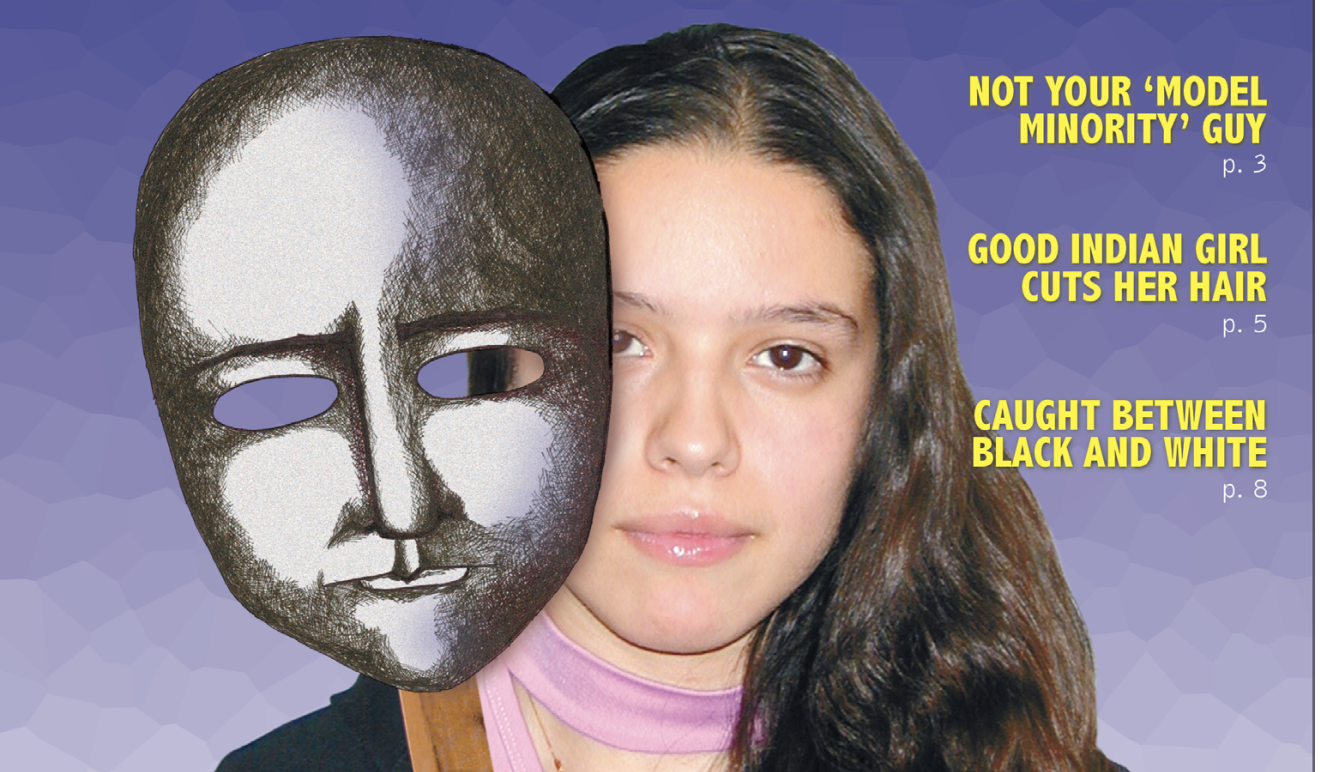
In this issue, we present stories written over the years by teens who feel that society-or their families, or even their own minds-expect them to look or act a certain way because of their race or ethnicity. These stories from the past reflect teens’ experiences today.
Take Cynthia Recio’s story, “isn’t She Lovely?” (p. 16). She tells us that she’d rather dress in looser, more alternative clothes, than the kind of clothes the other Latina girls around her wear; their clothes reveal a lot of skin and stick to their bodies to show off their curves. Even though some of her friends made fun of her, I’m glad to say that she accepted herself for who she is, and was happy about it.
I can relate to that. I’m Hispanic, and I can tell you right now, you won’t find me wearing clothes so tight they keep my lungs from getting oxygen. You’ll probably find me wearing something casual, like comfortable jeans and a sweater.
The Color of Music
I may be Hispanic, but most people wouldn’t be able to tell that by the way I am sometimes. I listen to what some people call “White music,” like Evanescence and the A-Teens, and I love to watch Gilmore Girls and Friends.
I have the right to watch or listen to whatever the heck I want and not be judged by it. Why do White people get to be the only ones who listen to pop music and rock? Also, why is it that since they aren’t minorities, it’s OK for Whites to speak proper English, but it’s not OK for us to do so?
Dwan Carter feels the same way. In “Princess Oreo Speaks Out” (p. 11), Dwan tells us about how her friends said that she was weird for preferring to listen to rock rather than r&b and not being able to dance reggae. They sometimes called her an Oreo: Black on the outside, White on the inside.
Dwan wasn’t the only one to be called an Oreo. In his story, “All Mixed Up” (p. 8), Satra Wasserman writes about growing up with a Black mom and a Jewish dad. Peers teased him, and some people, including his best friend’s parents, didn’t accept him. He felt other people pressured him to choose one race as his identity.
Cassandra Thadal was also put in a situation where she had to make some decisions about race. In “Sticking with Your Own Kind” (p. 16), she describes how in her school, Brooklyn International HS, teens only hang out with people of their own races. She’s Haitian, and her Haitian friends didn’t like it when she tried to hang out with friends of other races. She interviewed other students there who said they feel more comfortable with people of their own race, because they had things in common.
Learning Another Culture
I think I would have done the same as the kids in Brooklyn International if I had just arrived from another country and didn’t know anybody. It can be hard at times to be yourself for fear that some people who aren’t like you might not understand you or even dislike you because you’re different. I do believe, though, that it’s good to get to know other cultures.
So does Jessica Vicua. In her article “Asian by Association” (p. 10), she tells us about how, when she became best friends with a Chinese girl, she grew interested in the culture and began to learn the language and the history. She said she felt more Chinese than Puerto Rican.
While Jessica changed her identity to something that she thought suited her, another writer showed everyone a little more of her hidden self when she cut her long hair, a traditional style for Indian women. In “A Short Cut to Independence” (p. 5), Anita Chikkatur reflects on how she changed her identity from being a “good Indian girl” to her own short-haired self.
Letting Down My Hair
When you show the world the real you, it can feel as if a rock has been lifted from your shoulders. I think my proudest moment of showing the world who I really was in Spanish class last year. We had to make a presentation on a Hispanic singer, and I had chosen Gloria Trevi, the controversial Mexican rock singer who’s currently in jail.
I still laugh at the memory of that day. I sang the song “Pelo Suelto” (“Loose Hair”) and tossed my hair all over the place. I sat on a desk at one point. I’m often quiet in class, so everyone was amazed. They laughed, because they could see I was having fun. The song is about being liberated, and that’s how I felt.
There is only one person like you, and that’s you, so don’t be afraid to expose your true self to a little sunshine.
Refusing Labels, Defining Ourselves
About These Stories
YC runs intensive nonfiction writing programs for teens in New York City, where they’re mentored by a professional editor to write personal stories about their lives and about issues that affect young people. Their stories are then published and read by thousands of teens, educators, policymakers, and other adults who work with and for young people.