
“You look good today, shorty-won’t you come over here?”
It sounds like something a girl would hear on the street from some horny guy. But Krystal Portalatin, 16, a student at Jackie Kennedy Onassis HS, hears remarks like that in school-from cops and guards. Krystal is not the only one.
Brandi Fenner, 17, a student at Brooklyn Tech, said she hears cops and security guards harassing women in her school, saying things like, “You look pretty,” “You need to smile,” or, “If you were a little older…”
“I get comments like that, and women are used to that on the street,” Brandi said. “But coming from an officer, I think it’s a little worse, because he’s in a power position that other men aren’t.”
Do Cops Belong in Schools?
Being sexually harassed, beat up, or hauled down to the local police precinct instead of the principal’s office-that’s how many students say they’re treated by the security guards and police officers in their schools.
And since Mayor Giuliani put the police department in charge of school security a year ago, some teens say the way they are treated by officers in their schools has gotten worse.
So why did Giuliani put the cops in charge? Well, for years, there had been a lot of complaints that security guards in schools were not doing a good job, and were not well trained or supervised.
His idea was that putting the police department in charge could fix that, and that students would end up feeling safer.
Then, after the shootings last year in a few suburban schools around the country, a lot of people felt like schools were getting dangerous. Plus, in schools like mine, Roosevelt HS, at least, it seems like more and more kids were joining gangs.
Punished, Not Protected
It seems like Giuliani decided to act on that feeling of fear-by pushing for his plan to let the police department supervise the security guards, and by pushing for more cops to be put in schools.
In fact, while violence in schools increased in the early ’90s, resulting in metal detectors, more guards and bookbag scanners, school violence has actually been decreasing for the past five years. So we probably don’t need all those cops
And many students say that instead of making students feel protected, the cops and guards make them feel like they’re being punished.
Project Reach, a youth group based in Chinatown (but for teens from all over the city), has been advocating to get police officers out of schools. They have been working with several other organizations on a petition and a survey about experiences kids have had with school safety officers and cops.
Petitioning the Board of Ed.
Teenagers in these groups-Youth Force, the National Coalition for Puerto Rican Rights, the Coalition Against Anti-Asian Violence and the Audre Lorde Center-have been going to schools to get the petitions filled out.
They plan to take them to the Board of Education and say, “Look, this is not safe,” said Jesse Ehrensaft-Hawley of Project Reach. But they still need to do a lot more outreach to get the numbers to prove it.
Last year, these groups also held a forum where young people and parents expressed their feelings about having NYPD in schools, and talked about experiences they’d had with cops.
Teens at the forum had stories to tell about girls getting hit on and students being beaten up or taken down to the police station for something small, like being late.
“My friend-a cop beat [him up]. My friend provoked him by saying, ‘I don’t have to listen to you,’ and the cop hit him. My friend got suspended and nothing happened to the cop,” Krystal said. Even if the student was wrong for fighting back when he got hit, the cop had no right to hit a student. There are better ways that he could have handled it.
“The students are supposed to feel safe and protected, not harassed,” Krystal said.
‘Schools Seem Like Prison’
The teenagers I talked to at Project Reach were also angry that the people who made the decision-the mayor, police commissioner and schools chancellor-didn’t give students, teachers or parents a chance to voice their opinions.
“Any decision made without those voices, the voices of the people on whom this is going to have the most impact, that’s a problem,” Jesse said.
Some students said the presence of police officers in the halls is making the school seem more like a prison then a place to learn.
“I feel that not only do we have to fight gangs and each other, now we have to watch out for the cops. Schools seem more like prison,” Brandi said.
School guards now undergo the same training as police officers, and with the NYPD’s track record of police brutality, that doesn’t exactly make a lot of Black and Hispanic students feel safe.
Plus, it seems strange that the cops carry their guns in the school. The guards don’t have guns, and it doesn’t seem like anyone should be able to have a gun in a school. Whatever happens in a school, I would hope that a cop would never pull out his gun and start shooting.
“What are the cops going to do when a fight breaks out-shoot the kids, throw tear gas or bring out the riot gear?” said Krystal.
Guards Sometimes Make the Problems Worse
Besides, putting more cops and guards in schools doesn’t really get to the root of the problem, anyway, Jesse said. Maybe instead of treating teens like criminals on lockdown, schools should do more to work with the kids who are constantly getting in fights.
In my school, it seems like the cops and guards sometimes make the problem worse.
They’re so used to seeing the kids who are always in the hall-talking back to teachers, starting fights, and doing everything that juvenile delinquents are known for-the guards end up acting like friends to them. They let them stay in the hallways and let them get away with murder.
I hear them saying to those kids, “Just don’t let it happen again.” Then it happens again. Meanwhile, the guards are busy bothering the rest of us to take off our hats-or they’re trying to talk to girls.
This makes it almost impossible to go up to them if you really do need help. It creates a wall of distrust between the cops and the kids. That wall was already there outside of school. With cops in schools harassing kids, it will only grow.
I think cops can be useful outside of school, though, patrolling the building at the end of the day. Brandi agreed. “The height in youth violence is not during the school day, but after school, at night, and on the vacations,” she explained.
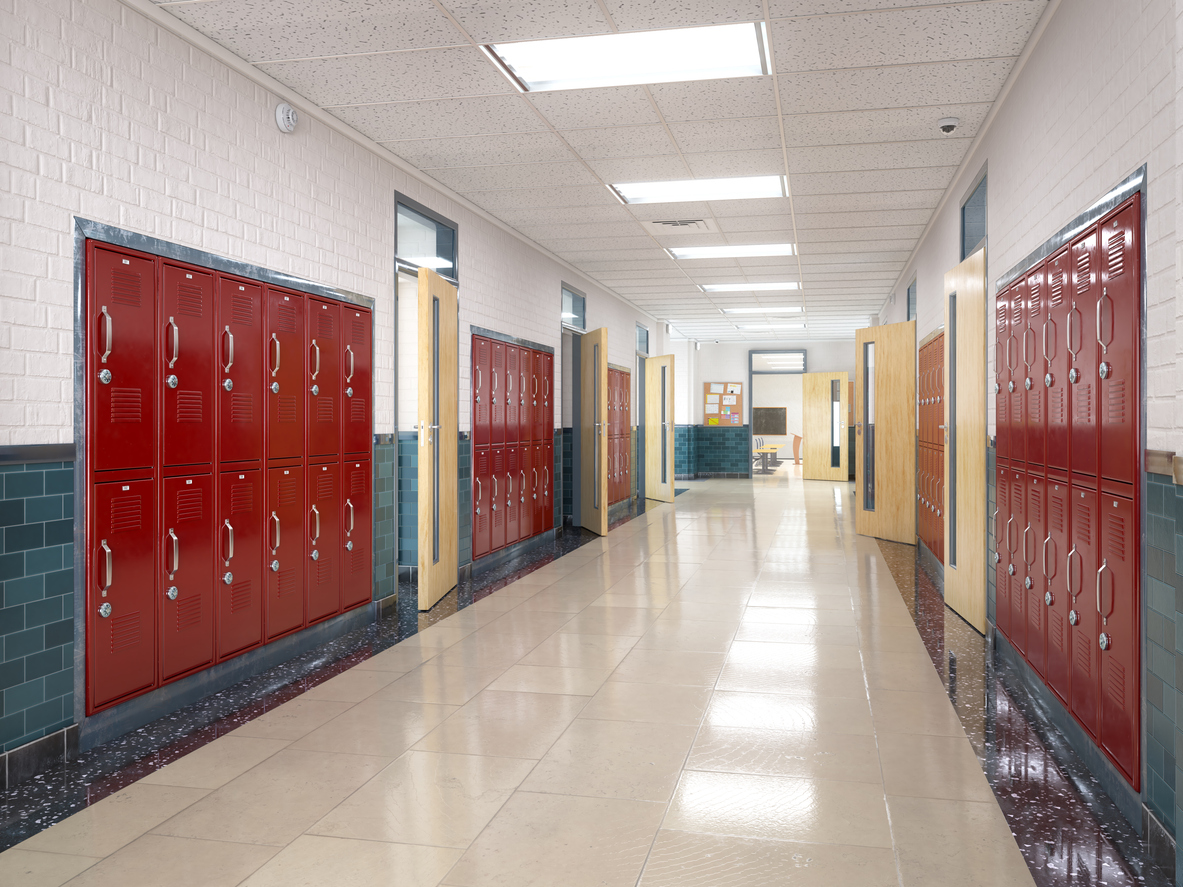
Punishment or Protection?
About These Stories
YC runs intensive nonfiction writing programs for teens in New York City, where they’re mentored by a professional editor to write personal stories about their lives and about issues that affect young people. Their stories are then published and read by thousands of teens, educators, policymakers, and other adults who work with and for young people.