
Sexuality is an integral part of our lives. It manifests itself in much more than just intercourse-holding hands, kissing, and even just talking are expressions of sexuality.
We have to broaden our narrow definition of sexuality. For example, when you go out to a club or a party, you want people to notice you and you want to appear attractive. This is an expression of sexuality, the longing to be a desirable person.
The ability to be sexual is very important to everyone-including disabled people. However, very few people think that the disabled are sexually attractive or sexually active, and even fewer would consider having a relationship with a disabled person.
“Images in advertising are of athletic, good-looking people,” said Pamela Boyle, now a consultant on disabilities and formerly with the Coalition on Sexuality and Disability. These images, she explained, have become the standard for our beauty and appearance.
By setting impossibly high standards that even non-disabled people can’t meet, these images in our culture completely exclude disabled people. You don’t have to be physically perfect to express your sexuality, but that is the message we get from advertising.
Overcoming a Negative Self-Image
Many disabled people have problems expressing their sexuality, partly as a result of stereotyping and misconceptions in the media and among non-disabled people. However, these problems are not only the result of the uninformed attitudes of others -disabled people have personal obstacles to overcome.
Many disabled people give in to popular beliefs and do not accept themselves as sexual people. Some feel inferior, inadequate, and unable to socialize with others.
“I grew up believing that I could have no social or sexual potential…I tended to avoid social situations…any kind of dating…I took myself out of the social arena,” said Harilyn Rousso, director of Disabilities Unlimited. Rousso was born with cerebral palsy. She added, “I only rethought that as an adult.”
These feelings often come to a crisis point in the teenage years. During adolescence, when everyone is concerned with physical appearance, feelings of insecurity over a disability may be compounded.
Furthermore, there is a natural desire for independence from parents and other authority figures. For the disabled person, who may be dependent on a caretaker, teacher, or parent, the hunger for independence can be very frustrating.
It is often necessary for the disabled to first accept that they are normal people who happen to have disabilities and that the disability is not their primary quality, before they can express their sexuality.
“For the first couple of years after I became blind I had to prove to myself that I was okay,” recalled Tom DeRosa, vocational rehabilitation counselor at Mount Sinai Medical Center. DeRosa became blind from glaucoma at 21. He continued, “I learned to feel good about myself…to accept who I was.”
‘Same Needs for Love and Affection’
Once the stumbling block of negative self-image is overcome, the main barriers hindering disabled people from sexuality are those created by bias, discrimination, and ignorance.
“Most people buy into the myth that the disabled don’t have the same needs for love and affection or the same sexual feelings,” explained Nanette Ecker, M.A., coordinator of special projects, parent education program, at Planned Parenthood.
The truth is, a lot of people will look at someone who is disabled and not see a complete human being. Furthermore, it is assumed that disabled people only want to associate with other disabled people, as if they had nothing else to talk about besides their disability.
Mariluz Gonzalez, 19, uses a wheelchair. Her boyfriend is not disabled, and she said that sometimes, when people see them together, they express surprise: “Wow! That’s his girlfriend? Is it someone he’s just taking care of?”
“People think that sexuality is not a part of someone who is disabled, particularly the physically disabled, those in wheelchairs for example,” agreed DeRosa. “People who are disabled are seen as children, and no one sees a child in terms of sexuality.”
“People assume that those who are physically disabled cannot have sex at all,” said Keisha Powell, 19, who is visually impaired.
Yet another misconception is that the disabled are overly interested in sex-are hyper-sexual or sexually perverted. Mentally disabled people are usually stereotyped in this way.
Need for Sex Education
It is just as important for disabled people to be given basic sex education as non-disabled people. But unfortunately, many do not have access to such information and rehabilitation centers, schools, and family members often do not provide sex education or birth control counseling.
This is particularly true for mentally disabled people who are usually very sheltered and often do not receive any information on what is appropriate sexual behavior.
“Because sexuality is not seen as important to the disabled, services in the area of sexuality are rare, few and far between,” explained Boyle.
Ecker added, “Everybody has the right to information that helps them to make choices out of intelligence, not ignorance.”
Very often, this same ignorance results in the sexual exploitation of disabled people. George Marshall Worthington, international health and development consultant, said that mentally disabled children are more likely then anyone else to be the victims of sexual assault.
He said the large majority of such sexual assaults are never reported and never go to court.
“Because of their disability they won’t be believed…It is assumed that either they imagined it, or they’re making up a story,” explained Boyle.
Few Places to Socialize
Barriers to sexuality also occur in subtle ways, that many non-disabled take for granted.
Many disabled people find it difficult to go to such places that are common centers of socializing-clubs, bars, and parties. This is especially true for those who are mobility or visually impaired.
“Not a lot of clubs have accessibility for the disabled,” explained Andre Donnegan, 18. Andre was born without legs and arms, and uses a wheelchair.
According to Andre, one of the most important things in forming a new friendship or relationship is that the person accept the disability and not be uncomfortable.
“My friends just accept me for the way I am,” he explained.
Disabled people are capable of sexuality in its many forms. They also share the same loves, hates, hopes, and dreams as anyone else. It is unfair and insensitive to assume that disabled people do not have the same wants and desires that the non-disabled have.
“Everyone has to be an advocate for social awareness, whether disabled or not,” explained Worthington. “It is important for those without disabilities to be advocates…in terms of consciousness raising in schools and communities.”
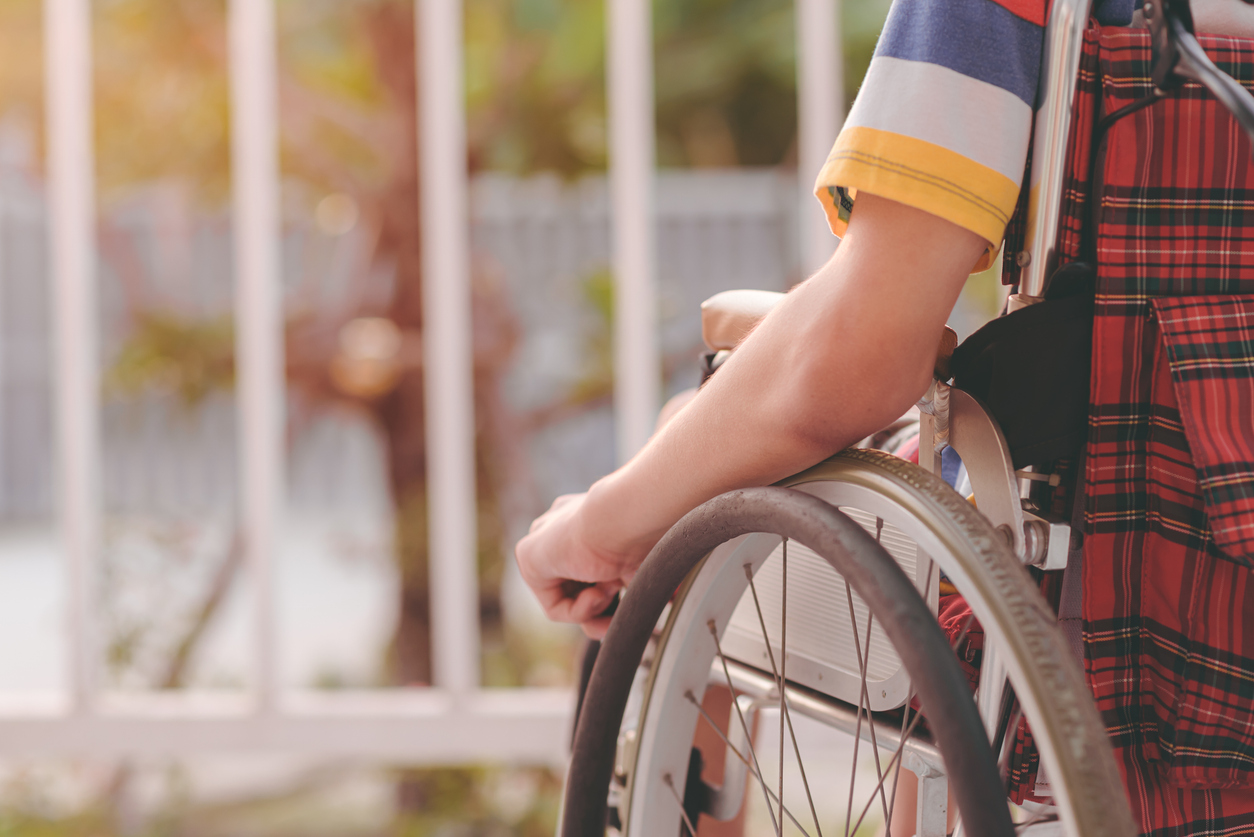
People With Disabilities Overcome Barriers to Express Sexuality
About These Stories
YC runs intensive nonfiction writing programs for teens in New York City, where they’re mentored by a professional editor to write personal stories about their lives and about issues that affect young people. Their stories are then published and read by thousands of teens, educators, policymakers, and other adults who work with and for young people.