
School can be hellish. The work is stressful, the kids are often cruel to each other, and no one is sure about the future. wouldn’t it be great to talk to someone who sympathizes-someone who’s going through it all too?
That’s the whole purpose of peer counseling. The idea behind it is that the people who can really help students are other students. I know. It helped me a lot.
When I joined the peer counseling program at Hunter College HS four years ago, we went through training to develop the skills needed to help other students in the school, and-most importantly-we formed a support group for each other.
We were trained in communication skills, such as how to really listen and understand what people feel. Together, we went through activities that taught us how to ask effective questions.
Reading Body Language
For example, we learned how to “read” body language. It’s possible to tell how a person is feeling by the way she stands and moves, by her gestures, and by whether she pouts or smiles.
To learn this, the group watched the four coordinators have a conversation. One of them was hurt when the others teased her. She didn’t say, “I’m angry,” so the students didn’t notice anything wrong.
However, the peer counselors paid attention to her body language, and we noticed that she leaned away from the others, and sat hunched over, as if someone had punched her. Because I learned to notice body language, I can understand how others feel, even when they don’t tell me.
Melinda Lopez, 17, is a senior who coordinates the peer counseling program in my school. She explained that, as the kids go through the training activities, they get to know each other and establish “an intimate, supportive group.” They continue to meet as a group and turn to each other for help as long as they are peer counselors.
“Once you learn the skills,” continued Lopez, “you feel more secure about what you can do as a person, and you can take that outside of the group.”
After our training, we signed up students who were interested in joining a group, and used our skills to try to help them. We didn’t expect to solve everyone’s problems, but we did help others help themselves.
Learning To Role Play
Every year I’ve done a different project. Two years ago, a friend and I led a small group of Hunter HS eighth graders in talks about self-image, friendships, and competition. We did this by role-playing.
For example, one of the kids, Alberto, pretended to be his mother, while his friend pretended to be Alberto. That way, during the role play, Alberto could understand the other side of the communication problem in his family.
My school is a six-year high school, and seventh graders have a hard time adjusting. The work is usually very hard, and they feel lost among all the older kids. I was assigned to help four incoming seventh graders adjust. I wrote to them over the summer vacation, and they wrote back with some questions. Now we meet every two weeks, go out for lunch, and talk about school, friends, and how we’ve all been feeling.
But the first few times that I met my seventh graders, they were very quiet, and I did all the talking. When I asked them get-to-know-you questions, they would just shrug their shoulders. It took a while for us to break the ice and become a group. Establishing this rapport is a situation every peer counselor learns to deal with.
These seventh graders called me when a recent suicide in the school upset them. It’s good to know that they trust me so much.
Gaining Self-Awareness
Peer counseling gives people insight into themselves. Lopez described her own background: “When I started peer counseling I didn’t know who I was, what I wanted, what type of person I wanted to be. I had no self-esteem. None. Zero.”
Peer counseling motivated her and made her more aware of her own abilities. After she joined, Lopez declared: “I had the power to change things…It really helped me to define myself.”
Peer counselors also get the satisfaction of helping others. It’s a wonderful feeling when a younger student comes up to me and tells me that I made a lonely year more bearable. When someone continues to confide in me years later, I know that we connected, and that I’ve made my mark in the school. I feel stronger when I realize that others look to me for their strength.
There are disappointments that all peer counselors face. Every year, at least one member of the group stops showing up for meetings. We can’t force anyone to get help, and we have to expect a certain number of drop-outs.
There’s no one kind of person who will be the ideal peer counselor. And it’s not for everyone. You must be committed and care about what you’re doing, because it’s a serious responsibility. You need to love people and know how to bring out the best in them.
As Nicole Hamilton, a peer counselor from Hillcrest HS, explained, “You just have to want to give of yourself.”
Growing up is always hard, and we all need someone sometimes. A peer counselor is the “someone” who makes it all a little easier.
If there is such a program in your school, I urge you to seek it out. Speak to your guidance counselor, or the Coordinator of Student Affairs (C.O.S.A.). Perhaps you can help start a peer counseling group if your school doesn’t have one.
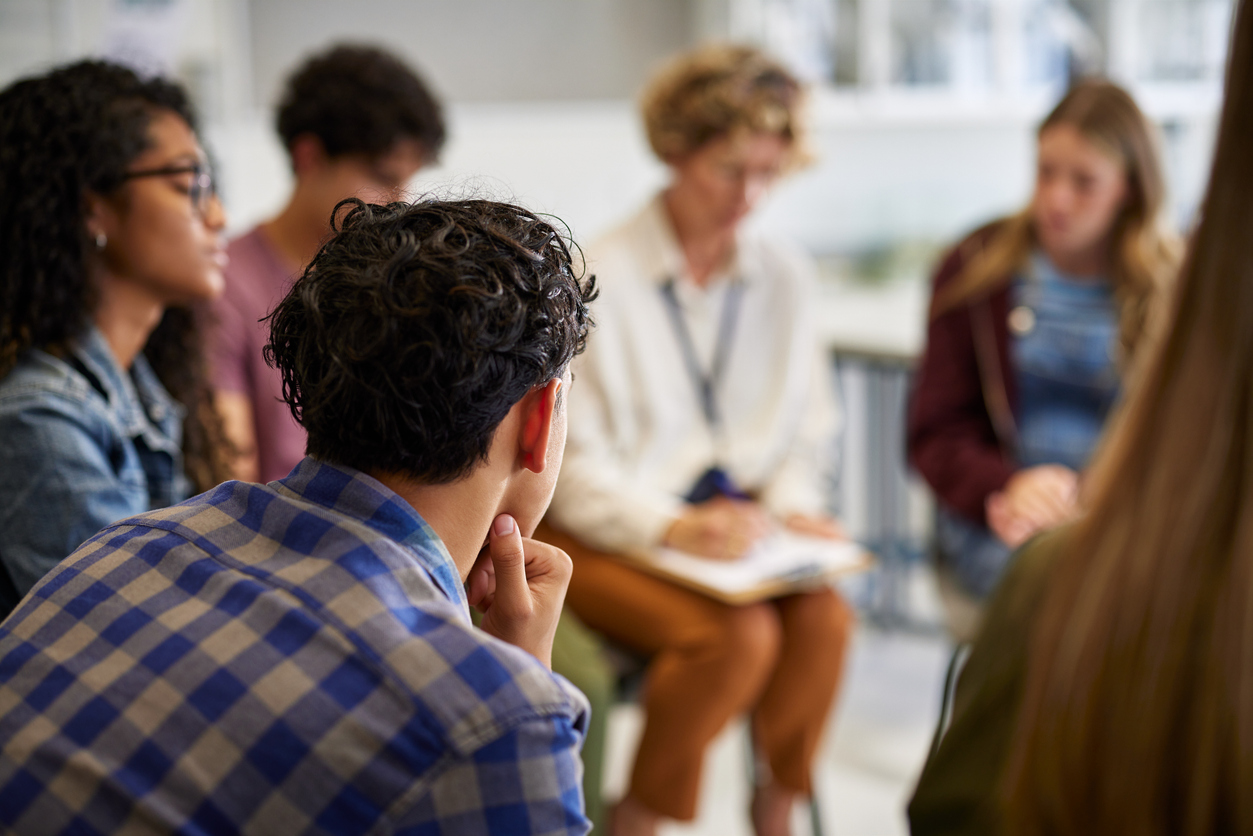
Peer Counseling Helps: We All Need Somebody Sometime
About These Stories
YC runs intensive nonfiction writing programs for teens in New York City, where they’re mentored by a professional editor to write personal stories about their lives and about issues that affect young people. Their stories are then published and read by thousands of teens, educators, policymakers, and other adults who work with and for young people.