
Expressing my point of view as a journalist was all I wanted to do. I thought my school newspaper would accept my point of view whether they agreed with it or not. Instead, they tried to keep me quiet.
My Adventure in Censorland started when I wrote a series of articles about controversial topics in my high school, The Manhattan Center for Science and Math.
When I first got to Manhattan Center, I saw many things that troubled me about the school.
The principal was invisible to the students. The school guards allowed the students to cut. The student government was weak.
Most of the headlines in the school paper-the “Gazette”-were about visitors who came to Manhattan Center, visitors who didn’t cross my path when they were there. There were no articles critical of the school. My instincts told me the school would paralyze my freedom as a writer if I wanted to write about controversial issues.
Other Manhattan Center students shared my views.
The Only News is Good News
“I think they only allow to be printed what they see,” agreed Alberto Santana. “Everything is positive. I think it [the newspaper] should have opinions on what students like and don’t like.”
He added that the school newspaper should report on problems in the school “so we could improve it.”
“Students are in bad shape,” added Andre, another student at Manhattan Center. “Being a student in the school, you should have a right to know what’s going on.”
He said that the school newspaper could improve students’ lives by giving them “a voice in the school.”
Unfortunately, some teachers at Manhattan Center do not agree.
Last year I was in summer school. I was placed in a writing class and they set up a summer school newspaper. I was made editor of the editorial section, and presented my “Controversy” series to the teacher.
Being the editor was something new to me. The teacher handed me a folder with several articles that had been submitted. I had to pick the best of the articles.
I thought that being the editor of the editorial section would have given me the freedom I wanted.
I was wrong.
The publisher of the summer newspaper was also the publisher of the school’s newspaper. She pulled out the articles I selected a day before distribution.
I went downstairs and met with her personally. I asked her what the problem was with the editorial section. She went around the question.
Security Guards Not Doing Their Jobs
Finally, after asking her several times, she told me: “Your article is garbage. I refuse to print it on a newspaper that will carry the Manhattan Center name. Now goodbye.”
I know why she rejected the article. It was about how easy it was for students to cut from school because the security guards were not doing their jobs. I don’t think she wanted to hear our opinion, or stir up any other opinions. Other articles dealt with the lack of heat in the school and a rude elevator operator.
I asked a student if the school paper should report on ineffective security guards.
“Yes,” he said, “the job of the guard is not to be the students’ friend.”
Because it seemed impossible to work for the school newspaper, I began writing my own newsletter, which I put up on the walls and in the hallways of the school.
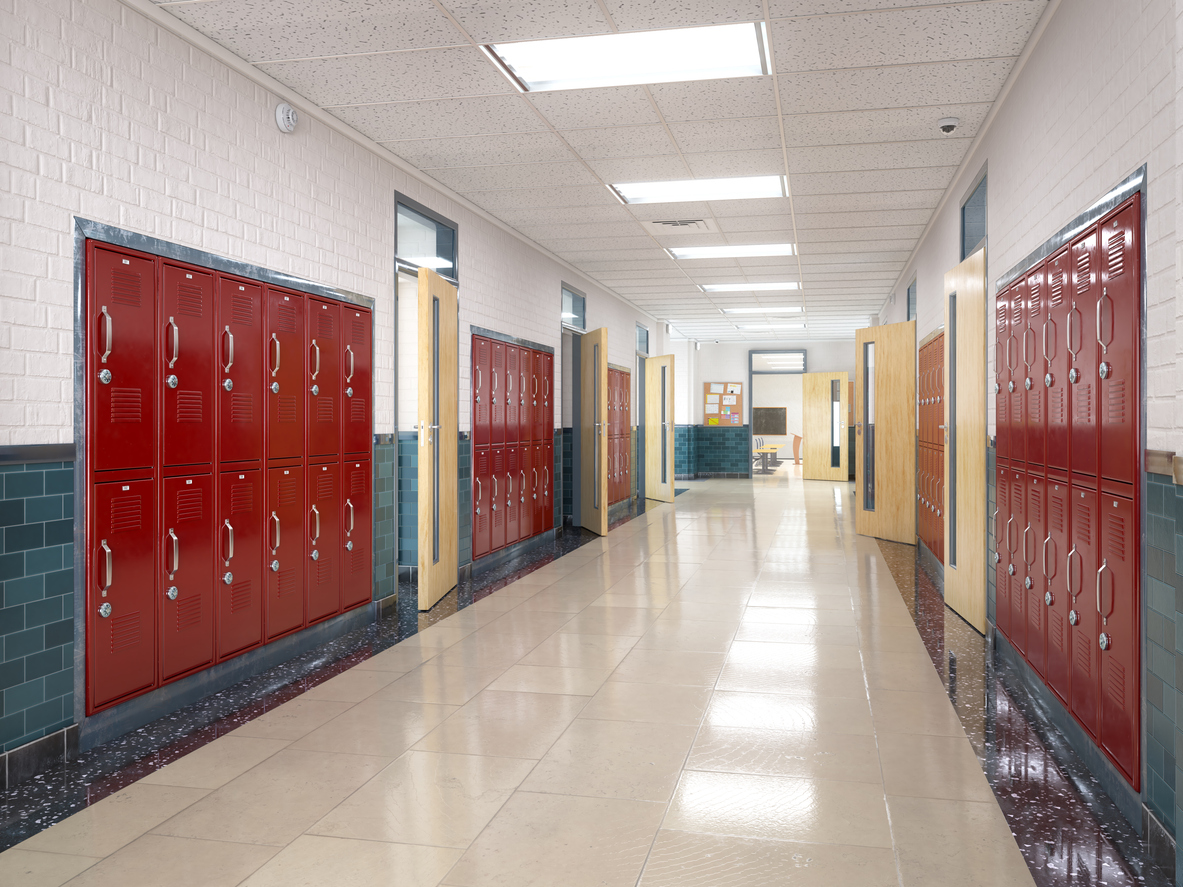
The first issue covered problems the students had with making program changes and our poorly run G.O. The second issue described how someone burned one of the lockers we have been waiting for for three years.
It also had articles on graduation requirements, and who controls the student government.
Andre, the co-writer of the newsletter, and I went to the principal’s office to discuss what we wrote, because we wanted some feedback from her. Patricia Cook sat us down in her office and told us we had guts to write what we did.
She also tried to tell us we were wrong, but in a nice manner. However, Andre’s article on program changes enabled him to get the changes he needed in his classes, which shows that we weren’t completely wrong about the positive effect a school paper could have.
In writing this article, I went back to talk to Ms. Cook to gather views on the school newspaper.
“It needs improvement,” she said. “The Gazette is a fairly new newspaper.” But she added that she didn’t try to control the paper.
“I really haven’t dictated it in any shape or form,” she said. “I would like for many students to be involved.”
She added that students should not have to change their viewpoints to be published in the paper: “If all people think alike, then they’re not thinking.”
‘Not Enough About Students’
John Marcus, an English teacher at Manhattan Center, agreed that the Gazette could be improved.
“There’s not enough about students,” he said. “There’s not enough about what really concerns students.”
He added: “If the problems are not addressed [by the school newspaper], how can they be solved?”
Migdalia Perez, a guidance counselor, also agreed that the school paper should not report on only the positive: “I think that the school newspaper should include everything. I think that there’s a lot of things that students have opinions about that should be reported.”
Asked if students should be required to change controversial opinions in order to be published, she said: “My first reaction is that students shouldn’t be forced [to change their opinions]. Students have their point of view- they’re entitled to them.”
However, she said that there may be “some articles and some points of view that the paper should not print. So it’s a hard question to answer.”
Mr. Marcus said that the recent Supreme Court decision upholding a school administration’s control over a high school newspaper in Missouri could have a negative impact on all school papers.
“Negative opinions may be censored now that students don’t have the same protection as public newspapers,” he said.
Mr. Marcus may be right. The school has taken us out of business. Our newsletter was ripped off the walls, and when we asked why, we were told it was because it was not issued by the school.
A school newspaper should be used to benefit the students-not for selling a school. All newspapers should include all kinds of news. Manhattan Center is a school with high standards and it has had a lot of success. It shouldn’t be afraid of a little criticism.
I’m going to try to continue to write about issues which concern students in my school. If you are a high school journalist having similar difficulties, find someone who will help you pursue your goals.
And whatever the consequences, don’t give up on your dream.
My Adventures in Censorland
About These Stories
YC runs intensive nonfiction writing programs for teens in New York City, where they’re mentored by a professional editor to write personal stories about their lives and about issues that affect young people. Their stories are then published and read by thousands of teens, educators, policymakers, and other adults who work with and for young people.