
Livingston High School is a special education school on Manhattan’s upper west side. Its students have all been diagnosed by the Committee on Special Education as having behavioral and emotional problems and/or learning disabilities. Some students have been diagnosed as having dyslexia, mild retardation, or autism.
The small number of students in each class (never more then ten) enables teachers to provide Livingston students with the individualized attention- academically and emotionally-that they need.
Livingston teachers must be certified in the field of special education. They are trained to identify learning disabilities, and develop strategies to teach children who may have perceptual problems, as well as other difficulties.
An example is a child who has no concept of shapes or proximity. In that instance a teacher may have to manipulate objects in class to teach the child. Or special ed students may not fully understand the concept of numbers, so a teacher will develop a specific strategy for that individual to learn math.
Special ed teachers are taught these strategies and some develop their own to find the best way a particular child can learn. Although a student may have difficulty translating what they say into the written word, they may have tremendous memories, which may become part of the teacher’s approach.
Placement in Special ED
I asked Jean Jee, the principal at Livingston, about the factors that lead to a child being placed in special ed. She said that when a child is experiencing extreme academic or behavioral problems, “the teacher will speak to the parents and other teachers and recommend an evaluation of that student by the board [The Committee on Special Education] which includes psychologists, social workers, and educators.”
Jee said that the parents of such students are given due consideration in the procedures. She said that “parents have the right to challenge the Board of Education. If they feel strongly against the recommendation, then they must make a case for their child.”
She said that the behavioral problems of her students stem from frustration with learning, emotional problems, and stress, all of which are extremely difficult for Livingston students to handle.
Jee believes that the argument for mainstreaming her students in other high schools is well meant but unrealistic. She said that in some situations mainstreaming is possible, but not for students whose emotional problems lead them to act out.
“Many teachers in mainstreamed high schools are intolerant of these children,” she explained.
“When we speak to the students themselves, most will admit that they had problems in other schools and that oftentimes teachers didn’t understand them,” she added. “People… are not as sensitive as one would expect given the real problems the children face outside of school.”
Janine Negron, a Livingston teacher, said that some of the students have either spent time in hospitals, juvenile detention centers, or out of school, and, as a result, have missed the very basics of math and reading.
Queen Wethington, another teacher at the school, said that teachers remedy learning gaps with constant review. “We give them the time and the reinforcing that they need to learn-each in a way that they understand,” she said.
Cannot Articulate Needs
Wethington said that a major difficulty in dealing with her students is their inability to control their emotions. “Anger and depression causes them to act out. They are frustrated because they are caught up in a system. They don’t know how they got there or how to get out.”
She said that the main difference between her present students and students she taught at other high schools is that Livingston students cannot describe what they are feeling and are unable to ask for what they need. She said students who can articulate their needs with a minimal amount of frustration usually do not have emotional problems.
During my first visit to Livingston, I spoke with a student named Sheryl, 19, who didn’t fit the mold of the special ed student that I had sketched in my mind. She was calm, attractive, bright, and spoke with enthusiasm about her job and her boyfriend.
But when I asked Sheryl about Livingston, the tone of her voice deepened and her confident expression changed dramatically.
She said she was unhappy at Livingston because she is unable to learn to her full capacity.
“Students are so rowdy…They’re always fighting. Teachers have to be breaking up fights and stuff so much,” she said, “that there’s no time to teach.”
Negron agreed that teachers are often forced to spend more time playing mediator than teacher.
“Before we can teach them anything, we have to get them to respond-to trust us,” she said.
‘I Broke All the Rules’
Raymond, 20, a graduate of the school who once felt the same as Sheryl, now feels that Livingston helped him more then any other school could.
Raymond described himself before coming to Livingston.
“I didn’t want to listen. I felt like I didn’t need anyone-that was my attitude. I wasn’t serious about school and got suspended so many times for fighting and disrespecting teachers. I broke all the rules.”
Raymond said that it wasn’t until he actually left Livingston and began to look for a job that he became a man. He said he realized he had to change. He knew he had to follow the rules.
“The work world is like school,” he said. “When you enter a job you learn, and if you know it, you’ll move on. If you don’t take the time to learn it, you won’t go anywhere.”
Raymond said that the teachers at Livingston helped him with his personal problems through counseling. When he began to see that they cared, he opened up to them.
Wethington said young people in mainstreamed schools should be more sensitive and understanding, and not so quick to judge and group all special students together.
“Our kids would be less angry and frustrated,” she said. “Kids sense it, see it, and experience it. They know society is unfair. Acting out is how they ask for attention. `If you don’t help me, this is the way I will say I am here too.'”
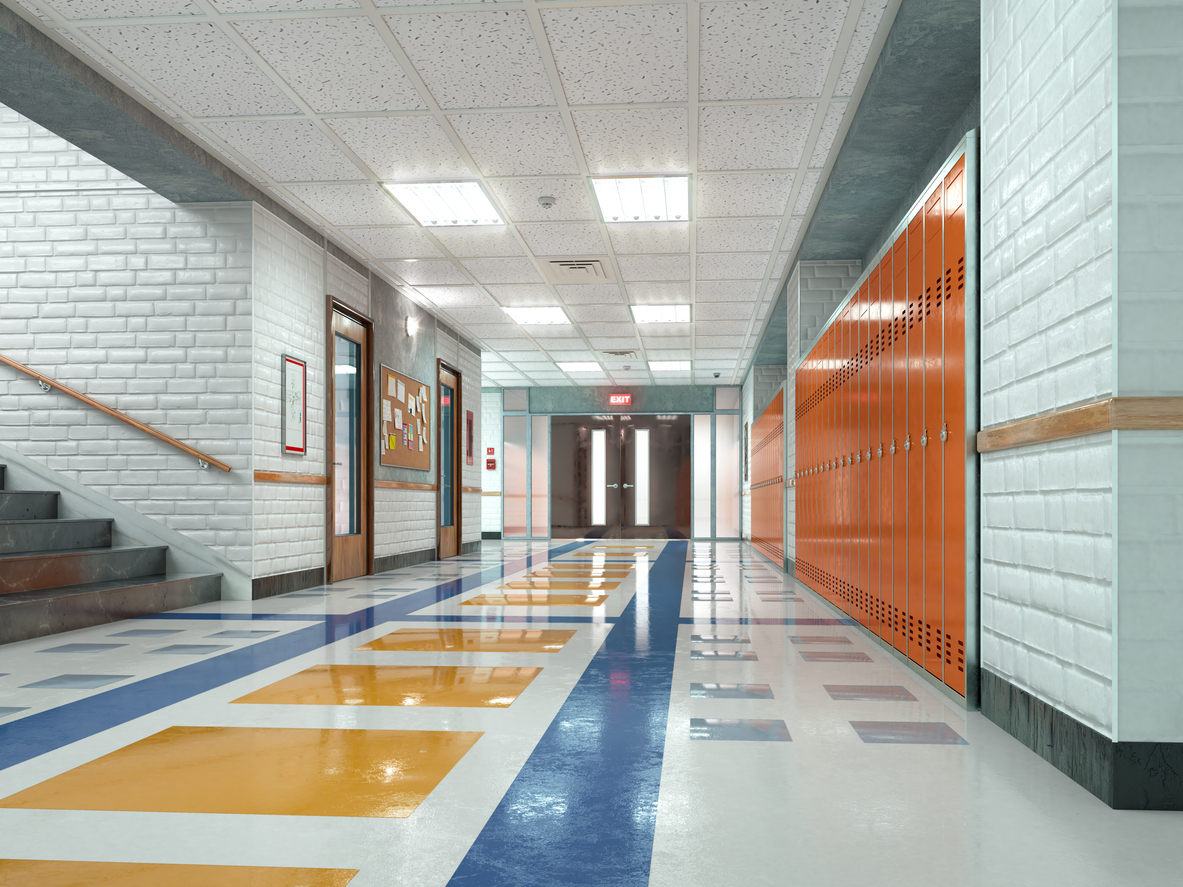
Livingston Students Get Special Attention
About These Stories
YC runs intensive nonfiction writing programs for teens in New York City, where they’re mentored by a professional editor to write personal stories about their lives and about issues that affect young people. Their stories are then published and read by thousands of teens, educators, policymakers, and other adults who work with and for young people.