
All of my life, I have been hearing about how my family escaped from the Nazis.
The stories I’ve been told always begin in Cracow, Poland, in the early 1930’s. Hankah (my grandmother) married Wilhelm, a handsome watchmaker. They lived in a good neighborhood right near their families. Hankah soon became pregnant, and gave birth to a daughter, Alina. Life was good for this Jewish family.
Hankah and Wilhelm didn’t pay attention to the rise to power of a man named Adolf Hitler, the head of the Nazi party in neighboring Germany. He had a maniacal hatred of Jews. He believed that Jews caused all of the world’s problems, and that they were a lower race, sub-human beings.
The Nazis Changed Everything
Then in 1939, the Nazis invaded Poland. Proclamations were made: All Jews must wear a yellow star. All male Jews must adopt the middle name Israel. All female Jews must adopt the middle name Sara. All Jews must have a ‘J’ stamped on their passports and on their identity cards. Jews were no longer allowed to patronize “Aryan” stores, or allowed to use public facilities, like parks. They couldn’t ride in trains, drive cars, or own bicycles. Life became increasingly difficult. Hankah and Wilhelm didn’t know what to do.
Meanwhile, in utmost secrecy, the Nazis came up with the “Final Solution” to the “Jewish Question.” They decided that all Jews must be eliminated. All Jews must die.
In March of 1941, the Cracow ghetto was created. It was about 10 New York City blocks long by 5 blocks wide with a brick wall around it and a barbed wire fence around the wall. Cracow’s entire Jewish population-18,000 people-was forced to leave their homes and crammed into this space. Hankah and Wilhelm had to leave their nice house and go live in the ghetto. Five people had to fit in one room. This was not the life that they were used to.
Hankah and Wilhelm began to hear rumors. Rumors of awful places where they would be worked to death. Trapped in the ghetto, they were easy prey for the Nazis. Still, Hankah and Wilhelm did not want to just give up. They began to think about ways to escape. They knew that the best chance that they had for survival was to escape individually. They’d find each other somehow.
Escaping the Ghetto
Wilhelm volunteered as a fireman. This work took him to areas outside the ghetto. That was how he escaped. With her husband gone, Hankah felt a sense of impending disaster. She had to get Alina out. She knew that the skinny 4-year-old girl would not have a chance in a work camp.
In the dead of night, Hankah and her brother Zishue dropped Alina over the wall that surrounded the ghetto and she scrambled through a hole in the wire fence. Alina had a note attached to her coat, which asked whoever found her to shelter her. She ran crying into the night.
Hankah was now alone in the ghetto. There was no way out for her. She was trapped.
Beginning in May, 1942, Jews could no longer work outside the ghetto. Escape was thoroughly impossible. The “selections” (the Nazis’ decisions about who would be transported to concentration camps) had started. Everyone would have to board the rickety cattle cars that would take them to hell. Hankah, her parents, brothers, and sisters stood on the long line, waiting to board the train.
Don’t Look Back
Hankah was thinking how glad she was that Wilhelm and Alina had escaped, and prayed that they would find each other, somehow. A voice interrupted her thoughts. “Do you want to escape?” She turned around and stared at her cousin, Fred. “How?” she asked quietly. “Don’t ask questions. Come with me now. Leave your bag.” Hankah began to call to her parents to follow, but Fred stopped her. “They won’t make it. You can’t say goodbye to them. We can’t wait another second. Come on!” Hankah walked away with Fred. She didn’t look back.
Hankah and Fred went down into the sewers. They began to move quickly, because it was only a matter of time before the Nazis realized that they were gone. After a little while, they heard noise behind them. Voices. And gunshots!
“It’s only a little farther,” Fred called to Hankah. She didn’t answer. Just as they climbed out, poison gas was released into the sewer. But they were out. They were free.
I don’t know how they all found each other, but somehow Hankah, Wilhelm, and Alina were reunited. They changed their names, got new identification papers, and a new religion. They pretended to be devout Catholics. Hankah wore a big cross to prove it.
Still, it was extremely dangerous for the family to stay in Poland. Since their escape, they had already been arrested and questioned. The Nazis had developed guidelines to determine a person’s race. They measured people’s heads and their noses to see if they were Jewish. But the Nazi guidelines, based more on stereotypes than science, were hardly foolproof. It was determined that Hankah, Wilhelm, and Alina were not a Jewish family.
Watchmaker or Bombmaker?
Not wanting to take any chances, the family moved to a different town, although they stayed in Poland. Wilhelm opened up a small jewelry store, and they tried to settle down to a normal life.
But not for long. Since Wilhelm was a watchmaker, he knew how to work with small parts. World War II had started and the Nazis wanted him to go to a work camp and make bombs. There was no way out.
Hankah and Alina took Wilhelm down to the train station, where he joined a large group of men, under guard. Hankah took off her gold watch, put it in the guard’s hand, and asked him to look the other way. Hankah and Alina waited. The guard didn’t look away. It was too late.
Just then, the air raid sirens went off, which meant that Allied bombers were flying into the area. Instead of going to the public air raid shelter, Hankah and Alina went back to their house, which wasn’t that far from the station.
When they went down to the basement, Wilhelm was there. Apparently, in all the confusion, Wilhelm managed to slip underneath the train, and escape after the train pulled out. It was just pure luck. But the family had to leave. The Nazis were sure to realize that he was missing and come after him.
On the Road Again. . . . . .and Again
The family took to the road again. There wasn’t time to get new identification papers so they had to travel by foot, for the most part, through the woods. They were planning to cross the border and escape to Hungary. The Nazis hadn’t invaded Hungary…yet.
They made it to Hungary but, after a few months, the Germans came. The Nazis were dissatisfied with the way the Hungarians were treating the Jews (too nicely) and so they decided to start running things. Hankah was pregnant, but the family went on the road again, traveling in an open truck covered with fruit for most of their journey. They headed East.
While they were on the road, the Nazis, who had been suffering severe losses, surrendered. Hitler was dead. They decided to head to Germany to try and locate the rest of their family. In Munich, Hankah had her baby, a little girl named Mira.
Not Everyone Made It
Mira is my mother. My grandparents, Hankah and Wilhelm, were very lucky to have survived. Few of their relatives did. Hankah’s parents died in the Auschwitz concentration camp. They refused to eat the food they were given, because it wasn’t kosher.
Hankah’s favorite sister, Regina, was killed by the Nazis. Upon arrival at Auschwitz, the Nazis took Regina’s daughter to the gas chambers. She decided to die with her daughter. My grandmother’s other siblings were also sent to Auschwitz. They managed to survive.
Fred, Hankah’s cousin who helped her escape from the ghetto, got himself out of many a bad situation. After he left Cracow, he went to Hungary, where he was captured and placed in a work camp on a farm. Hungary was a good place to be captured, because the camps were run by Hungarians for the most part, not by Nazis. Security was lax. Fred built a shack in the woods, and began sneaking off to supply it with food. When the camp started to enforce tighter restrictions, he grabbed his girlfriend and her brother and they went to live in the woods.
The Survivors Came To America
It took the various family members three years to locate each other. They reunited in Germany but they no longer felt safe in Europe, even though the war was over and the Nazis had been defeated. They decided to move to America, to a place called the Bronx. Some of them didn’t even feel safe in America, so they moved on to Israel, the newly formed Jewish state.
My grandmother was haunted by her memories of the Holocaust until she died. I never knew my grandfather; he died before I was born.
I am proud and honored to come from a family of survivors. Stories like theirs have to be told, no matter how unpleasant, so the world won’t forget, and it won’t happen again.
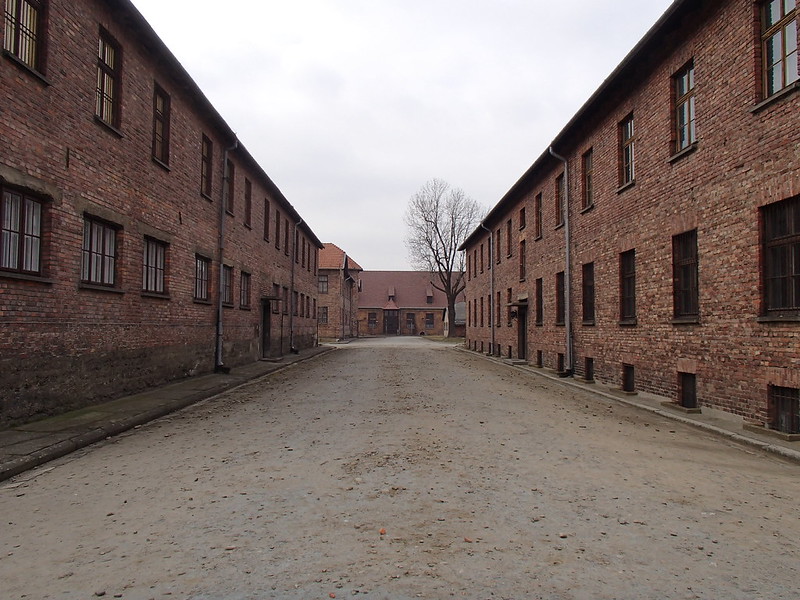
How My Family Escaped the Nazis (Part I)
About These Stories
YC runs intensive nonfiction writing programs for teens in New York City, where they’re mentored by a professional editor to write personal stories about their lives and about issues that affect young people. Their stories are then published and read by thousands of teens, educators, policymakers, and other adults who work with and for young people.