
Except for the United States, Haiti is the oldest republic in the Western Hemisphere. Part of a small island called Hispaniola (which it shares with the Dominican Republic) in the Caribbean Sea, Haiti is a place of white sandy beaches, tropical flowers, and political chaos.
Haiti first became a cause for political concern almost 200 years ago when Toussaint L’Overture, a slave who taught himself how to read and write, led a slave revolt against the French in 1791. He had a lifelong dream of freeing all slaves under France’s control.
At this time, the Spaniards were fighting against the French for control of the island. Toussaint showed leadership qualities that made the Spaniards offer him a chance to become a lieutenant general in their army.
But because of disagreements with his idea of freeing the slaves, he refused the invitation of the Spanish Army and joined forces with the French. The Spaniards and their English allies soon were defeated. Toussaint then became governor of the island, with the right to choose a successor.
Inspired By American Revolution
L’Overture slaughtered all the White slave owners in Haiti. He was inspired by the American Revolution, where many people think he got his idea of freedom.
Many Americans were afraid that Toussaint could start a slave revolt in the U.S. if slaves were aware of what had happened in Haiti. White American slave owners thought Toussaint’s empire should be crushed to keep him from “making trouble” in the U.S.
In 1802, Toussaint was betrayed by one of his own trusted generals. The French general Napoleon then sent his army to invade Hispaniola and capture Toussaint. He was imprisoned and then died in France.
Followers of Toussaint continued his fight for a free Haiti. Another former slave, Jean Jacques Dessalines, declared Haiti independent in 1804. But by the early part of the 20th century, Haiti was disorganized and bankrupt. It could not pay its debts to European nations.
U.S. Occupation
In 1915, to enforce the Monroe Doctrine, the United States sent Marines to occupy Haiti. The troops did not leave until 1934, when Haiti had become more socially and economically developed.
The next two presidents encouraged foreign investment in Haiti, but upper class mulattoes (racially mixed people) gained most of the benefits from these investments.
Haiti became a country of extreme political unrest in 1946, when army officers took control of the government, and again in 1949 after widespread rioting.
In 1957, a country doctor, Francois Duvalier, was elected president of Haiti. Seven years later he declared himself president for life, and Haiti became a dictatorship.
He changed the country’s constitution in 1971 to allow him to choose his successor-his son, Jean-Claude Duvalier. At age 19, Jean Claude (“Baby Doc”) followed his father’s footsteps and declared himself president for life and ruled as a dictator.
Secret Police
Both father and son controlled the army and a secret police group, the Tontons Macoute (meaning “bogey-man”), which enforced Duvalier policies through violence.
In the early ’70s, many Haitians left their country for better living and working conditions and to escape the Tontons Macoute. A great number fled to the United States.
Two years ago, Haitians staged a revolt against Jean-Claude Duvalier. He fled Haiti with his family, in fear of his life. The armed forces are now in control of the Haitian government.
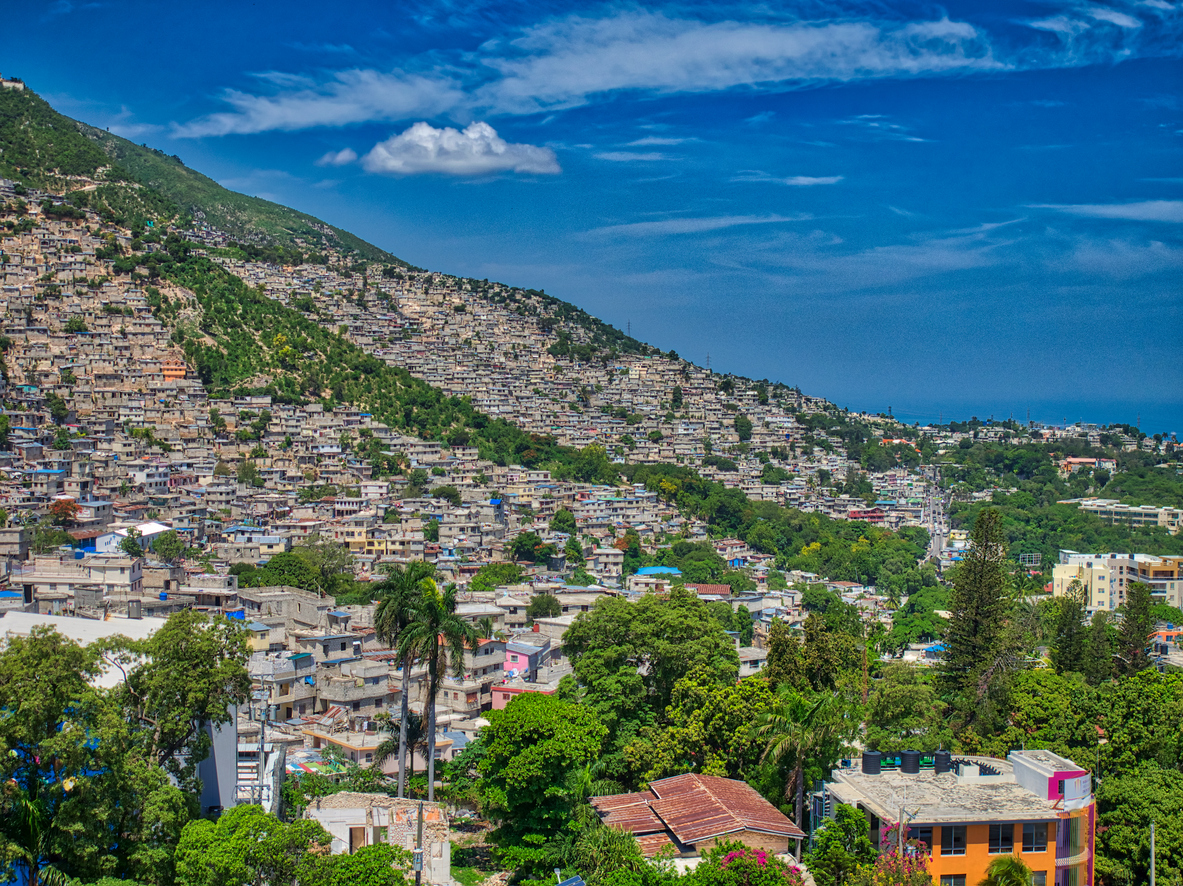
Haiti’s Part in America’s History
About These Stories
YC runs intensive nonfiction writing programs for teens in New York City, where they’re mentored by a professional editor to write personal stories about their lives and about issues that affect young people. Their stories are then published and read by thousands of teens, educators, policymakers, and other adults who work with and for young people.