
I had a dream once that I was in a rehab center. When it was my turn to speak, I didn’t mention a drug or alcohol problem. Instead, I stood up and said, “My name is Melanie and I’m a vegetarian.”
I’ve gone without meat, seafood, and poultry for more than a year now. When I’m forced to reveal my eating habits in real life-“No thank you, Mrs. Smith. No turkey for me. I’m a vegetarian.”-it sometimes sounds like I’m confessing something shameful.
What made me change my eating habits so drastically? No, it’s not insanity, although I’ve been accused of that many times by meat-eaters. It’s just that the more I thought about it, the more convinced I became that meat-eating was not only unnecessary, but cruel.
My transition into vegetarianism was a relatively slow one. I didn’t wake up one morning to find I had turned into “Veggie Woman” or “Carrot Girl,” as I am sometimes lovingly called. I would think about it one day, forget about it the next, and maybe a week later think about it again. I started by giving up fish, since I hated it anyway. Then, gradually, chicken disappeared from my plate. Finally, I ruled out all other kinds of meat.
The biggest influence on my decision was learning about the great number of admirable vegetarians like Socrates, Albert Einstein, Gandhi, Leonardo da Vinci, Ralph Waldo Emerson, Bob Dylan, Candice Bergen, and Paul Newman. If they could do it, so could I. And as I learned more about both the personal and societal benefits of vegetarianism, it became easier for me to remain “green.”
Animal Rights & Human Rights
There are a lot of good reasons to avoid meat. The most obvious one is animal rights. The “animal rights” vegetarian is armed with many meat industry horror stories about animals being slaughtered with blows to the head (instead of being injected with painless but unappetizing chemicals) and new-born calves who are kept in confined spaces, unable to move or even lick themselves (soft muscles=veal=$$$). Vegetarians opposed to this horrible treatment share the philosophy of playwright George Bernard Shaw, who said, “Animals are my friends…and I don’t eat my friends.”
For people who don’t consider animals their friends, there are other reasons not to eat meat. These include what I call the “environmental” and “human rights” issues. You see, rain forests are destroyed to create pastureland for animals raised for the meat market, posing a major threat to the environment.
The meat industry also contributes to world hunger. According to environmentalist Jeremy Rifkin’s new book, Beyond Beef, cattle and other livestock are fed one-third of the grain produced on the planet. If that grain were given to humans instead of livestock, it would be enough to feed 1 billion people. As a result, hunger and related diseases, which kill between 40 and 60 million people each year, could be obliterated.
It’s Good For Your Heart
Finally, for those who remain untouched by these humanitarian arguments, personal health may be a more powerful incentive for giving up meat. Eating cholesterol-laden red meat can help cause high blood pressure and heart disease. It can also increase the risk of getting some forms of cancer, including colon cancer (the second most common form in the U.S.) and breast cancer. A low-fat, high-fiber vegetarian diet reduces these risks.
If you think that not eating meat will make you weak, don’t worry. Vegetarian athletes like track star Florence Griffith-Joyner have proved that you don’t have to eat meat to be strong and healthy. Even Charles Darwin, the scientist responsible for the “survival of the fittest” theory, was a vegetarian. He said that humans are not meat eaters by nature. Most humans don’t like to kill their food themselves, eat it raw, or salivate at the sight of it, the way truly carnivorous animals, like lions, do. Also, humans don’t have claws suitable for ripping apart flesh. Our teeth are better suited to chewing crisp foods.
Gaining Acceptance
Despite these good arguments, neither my friends nor my family took my vegetarianism seriously at first. Although I still haven’t converted everyone to my way of thinking, I’ve come a long way. Eventually my parents stopped dropping “How-important-balanced-diets-are” pamphlets in my path. And some of the friends who joked about my new diet a year ago have stopped eating meat themselves.
The rest of the world has started coming around as well. I used to sit in McDonald’s or Roy Rogers with my friends but not eat anything because even the apparently vegetarian foods on the menu had some hidden animal product in them. But now, even fast-food places are using vegetable oil and serving meat-free dishes.
We’re on our way, but it will still be a long time before the vegetarian minority becomes the majority and saves the world. As a wise little frog named Kermit once said, “It’s not easy being green.”
SIDEBAR: Hold the Meat
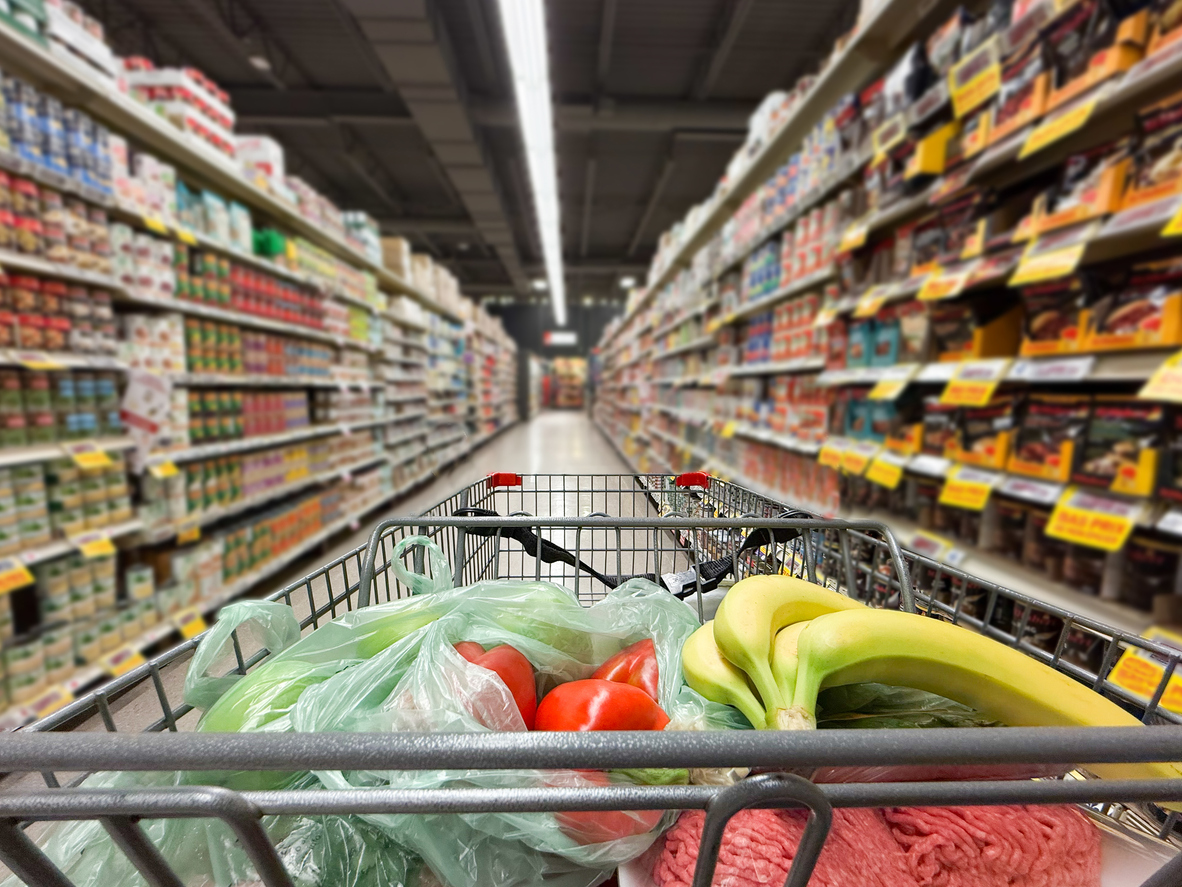
Some people cringe at the word “vegetable,” but that isn’t all vegetarians eat. There is an abundant variety of healthy foods out there for those who choose not to eat meat-brown rice, fruits, nuts, and all kinds of bread. Some vegetarians also eat eggs and dairy foods like milk, cheese and yogurt. It’s really not that hard to go without meat. You quickly learn the tricks for surviving in a predominately carnivorous world. Breakfast and lunch are easy, with cereals, English muffins, bagels, grilled cheese sandwiches, etc. If my family has something like steak or chicken for dinner, I just eat the side dishes. I’ve also become a pretty good cook in my own right (15-minute pasta dishes are this chef’s specialty). And the foods I throw into the shopping cart for myself-potato and macaroni salads, greens, fruit, bread, rice-are quicker and easier to make than the “normal” foods on my family’s table. They must taste better too, because my food is sometimes stolen by the meat-eaters I’m related to. A vegetarian diet is usually low in saturated fat and high in fiber. It can also provide all the protein, iron, and vitamins you need to stay healthy, as long as you’re careful to maintain a well-balanced diet. Dr. Barbara Deskins, a diet and nutrition expert, says that a vegetarian teen should make sure to eat something from each of the different food groups every day-dairy products like milk, cheese, and yogurt; fruits and vegetables; and breads and cereals. Dr. Deskins also recommends eating eggs, dried peas and beans, and peanut butter (good sources of iron) and drinking orange juice (the vitamin C helps the body absorb iron).