
Looking through rose-tinted glasses…
“I love to go to Chinatown for a wild shopping spree, and then stuff myself with egg rolls and fried rice.”
“The people are so friendly and helpful.”
“There are so many quaint shops that sell seafood, fruits and vegetables, cheap T-shirts, shoes…”
“It is a busy, quiet place to live in.”
Chinatown: where you fill yourself with delicious foods and delicacies, where tourists indulge in hours of souvenir shopping, and which serves as an excellent source of tax revenues for the city. All in all, a community where all is happy and well.
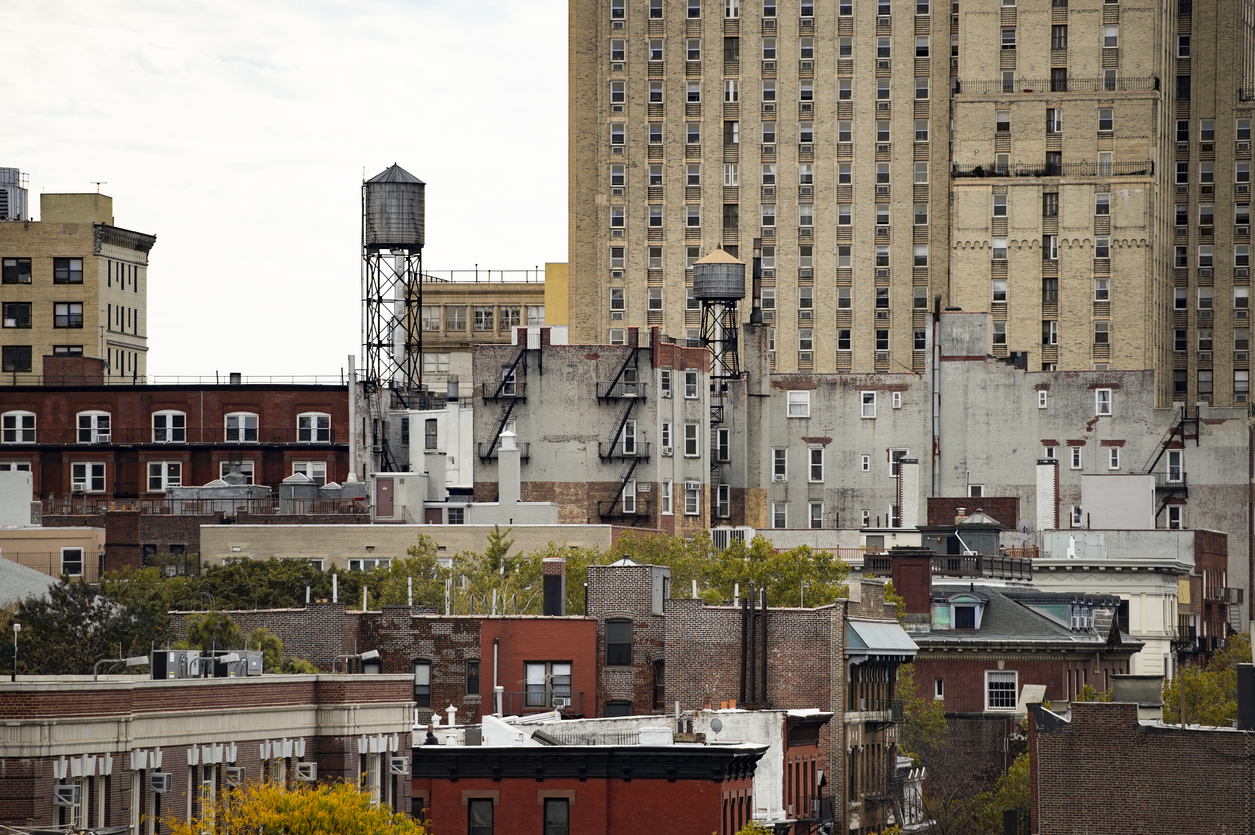
But beyond the rose-tinted perspective, in the glaring light of reality, there is the picture of dilapidated buildings, overcrowded tenements, youth gangs, deteriorating family lifestyles, and discrimination.
History of Chinese Immigration
Like many ethnic groups who came to America, the Chinese encountered social and economic problems from the start.
When gold was discovered in California in 1848, many Chinese immigrants moved there, and were then recruited to work in the mines and on the railroads. But tension soon developed between the white laborers and the Chinese, as each group vied for the jobs.
As a result, many laws were passed by Congress to limit the number of Chinese immigrants who could come to the U.S. From then on, the Chinese population dropped drastically. They moved and settled in urban areas to avoid the anti-Chinese movement which developed in the late 1860s.
“Many of the Chinese took up non-competitive jobs, such as restaurants, laundry shops, and garment industries in the city,” said Charles Lai, director of the Chinatown History Project.
After deciding that the government was not going to help them gain their necessary rights, the Chinese community began to isolate itself from the other ethnic groups. And to this day, Manhattan’s Chinatown is recognized as a self-contained community.
“The Chinese rely on each other for help. Whenever someone had a problem, he or she would ask someone in the community for advice,” said Robert Disch, a professor at the College of New Rochelle and an expert on immigration history.
Chinatown in New York City started developing in the 1870’s. Before 1965, when Congress passed the Hart-Cellar Act (which allowed Chinese into the U.S. in large numbers for the first time in 80 years), only four streets existed in Chinatown: Mott, Doyer, Pelt and Bayard. Chinatown has developed substantially since then to become a major site for tourists and a home for new immigrants.
As Chinatown grows each day, problems accompany the new immigrants: overcrowded housing, disillusionment with America, the loss of one’s Chinese identity in the process of becoming “Americanized,” youth gangs, unemployment, and discrimination.
Overcrowding in Chinatown
“Space is of very high premium in Chinatown. It is not unusual to find several families living in one room-a room where the tub is in the kitchen,” said Charles Lai.
May Sun Lau’s tiny apartment on Henry Street is a perfect example. Her refrigerator is the first object she sees when she opens the door. To the right is the bedroom where she and her husband sleep. Their two teenage boys sleep on the couch or on the floor in the living room, depending on whose turn it is.
The bathtub, dining table, and kitchen are in the same room. The living room, separated by a door, contains a tattered couch and a small TV.
“Many of my friends are in the same situation as I am in now. My husband tried to find a bigger place to live, but the rent was too high,” said Mrs. Lau, speaking wearily in Chinese.
As the Chinese population in New York more than quadrupled from 19,769 in 1960 to 85,100 in 1980, overcrowding has worsened. It is difficult for the new immigrants to find good, stable jobs with adequate pay, since many of them do not speak English.
The men are generally employed in restaurants or teashops as waiters or dishwashers, and the women work in clothing factories as seamstresses. A common denominator for both jobs is that they are low-paying.
Although many of them want to learn English, there isn’t time.
No English, No Advancement
“I have been in Chinatown for four years already, and I still don’t know any English words besides the ones I learned in Hong Kong. Every day, including Sundays, I work from eight in the morning to ten at night. I can’t shorten my working hours, because there wouldn’t be enough money for my family. When do I have the time for English lessons?” said Khim Xiaoping, in between mouthfuls of rice. He was on his lunch hour.
Not knowing English fluently presents a major obstacle which prevents these immigrants from moving up and finding a better place to live.
Crumbling Apartments
Many Chinatown apartments are old and dilapidated. Running hot water or heat is sometimes not available. Ceilings fall down from the lack of care, and peeling paint is a common sighton walls in apartments and hallways.
“New immigrants and senior citizens usually rent these apartments, because they do not have the money to rent better ones,” said Alan Wong, housing specialist at the Chinatown Planning Council.
Construction is underway to help the overcrowding situation.
“New apartments are being built on Cherry Street for senior citizens, and the apartments on Grand Street have been remodeled for low-income families,” noted Wong.
Why Did We Come To America?
This is a common question many immigrants ask themselves. Chinese immigrants thought of America as Gam Saan-the Golden Mountain, a land where life is free, prosperous, and healthy. Many parents wanted to provide a better life for their children.
“My parents wanted their kids to have the opportunity for a good education. Other people have image of golden opportunities,” reminisces Charles Lai.
“Knowing that the United States was an advanced country in education, my parents planned to emigrate for the sake of their children,” said Guojie Lin, a senior at Jamaica HS.
But after stepping off the plane, the freshness of starting a new and better life fades away as hardship and grief settle in.
Life is not as comfortable as it was in China. Money is not easy to find. Many have to work at jobs beneath the original positions they once had.
“In China, my father was a successful surgeon, and my mother was a well-known physician of acupuncture and moxibustion. They worked very hard at their professions for more than twenty years. Now they are both working in a sewing factory,” said Lin.
“Before coming here, my mother was at a high school teaching chemistry, but now she only can go to a sweater factory because she can’t speak English. My father worked in a restaurant first, then in a sweater factory, too,” said Michael Zhu, a student at McKinley JHS.
Youngsters are often taunted and teased about their language, customs, and appearance. “Chinky Chinese” and “Yellow dogs” are some harsh words used by racists.
“One time in an English class [in Lafayette HS], the teacher was instructing the class on how the book receipt was to be filled out. I was holding a book receipt in my hand. A Caucasian cujine snatched the receipt from my hand and proceeded to give it to someone else.
“He then smacked me behind my neck, and started to insult me by imitating my language. The rest of the class laughed, except for those who knew me or knew it was wrong,” said Glenn Loew, a student at City College.
Even so, many keep a positive and optimistic attitude toward life in America. Many feel that if they work hard enough, they will succeed.
“I have been accepted to attend Brooklyn Polytechnical College in September… I will be able to improve my skills to become successful in my chosen career in order to repay my parents for their sacrifices and enable them to have delightful and contented days forever,” surmises Guojie Lin.
Many said that if they were given a chance to choose between moving back to China or staying in America, they would choose to stay. The hope of opening their own business, and being on the other side of the desk, motivates them to work hard and save money.
They realize that America does offer golden opportunities in education, and in life itself.
[Part II of this article will be published next month.]
Chinese Confront Many Problems in New York City (Part I)
About These Stories
YC runs intensive nonfiction writing programs for teens in New York City, where they’re mentored by a professional editor to write personal stories about their lives and about issues that affect young people. Their stories are then published and read by thousands of teens, educators, policymakers, and other adults who work with and for young people.