
When I was a kid, my friend Mark and I would ride our bikes around the block. I rode a Sears dirt bike and Mark had one of those portable Italian bikes that folds up. When we were about 10 or 11 Mark got a mountain bike and I got a Mongoose BMX model. But then, in junior high, Mark moved to Long Island and I changed schools. The rides around the block ceased and I began skateboarding with kids from my new school. Throughout high school and well into college, the bike remained in the garage and skateboarding was my sole athletic activity (even though I was never really any good at it).
In high school, I had a band with some friends and we practiced two nights a week after Lex, our singer, got off work as a bike messenger. Lex rode his bike all the way from Manhattan to my house in Flatbush and always arrived so excited. As we ate dinner, he would ramble on about how great bikes were or tell some story about how near he came to death under the wheels of some automobile. The rest of the band and I all thought he was crazy. His ideas for songs about messengering were even more insane and when he tried to convince us to ride bikes too we were ready to have him committed.
Puerto Rico by Bicycle
But about a year ago, something happened to change my outlook about bikes. Last fall, I went to study in Puerto Rico for a semester. I stayed with relatives in the countryside and even though they would usually drive me if I needed to go somewhere, I couldn’t stand being at the mercy of someone else’s schedule. I’m an independent person and wanted to see Puerto Rico on my own. So I got a bike.
It had been years since I’d had a good ride, but I attacked the trip between my cousin’s house and the town with vigor. The distance wasn’t any more than two or three miles, but the house was on a steep hillside. I would ride all the way down into town in about 15 minutes. The return trip would take three times as long, with me fighting the steep incline all the way.
Cycling became more and more enjoyable with each trip. On the downhill ride, the wind would blow strong against my face as my heart pounded in synch with my pedalling. It made me feel so good to speed effortlessly down the road and to hug the tight curves. There were times when I could have sworn I was actually flying.
A Natural High
Even the uphill journey made me feel good. Once I had successfully propelled myself back up the mountainside I’d end the ride with a hard-earned glass of iced water. Drenched with sweat, I’d feel a natural high. The whole process became an addiction.
Back home in New York, Matt, another friend from our old band, was riding his bike too-and getting paid for it. With my new attitude, bicycle messengering was beginning to seem not only possible, but actually enticing. New York bike messengers had a reputation for their intensity and endurance against the elements. They were supposed to be the toughest riders around and I wanted to test the limits of my newfound passion. Like Sinatra sings, “If I can make it there, I’ll make it anywhere.” I wanted to see if I had what it took to messenger in New York City.
My timing couldn’t have been better. Matt planned to leave his company for a new one shortly after the New Year and arranged for me to take his old job when he left. So, on the first Thursday of January, I went to meet my future employers, Mother’s Messengers.
Life as a Rookie
There wasn’t much of an interview. Steve, the boss, introduced himself and his partner, Dee. “I see you have a bag,” he said. (I was wearing a huge backpack that day.) “Do you have a bike?”
I told him yeah, and he asked when I could start. I said Monday. That was it. Before I left I was given some paperwork to fill out and bring back when I reported to work.
On Monday I left my house bright and early so I wouldn’t be late on my first day. It took me about 45 minutes to ride to work, arriving a little before 9 a.m. When I walked into the office, I stared into the faces of my new co-workers, who greeted me with the cold stares of war-hardened vets meeting some fresh green soldier for the first time. Nobody said hello. I said, “what’s up” to the two dispatchers, and with telephones up on their ears, they nodded back in acknowledgement.
When Dee got off the phone, he gave me the run-down. He gave me a manifest, the form that messengers use to record their runs, and showed me how to fill it out. A complete run usually consists of two parts: a pick-up and a drop. The dispatcher gives you the addresses, and then you’re on your own, with up to an hour and a half to get the package delivered. Then he gave me a beeper, and told me to hang out until he had work for me. Being the rookie means that you’re the last out of the dispatch in the morning.
My First Run
I hung around quietly, listening to the dispatchers give runs to guys who had already been sent out. Then a call came in with a pick-up in Riverdale, the northernmost part of New York City. The pick up was at the College of Mount St. Vincent. My dispatcher didn’t know where it was, so I told him.
“You’re so smart,” he said. “You get the run.”
Normally, they don’t send bikers out of Manhattan. I took the 1 train to its last stop-242nd St./Van Cortland Park-and rode my bike the rest of the way to the pick up. On the way back, I took the train again, getting off at 72nd Street and riding the rest of the way to the drop on 42nd Street.
Most bike messengers make 50 percent commission on whatever the client is charged for the run. On that run I made 30 bucks. (Since that first day, the farthest uptown they’ve sent me is 111th St.) The rest of my first day went smoothly. I managed to avoid any accidents and I went home with eight runs on my manifest.
My first accident came that Friday. I met up with some friends in the East Village after work. We all had bikes, so we decided to ride over the Brooklyn Bridge. We started riding at 12th Street and Second Avenue. We were talkin’ sh-t to each other and started racing.
Bang!
To take the lead, I cut to the east side of the avenue. At Eighth Street, I was passing a bus and pulling back to the right-well ahead of my friends. But I failed to notice that the light up ahead had turned red and the cars had stopped. When I realized I was about to crash, I tried to turn and avoid it. My bike didn’t hit head on, but I caught the rear bumper with my left calf and bang, I took the bike with me to the pavement, hard.
I wasn’t seriously hurt, just a little shocked and kind of embarrassed. I had definitely been hot dogging, and it was nobody’s fault but my own. I rested for a minute and laughed about it with my friends before remounting my bike and riding into Brooklyn.
My accident didn’t stop me at all. I arrived at work on Monday morning ready for the high-speed race through the streets of Manhattan. Like most other aspects of city life, cycling moves at an alarming rate. It’s not unusual for me to cruise down Fifth Avenue from 42nd to 26th Street without missing a light.
Wayward Taxi Cabs and Pedestrians
Keeping your momentum requires a lot of physical endurance. But it isn’t fatigue that usually robs me of speed. It’s having to brake suddenly for jay-walking pedestrians and non-signaling taxicabs. Those are the toughest challenges and biggest hazards bike messengers face.
While stoplights, crosswalks and state and federal laws regulate the flow of traffic to an extent, it remains a largely unpredictable phenomenon. Unless you’re a mindreader it’s impossible to predict people’s movements. I try to be aware of what’s going on around me but nobody’s perfect. This year alone, I’ve hit three pedestrians and one car.
The first person I knocked down was a woman at the intersection of Park Place and Broadway. She walked into my shoulder as I passed, and fell over. I looked back to see if she was hurt, but her expression was one of bewilderment, and not agony, so I rode on.
Cross At Your Own Risk
The second ped to go down was a guy crossing Varick at Houston. I don’t know what the guy’s problem was, but in the middle of the crosswalk, for no apparent reason, he decided to back up right into my path. I was going pretty fast and when I hit the guy, he actually bounced off the pavement but somehow managed to come through the experience unscathed. I helped him up, we each apologized to the other and I went back to work.
Another guy was crossing Sixth Avenue at 43rd Street. I was trying to go behind him, giving him the right of way because I was running a red light, but when he saw me bearing down on him, he froze, and I hit him full force. That time I went down too, actually seeing lights flash around my head like in a Tom and Jerry cartoon. Fortunately, neither I nor any of the pedestrians I’ve hit have been seriously hurt-just startled.
Non-signalling vehicles are a little different. Generally I won’t hit an automobile that cuts me off. I’ll just be forced to make a turn in order to avoid a collision. This is usually only as bad as the inconvenience of having to go out of my way down a street I hadn’t planned on taking. But worse things can happen.
A Close One
Once I was forced into a right-hand turn by a van that hadn’t signaled. It was one of the scariest situations I’ve ever encountered on a bike. I was so close to the side of the van, I had to push myself away with my forearm. I know it’s a bad habit to pass vans and trucks on their right, because the driver has a blind spot there. (My own father is a commercial truck driver who has totalled smaller cars because their drivers made the same mistake.)
I even ignored my own intuition that was telling me this van was planning on making the right. I thought I could get away with passing him while the light was still red, but I couldn’t. The light changed and the van accelerated into the turn. Fortunately for me the driver heard me banging on the side of the van and stopped in time for me to ride away.
When faced with a situation like that, escape depends on many variables, among them the density of traffic, the average speed of the cars around me, and my own reflexes. There’s often no room for hesitation; I’m constantly forced to make split second decisions that hold my life in the balance.
Staying in Synch
Sometimes, the safest thing to do is to stop until my way is clear of obstacles: like when a car door swings open in front of me. Other times the traffic behind me won’t allow that. That’s when I have to merge into the next lane as best I can. In order to do that without a collision I have to stay in synch with traffic flow.
The latter is an almost mystical process. People who rhyme or paint often describe the element of “flow” in their art. Some athletes also refer to the mental “zone” they get into when they are performing at the peak of their potential. In Star Wars it’s called “The Force,” in Asia “the Tao.” When done well, city cycling is almost a martial art. Only with discipline, practice, and determination can you attain the skill necessary to cruise effortlessly through traffic, timing lights and traffic just right. A perfectly fluid ride, devoid of stops or pauses of any kind is the ultimate natural high.
Police Traps
But no matter how much the ride flows, how “Zen” the rider’s style, or how deep into a “zone” he or she is, cops aren’t philosophers. They’re ticket-givers, and, legally, bikes are considered “vehicles” and bound by the same rules and regulations as cars and trucks. The police don’t always turn a blind eye to cyclists who break the law. I’ve been lucky and managed to avoid being ticketed so far (knock on wood), but I’ve had my close calls.
The NYPD is known to set up traps along Sixth Avenue between 23rd Street and Herald Square. One day I was about to hop a light at 29th Street when another bike messenger told me not to and to make the left instead. I looked at him like he was nuts until he pointed out those familiar blue uniforms ticketing cyclists just a few yards ahead of us.
Another time, heading down Livingston Street in downtown Brooklyn, I was pulled over by a patrol car and the officers claimed that I had almost run down a woman a couple of blocks back and asked me for ID. But when they found out that I didn’t have a driver’s license, they lost interest in giving me a summons, and let me go.
Rainy Days and Mondays
Although they rank with pedestrians and cabbies as the worst nuisances cyclists have to put up with, cops pale in comparison to the one true enemy that all cyclists-urban and suburban-must face: the elements. If you aren’t prepared for the weather, you shouldn’t be riding a bike.
Like many messengers, I sat my first rainy day out. It seems to be a courtesy companies extend to new riders. But when the second day of foul weather falls upon the city, that rider had better show up for work. When I arrived, already soaking wet, I was shown no quarter by my dispatch. I worked from 9 a.m. to 6 p.m. that day and I learned my lesson.
The next rainy day, I slipped my 5-foot-6, 145 pound body into my father’s XXL rainpants (I wore my own waterproof jacket). I wasn’t entirely dry, though. Due to the irregular fit of the pants, the runoff from the back of my messenger bag went right down my backside, drenching my derriere. Before the day was over, I had purchased some waterproof pants in my own correct size.
Practice Makes Perfect
As the weeks passed, I got used to the rain. There were aggravating days when I’d snap brake cables or catch flats, which only get you angrier when it’s raining. But such hindrances do have a positive side-like hanging out in a warm, dry bike shop while they do the repairs. Windy weather also sucks. I have yet to be thrown from my saddle, but wind does slow me down. It takes me more time to bust a run and I make less money as a result.
They say practice makes perfect, and in the case of cycling that’s definitely true. I’ve watched the number of runs on my daily manifest grow from 8 on my first day to my existing record of 27 in one day. I’ve also gotten my best time between my house and my dispatch down to 27 minutes (27 seems to be my number, eh?). I can remember when it used to take me an hour. For a 45 hour work week (9 a.m.-6 p.m., five days) I now average about $350 in take home pay.
Still, the strangest sensation the whole experience of cycling has produced for me is the stirring of athletic desire. I was never an athletic person before I started becoming a serious rider, and now I’m thinking about entering competitions. I’ve added baseball and karate to my personal schedule and with the coming of spring, I’ll surely be racing through city parks. Cycling seems to have made a permanent impression on my life.
P.S. Since I finished this article, my luck with the law has run out. On Friday, May 9th, I was fined $125 for running a red light while going southbound on Broadway at 13th Street. I plan on contesting it in court on the grounds that the light was still yellow when I entered the intersection.
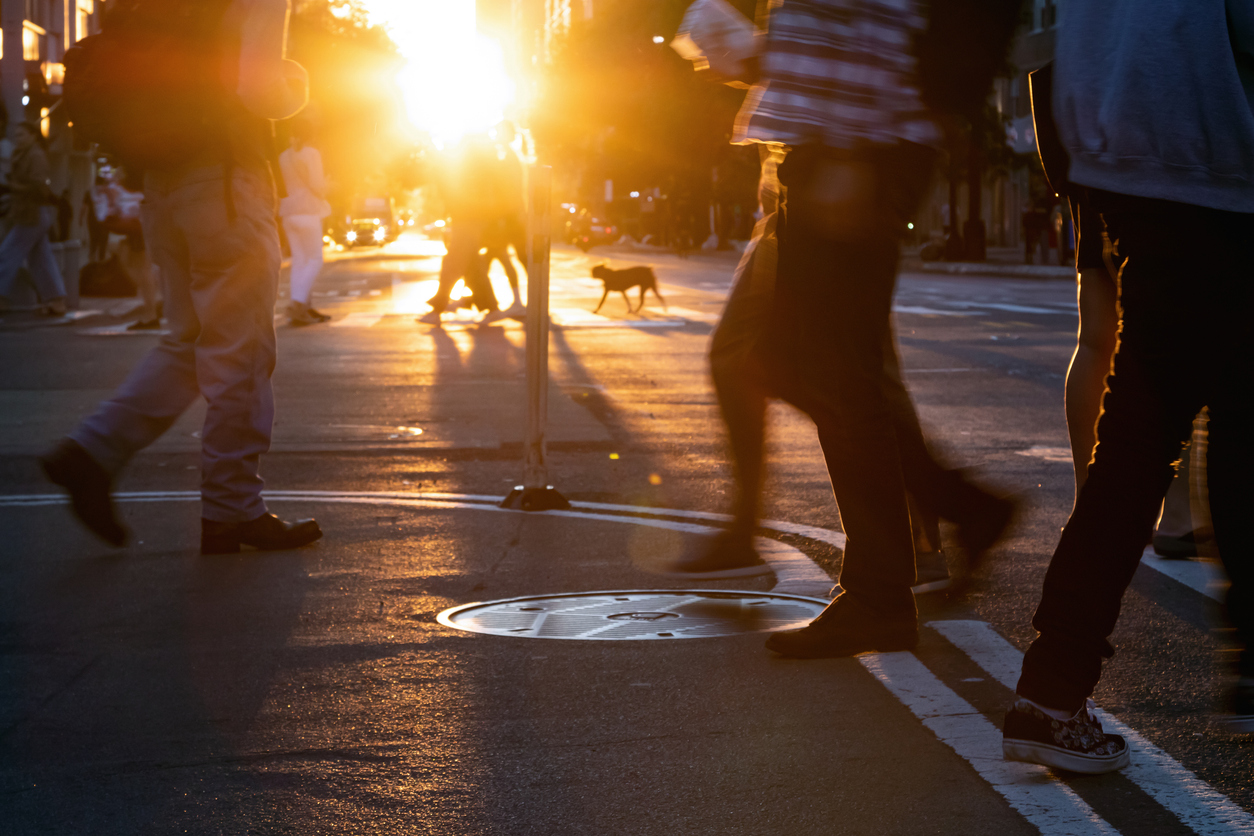
Biking for Dollars: Don’t Kill the Messenger
About These Stories
YC runs intensive nonfiction writing programs for teens in New York City, where they’re mentored by a professional editor to write personal stories about their lives and about issues that affect young people. Their stories are then published and read by thousands of teens, educators, policymakers, and other adults who work with and for young people.