
What are our textbooks like in New York City? “Yo, them joints are horrible, I mean horrible, ripped up, tore up, straight up gum in it,” said Richard Cummings, 16, an August Martin HS junior. “They are just nasty.”
“My biology books are missing pages,” said Shariq Abbas, 17, of Jamaica HS. While some textbooks at his school are OK, he said, including new science and math books, others are old and in bad shape.
Sometimes it’s not just pages that are missing, but the books themselves. In my AP history class last year at August Martin, there were stampedes for our textbooks because there weren’t enough to go around.
We sat on the edge of our seats, waiting until the teacher told us to get a book. Then we ran to the cabinets at the front of the room. Only a few books were in good or fair condition; the rest were either worn, torn or food-infested.
Ongoing Vietnam War?
It’s not unusual for students in New York City public high schools to get old or barely functioning textbooks. A 1996 New York City Council report found textbooks so outdated that one school still used a 1975 history textbook that mentioned “the ongoing civil war in Vietnam.”
The City Council report concluded: “Students are using outdated books, torn books, or are forced to share books with other students.”
Responding to the City Council report, Mayor Rudolph Giuliani allocated $70 million for textbooks in 1997, double the usual amount, though not all that money went to public schools. The extra money helped, but didn’t solve the problem.
How Can We Compete?
What’s so bad about old textbooks?
“When we have books with missing pages we can’t do our homework,” said Shariq. Students may not notice pages are missing until they attempt an assignment at home.
Even if a textbook has all its pages, if it’s old, the information on those pages may be outdated.
“With the history books, the world is changing so rapidly, how can you base [your knowledge of] the world on something outdated,” said Shirley Murray, a budget analyst at the New York City Board of Education. “If we are in competition with other schools, the ones with more information will do better.”
New Books Teach Pride
Students who have new textbooks may also do better because new books show them their education is important.
Having students “trusted with new updated textbooks instead of old, worn out, graffitied books” can help to build students’ “sense of pride” in themselves and their education, said August Martin principal Geraldine Taylor-Brown.
Giving students shabby books “says something about how you value a child,” said Jessica Garcia, outreach coordinator of the Campaign for Fiscal Equity (CFE), an organization that fights for more funding for city schools. “It tells them that they are not good enough.”
Students Don’t Return Books
But some people suggest that if students had more respect for education in the first place, the textbooks wouldn’t be such a mess. If textbooks end up in bad shape, said Savittre Beria, 17, an August Martin senior, it’s the students’ fault.
Schools should enforce a high penalty for missing or destroyed books “to make the students take better care of them,” she said. Savittre added that most textbooks she’d used were fine.
Taylor-Brown agreed that students were also partly responsible for the textbook shortage. Some students, she said, take the books home and never return them. “Students [need to] understand that the books are ours, not theirs, and return them,” she said.
But most people point to the New York City school budget for the problems with our textbook supply.
We Need More Money . . .
According to the CFE, “the level of funding has been inadequate for years, making it impossible for the schools to purchase and maintain an adequate supply of books.”
For example, most state funding for textbooks comes from the New York State Textbook Law (NYSTL), which covers hardcover textbooks as well as other types of instructional materials.
Five years ago, the NYSTL allocated $35 per student. The city government called that inadequate, especially as students use four or five books a year. The 1996 City Council report recommended increasing the NYSTL amount to $100 per high school student.
As of the 1999-2000 school year, though, the NYSTL was only giving the city $41 per student.
. . . NY Supreme Court Agrees
In 1993, the CFE sued New York State, which is responsible for the education of its residents, saying that the state was shortchanging students in New York City schools.
In January, the CFE won its lawsuit. Justice Leland DeGrasse agreed that the state needed to give more of its education money to New York City schools. He ordered the New York State legislature to come up with a new way to fund schools that would be fair to all students in the state. (For more on the CFE lawsuit, see p. 21.)
Textbooks are only a tiny part of the entire New York City Board of Education budget, which comes to $11 billion this school year. About 45% of that money comes from the state, 45% from the city, and about 9% from the federal government.
Dividing Up the Money
The Board of Education’s Murray explained how it distributes the money. “First the Central Office allocates it to the school districts, then the districts allocate it to the schools,” she said. She explained that the amount of money given to a school is based on the number of its registered students.
New York City has 35 school districts and each district divides up its money. Even at the district level, though, CFE’s Garcia says, “Funding is unequally distributed.” Some schools in one district may get better materials or equipment than others.
Also, schools where the students come from richer families often raise extra money to improve their schools’ textbooks and other resources. But what about schools in poorer neighborhoods?
Getting Books Donated
“We should ask private companies to donate [books] or give us funding,” said Antonio Benjamin, an analyst at the Board of Education. The companies could get tax breaks in return.
He suggested that publishers give schools older books they have in stock, which would at least be an improvement over what some schools have now.
Another way to get better books is to write to your district superintendent or your City Council representative.
Markquis Owens, 17, a senior at August Martin HS, said that his politics class got “new, up-to-date” textbooks because, “We wrote to our councilman and we [got] new politics textbooks donated.”
Teacher Buys Her Own
Some teachers take the problem of bad books into their own hands. Margarita Chew, Italian and Spanish teacher at August Martin, buys her own textbooks most of the time.
“What is available in school is not appropriate or outdated,” she said. So, “every year I supply myself with materials for my classroom.”
Many people believe that public school students shouldn’t have to count on private donations or teachers using their own money to get decent books. The CFE, the Board of Education and the city government are hopeful that New York State will make its school funding fairer for New York City students, as Justice DeGrasse ordered.
But Governor George Pataki says he’ll appeal the decision, so there may be more fights before we get our fair share.
In the meantime, the extra money the city government budgeted for textbooks in the last few years has made a difference. Although my current economics textbook talks about “life today in the Soviet Union,” several other classes at August Martin got brand new textbooks this semester.
Maybe next year’s history students will only know about stampedes from reading about the buffalo in the Great Plains, and not from personal experience.
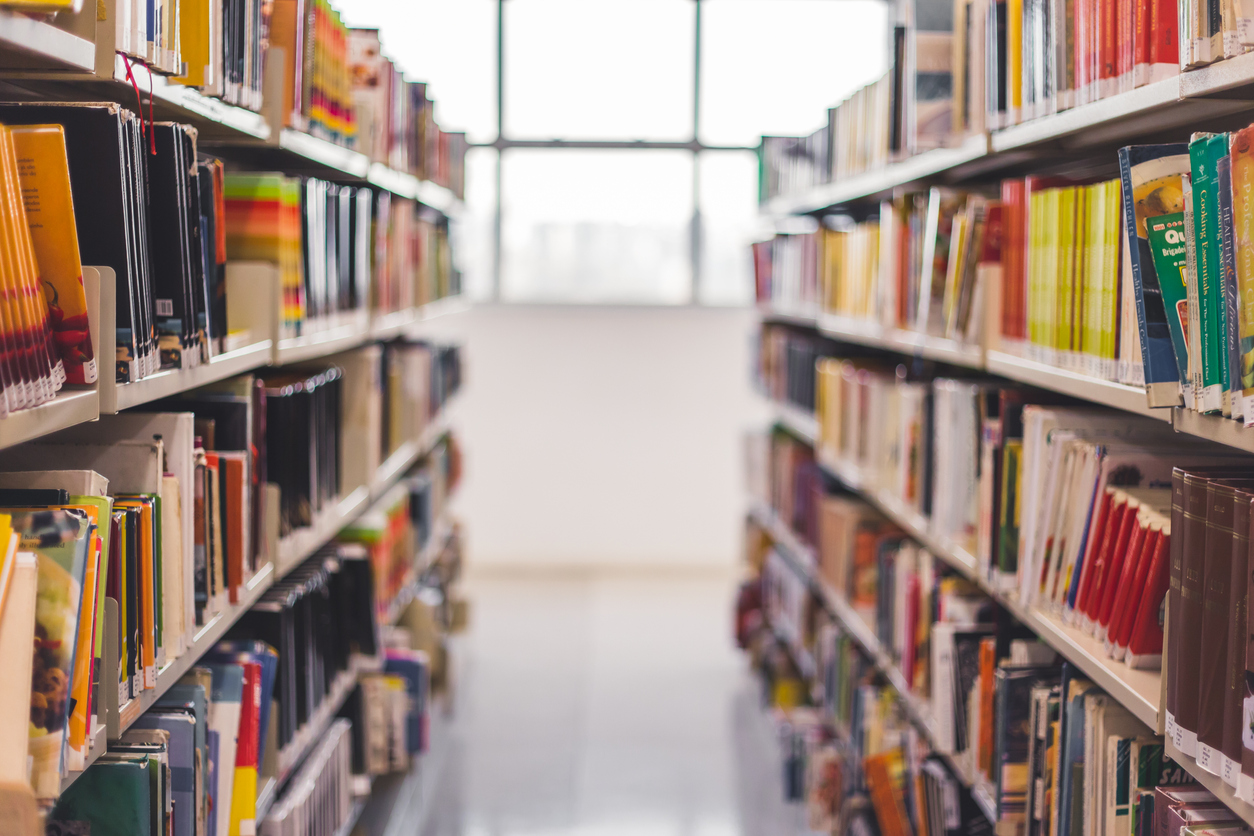
All Tore Up
About These Stories
YC runs intensive nonfiction writing programs for teens in New York City, where they’re mentored by a professional editor to write personal stories about their lives and about issues that affect young people. Their stories are then published and read by thousands of teens, educators, policymakers, and other adults who work with and for young people.