
Growing up, I was always getting into arguments with males about everything from a flower’s color to the best baseball team. I always felt a constant need to challenge men or to prove myself to them. Maybe it was because of the double standard that I saw in my family, like the way my mom did all of the cooking and cleaning while my dad lay in bed, or the way my little cousin was able to brag about his girlfriends and stay out late when I couldn’t.
One afternoon, I was out with my 6th grade class on a trip to an indoor pool. My teacher had invited his girlfriend and after we had gotten out of the pool, he offered to buy her ice cream. “Why can’t she buy her own ice cream?” I said. His chivalry annoyed me because to me it was as if he was trying to imply that she didn’t have her own money.
“I was just trying to be nice,” said my teacher, smiling. It probably made it even funnier to him that I was only 12 years old.
“I bet she can buy her own ice cream. She probably has money,” I replied very matter-of-factly. He and his girlfriend chuckled at my sassiness. I didn’t think it was funny at all.
Most of my life, challenging society’s norms and double standards was just something I did. It didn’t seem to represent anything bigger. But last year, something changed. I started to see myself as a feminist.
A Teacher’s Influence
I had never heard the word feminist before, but somehow I knew what it meant. I had a teacher who had a vibe that just gave off independence. She would always stand up for the girls if they were being treated unfairly. And unlike some teachers in my school, she would never shy away when a man was in her presence.
I wrote a paper for her class about a band I liked called Odd Future Wolf Gang Kill Them All, which had a lot of songs that were derogatory toward women. Part of me knew their lyrics were offensive but I didn’t pay mind to it. I liked their outlandish music and behavior because it showed that they didn’t care about what people thought about them. But when my teacher gave my paper back, she had written: “Why do you listen to this music if it degrades women? I thought I was teaching you to be a feminist.”
I just giggled about what she said and when she walked past me she gave me a look that meant that I should know better. When I thought about it, I knew she was right. I felt like a hypocrite for being so into women’s rights while listening to music that degrades women.
After that, I began thinking of myself as a feminist. My teacher’s comment opened my eyes. I felt like I had a responsibility to defend my rights as a woman. It almost felt like my part-time job to do so.
My Version of a Feminist
I began to take more pride in being a woman and even carried myself differently. I would walk with my head held high and I stayed away from clothes I thought were exposing too much skin. When boys made comments about my butt or another part of my body, I would tell them that was no way to speak to a lady and they weren’t doing me any favors by talking about my body parts. Before, I would just brush that off or even accept their remarks as compliments.
At first, I worried that being a feminist came with requirements about what you could and could not do- like never allowing a man to do you a favor you could do yourself. A lot of these thoughts came from my own misconceptions and stereotypes.
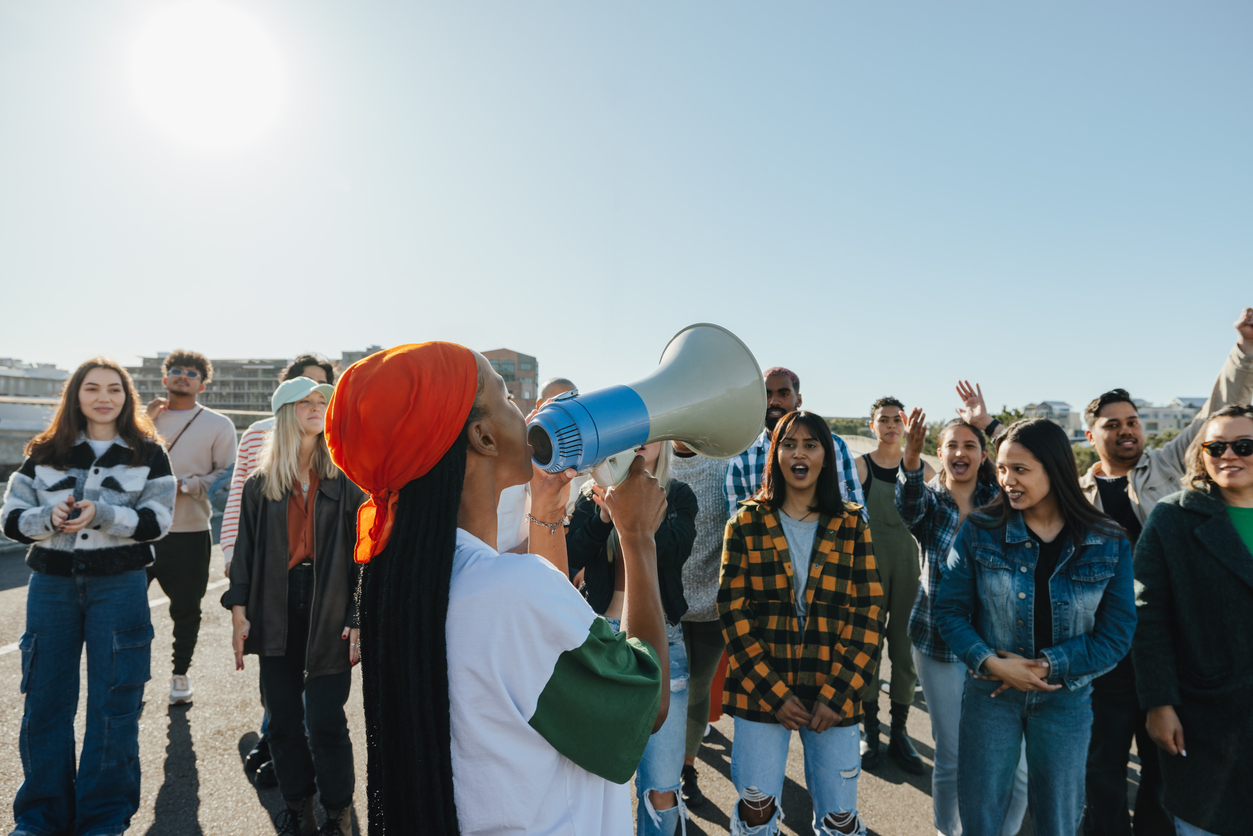
I used to think that feminists are all angry women who hate men and stand outside the offices of politicians with signs about being pro-choice. I don’t think of myself that way. I could never hate men and I’ve never participated in a protest. But I’ve realized that not all feminists are going to think and feel exactly the same. Like the author Rebecca West once said, “I myself have never been able to find out precisely what feminism is. I only know that people call me a feminist whenever I express sentiments that differentiate me from a doormat, or a prostitute.”
When I did some research, I read about one woman who claimed she knew she was a feminist when she left her conservative church to live a different kind of life. Another woman said she knew she was a feminist when she became a firefighter. What unites us all is the belief in equal rights for women.
Now, I see that I don’t have to turn my back on everything fun or become a militant to be a feminist. When I became more informed about feminism, I was able to make my own decisions about what I should and shouldn’t do.
My Dominican Dad
Still, it’s hard to speak up as a feminist in my family. I come from a Dominican culture that is male-dominant. Still, sometimes I’ll try to make a point when I see something that bothers me. For example, if my dad asks my mom to bring him something, I’ll tell him that is no way to talk to a lady. He speaks as if he were speaking to a child, throwing his words around. He asks for things he can easily get himself and when he gets them, he always has something to complain about. His excuse is always that he pays the bills so he gets to act the way he does. When I challenge him, he always tells me that I need to respect him because he’s my father or he tells me to stay out of adult business.
Once, I brought up how unfair it is that he asks my 11-year-old cousin about his girlfriend all the time but I’m not allowed to have a boyfriend, even though I’m 15. He just thought I wanted a boyfriend, when in reality I was trying to call him out on his sexist ways.
Sometimes I see men yelling at women on the street, or giving them dirty looks because of how they are dressed. It makes me angry and frustrated. But as much as I’d like to help, I don’t feel safe speaking up on the street, so I usually brush it off. I can accept the fact that I am powerless sometimes, but I won’t let that that stop me from taking opportunities to speak up in the future.
To me being a feminist means I speak up when I feel something is wrong, but I also know how to pick my battles. It means that I am equal in strength, power, and dignity to any other person in this world. In the future I want to work to change the double standard. I’m not sure exactly how-maybe I’ll join a feminist organization. But right now, I guess I’m still in the process of trying to define myself better-as a feminist, and a person.
Defining Feminism
I'm equal in strength, power, and dignity
About These Stories
YC runs intensive nonfiction writing programs for teens in New York City, where they’re mentored by a professional editor to write personal stories about their lives and about issues that affect young people. Their stories are then published and read by thousands of teens, educators, policymakers, and other adults who work with and for young people.