
The tangible legacy my father left is small. Pakistani rugs cover the floors of the apartment I share with my mother, richly dyed and painstakingly patterned by hand in some far-flung mountain village. Pakistani spices line the walls of our kitchen, their colors seemingly drawn up from the rugs, their flavors a reminder of a culture that my father gave me. The bookshelves are filled with volumes on the sociology of labor in the Middle East, imperialism and orientalism in the subcontinent, and Urdu poetry.
Sometimes I open up the books of poetry and look at the beautiful characters I cannot read, just enjoying the artistry of the writing. Sometimes I take down my father’s dissertation on criminality in India, bound in a blue cover, his name printed proudly down the spine. It’s so strange to leaf through the pages, to be in a conversation with a father who lives tens of thousands of miles away, in a different world and a different life.
Brilliant but Troubled
My father was a brilliant, loving, strong man-or so my mother tells me. She also says that my parents were the ideal couple for 20 years, completely supportive of and in love with each other. And then, and I really am not sure how or why or when, my father started drinking. It was not until after I was born. For the first few years of my life (when we all lived in Pakistan), everything was fine. When we moved back to New York, my mother says there were no issues at first. But around the time I started elementary school, my father went from a heavy drinker to an alcoholic.
I’m their only child. I remember making little paper signs that read “Abba [Urdu for dad], please stop drinking!” and posting them all around our apartment. When my father came home and saw them he just looked at me sadly and said, “It’s not that simple.” I didn’t understand why, though. If he wanted to stop, he should just stop.
Fights between my parents reverberated through our tiny kitchen. I remember my mother’s icy tone as she told my father: “Choose me, or the bottle.” I hated the fights, because I was always too close. Our apartment was too small to get away from anything.
My mother did everything she could to try to protect me and fix my father. My father went to Alcoholics Anonymous meetings, and even two or three different rehab programs. I remember visiting him in one and not really understanding why he was there. Whenever he left I somehow assumed that he had gone on a “business trip.”
And when he started leaving for longer and longer periods, living in Pakistan for months a time, I kept up this illusion. But it took a serious toll on me. I was constantly anxious, often depressed, and had trouble sleeping.
One night my mother left me alone with dad and went to visit a friend. He became more and more intoxicated, there in the house with me but mentally somewhere far away. He sat and stared like a zombie. Eventually he came around somewhat and we tried to eat dinner together, but he was too messed up to put anything edible on the table, and I was too frightened to stay in the same room as him. Terrified, I hid under the covers of my bed and cried. When the sun came up in the morning and I was able to get away and out of the house, I felt elated. It was one of the worst nights of my life.
My father was never physically violent. He was an intellectual drunk. He could think and argue while very intoxicated. He could spout the most insane stuff about how my mom had wronged him or why he was right about an issue and actually sound credible. You could call it reasoned insanity. And to me, that paradoxical form of drunkenness was horrifying. It took one of his best qualities-his intellect-and twisted it into something malicious and damaging.
It was unpredictable. He would be very sane and calm one moment, and then sink into madness for a bit, and then be fine again later.
I’m not sure I would’ve survived without my mother. It’s only recently that I fully realize how much she did for me. She said to me, “For years I was trying to put the pieces of you back together.” She did a fine job with me, but she couldn’t save my father, and ultimately she kicked him out. He went to live in Pakistan when I was in 2nd grade.
Painful Visits
From then on I saw my father more and more infrequently. At first we would visit Pakistan every two years or so. But as time went on the gaps increased and at one point it had been four years. Then his green card expired, and it took him nine years to get a visa. Once he did, he decided to come back for a visit. I was a sophomore in high school.
I felt more anxious than excited, although my mother seemed to hold out some hope. She had known him in a way that I missed out on, so while I saw mostly negative possibilities in the visit she saw more potential for the positive.
The visit was certainly emotional, and he did get drunk and cause trouble sometimes, but it went smoothly overall. He was only here for a few weeks and despite the rough patches, I hoped for more contact in the future.
But when he came back in my junior year, it was awful. It was a longer visit and he couldn’t maintain himself. New York contained too many memories of all that he had lost and abandoned. And something had changed over the year. He had always been a bit messed up but now my mom thought that he was mentally ill, not just alcoholic. It seemed that way to me too.
He kept extending his trip, trying to stay indefinitely, but then he wouldn’t do anything all day but stay alone in the study, where we’d made up his bed, and drink. In the evening he would rave, literally start shouting about how God was punishing him and about his misery. He would fight with my mother, constantly picking at her with crazy arguments about how she had abandoned him and how she hated him.
My Father’s Therapist
During this crazy visit, my mother was so, so good to him. She told him that she loved him, would always love him, but that their old relationship just couldn’t exist anymore.
Some kids have parents who beat them, and then when they get older suddenly they can physically stand up to their parents. For me it was the same effect, but mental rather than physical. When the arguments started getting out of hand I would shout down both of my parents. I’d try to restore a little bit of order and reason and stop them from saying hurtful things. I’d tell them why they were being unreasonable or foolish and then try to get them into different rooms.
When my father was going crazy in his room sometimes I’d sit down next to him and try desperately to reason with him. I’d act so calm, so collected and together, so rational. I’d act like I was fine and just having a chat with him, and slowly I’d try to bring him out. I wanted him to realize how much support was available for him and also how much so many different people cared for him. In his madness he felt abandoned and alone, and that wasn’t really the case.
Those “therapy” sessions (as I thought of them) were emotionally and mentally draining. Instead of standing up to my dad physically, the way I asserted myself was by displaying a mental superiority: by controlling myself and my emotions, I tried to be “the better man” and actually help my dad.
It would’ve been much easier to get into a fistfight. I had to dig deep to find the strength to try to help this man who had done so much harm. I guess I wanted to get a glimpse of the man my mother told me about, to help him toward his old self.
Pushing Myself to “Win”
All of this was in addition to the stress I was under in school. I took my school’s toughest course load by maxing out my credits and taking the hardest classes, like college-level calculus and political science. Between derivatives and Kant I had my hands full academically, not to mention the fact that I had athletics practice around four times a week. It was insane, and the work I put in to maintain my academic standards while simultaneously dealing with the home situation and staying in shape for sports pushed me in a way I’d never been pushed before.
The night before my first calculus exam things were so bad at home that studying became impossible. I didn’t want to leave my mom alone but she convinced me that I should go stay with my cousins in Brooklyn for the night, which I wound up doing. Suffice it to say I didn’t do too well on that exam.
But the struggles I faced made me even more determined. I vowed that I would succeed in school and in my extracurriculars. I would do my best to protect my mother and help my father, and I would not let any of the chaos stand in the way of my goals. I would survive my father. Having such a troubled father was oddly motivating. I was so dead set on proving to myself that I could “win” in the end that I tried my hardest at everything I set my mind to.
Forgiveness
But neither my mother nor I could help my dad. He was too far gone. That visit was terrible for me and my mom. We were afraid of going home after school or work, knowing what awaited us. But for my dad I’m pretty sure it was just hell. He had to go, not only for us, but for his own health. New York had too many triggers for his insanity.
Mom rallied his old friends and together they managed to get him a plane ticket, clean him up (literally, since he refused to leave his room for days at a time), and give him an ultimatum: Either he left, or he was going to be thrown out of the house.
Three months after he arrived, he left. On his last morning here, he stayed sober. I didn’t want to spend another second around him, but I also felt an obligation to finish things right. He seemed like a sad, done, broken man, kicked out of his home, absent from the son he loves, turned away by a woman who once loved him, and kept from his full professional and intellectual potential. So I let him walk me to the subway.
Such a small thing with such a big implication: forgiveness. As we walked to the subway the sun was coming up over Central Park, and it was pleasantly cool. It was quiet. Calm. Not like the last few months.
At the subway station, I realized this would be a serious goodbye. I wasn’t sure if I ever wanted my father to come back to the U.S. again. But he has also given me a lot, if not by being with me, than by everything he represented to me.
He gave me a love of learning and intellectualism. Apparently, he was reading The New York Times to me when I was two weeks old. He taught me to cook as a toddler; I would chop vegetables with dulled knives at his side. He taught me to love the power of my senses, to enjoy food, music, and the outdoors. Loving the mountains runs in the family. Ironically, he taught me how to be fair, to compromise and be reasonable. He taught me that life isn’t always simple. He gave me my Pakistani cultural heritage.
The Best I Could
And even his alcoholism taught me strength. Through my fear, I taught myself to be brave. Through my anxiety, I taught myself to be confident. Through my struggle, I taught myself how to succeed, and never back down from a challenge. I guess you could say I learned what it means to be a man: to have ambition without selfishness, to have strength with sensitivity and understanding, and to be tough while retaining the ability to love.
But here at the end, I still couldn’t say I had “won” my fight. It’s true that I finished the semester with an A- average, that my mother and I both came through the fight whole and sane, that I had become a stronger person myself. And yet I couldn’t save my father.
So I did the best I could. On the steps of the subway I told my father that I wasn’t angry with him, and that he hadn’t hurt me. I forgave him. I made sure my father knew that his son didn’t hate him. Maybe I even gave him some hope.
As I turned away and walked down the steps into the train I knew what it meant to be strong, and to do the right thing, and to help someone. Perhaps I knew, just a little, how my own father must have felt when he comforted me, a sleepless, anxious child, so many years ago.
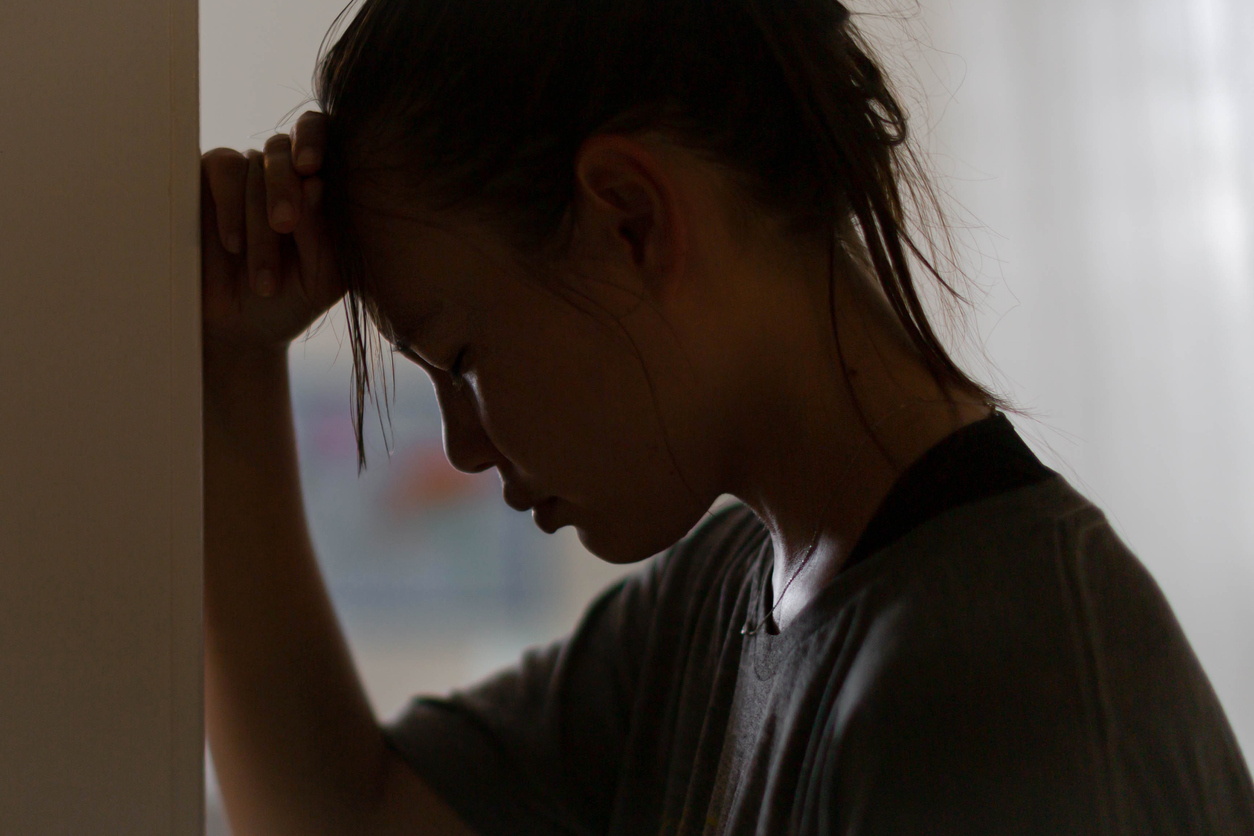
Losing My Brilliant Dad to Alcohol
About These Stories
YC runs intensive nonfiction writing programs for teens in New York City, where they’re mentored by a professional editor to write personal stories about their lives and about issues that affect young people. Their stories are then published and read by thousands of teens, educators, policymakers, and other adults who work with and for young people.