
I never gave my weight a second thought until I was 9, when my parents sent me to a summer camp in upstate New York for one month. All summer I listened to the kids insult me about my weight.
“We can’t let you on the bus. You won’t fit and we’ll crash on our way.”
“If you swim, you’ll eat all the fish and drink the whole ocean.”
I felt like crap when they teased me, and usually I made a joke to take attention away from my weight. Or I’d make excuses, saying, “I’m not really fat. I’m just working out right now and need the extra weight to turn into muscle.” When they didn’t let up, I’d hit them with the hardest comeback I could, depending on what I knew about the kid who was teasing me, like: “Well, I’m not the one with no mom.”
But sometimes I’d stay quiet, thinking, “He’s right and I should be listening to him.” I mean, I knew the kid was being mean, but I got the message loud and clear: being fat was unacceptable.
Bullied and Teased
Today I know those kids who teased me were bullies, but back then I was so sad because I thought they were right. “How come I’m fat and I can’t do anything about it?” I thought. “I should be doing something.”
After summer camp, I started 4th grade believing I was the fat kid because I had the big stomach and the boobies. I hated it because the other guys, the thin ones, were always jumping around and hanging out with the girls. I was always left out and I thought it was because of my weight.
Fortunately, I found some friends in that class who didn’t judge kids who were different. They weren’t fat, but they made me feel like my weight wasn’t a problem.
But after school, I only thought about my weight. I weighed myself and looked at myself in the mirror three or four times a day. I used to walk on my toes around the house so I wouldn’t hear how heavy I was when I walked. I’d lie down on my back and stretch really far, so it looked like I had no stomach at all.
Overpowered by Food
In Eastern Europe, where I was born, bigger was always better and food was the center of the family. So I ate a lot at home. And the food was hearty, tangy and fulfilling. I especially loved my mom’s special beef stroganoff recipe-strips of beef, beef stock, onions, mushrooms and ketchup. Let me tell you, the entire dish was always gone within two hours, all because of me.
My grandmother always believed that I was too skinny for my age. At my grandmother’s house, seconds and another helping for home were a must. The food was delicious and there was so much of it. I felt I was helping out by eating more so it didn’t go to waste.
I don’t want to put blame on everyone else, but the family food thing just overpowered me. And I’ve always liked more and more food, ever since I was a little kid. I felt that most people would put some food in their mouth and chew it over slowly, to get all the taste out of it. I shoveled: a little of this, a little of that, a little more and when the plate was empty, I got more. I ate food like I breathed air.
‘What’s Wrong With Me?’
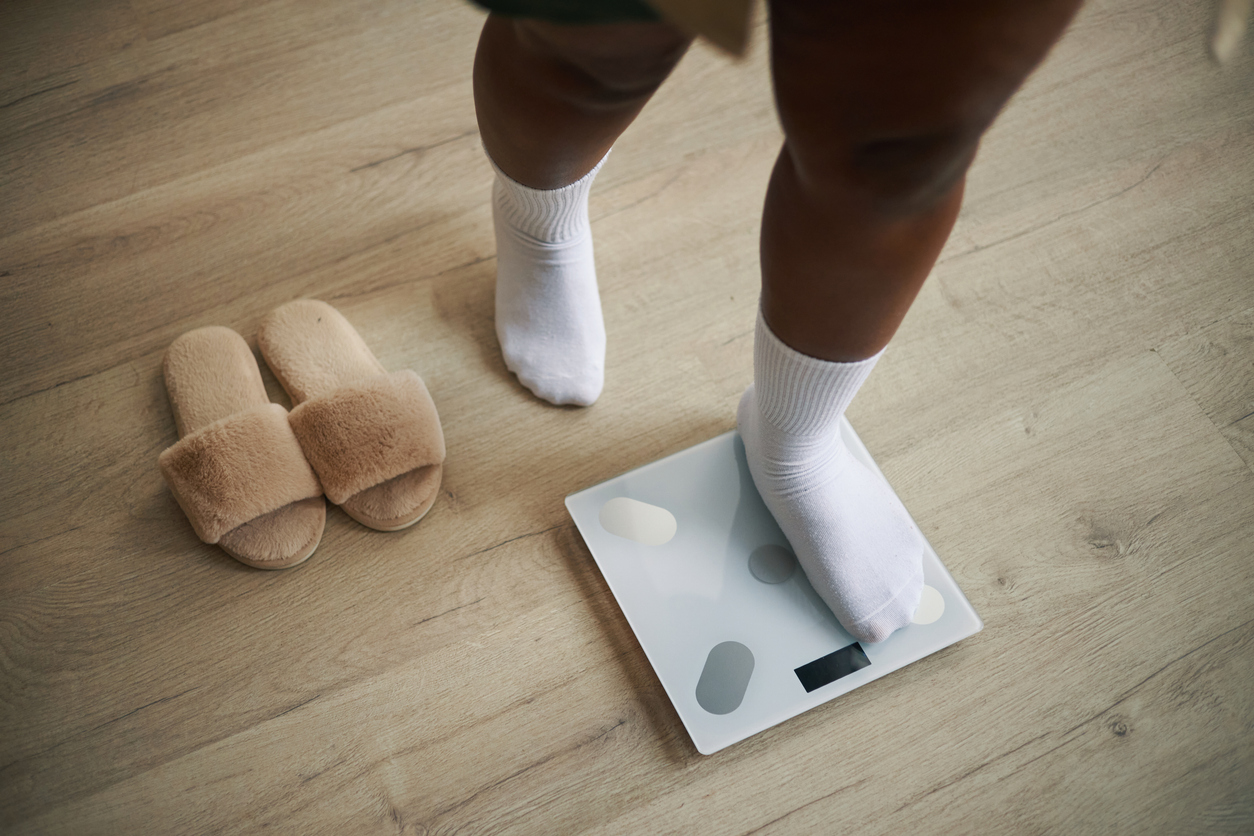
When I was 13, I looked at my scale and it said “134 pounds.” I was only about five feet tall and I couldn’t believe how enormous I was. I wasn’t just fat. I was huge. It was right there under my nose.
I didn’t understand why I was fat. I thought, “I was always so nice to so many people-why would God let me become so huge? ” Of course he didn’t answer me and I wondered what was wrong with me. Because of my weight, I felt ugly and lonely.
I didn’t ask my parents for help with my weight, but I wish they had noticed and helped me do something about it. They could have helped me learn to stop when I was full so I wouldn’t eat so much. If they’d only taken the food away from the table when we all had enough. But they didn’t. When I was 14, my mom and dad just said, “Son, you’ve gained so much weight and you should lose it.”
I eventually learned that there was a chart called the Body Mass Index (BMI) which showed you how much you should weigh depending on your height. I learned I was 50 pounds overweight for my height.
By the time I was 15, I decided it all had to go. I saw on TV that celebrities were losing weight by becoming bulimic or anorexic. I had no idea what that was, so I researched it online.
Then I starved myself as much as I possibly could. It’s called anorexia and it was simple: you don’t eat, so your body must eat itself (meaning its own fat, which I had plenty of).
I only did it for about three months, but oh man was I slimming down. I only ate bread and drank water every day, and I lost 40 pounds during that time. But my stomach felt as if a gremlin was inside and he was pushing and scratching at the walls to get out. Still, I loved the way I looked.
Angry at Myself
I also tried bulimia, which is essentially binge eating (overeating) followed by vomiting everything I’d just ingested. Once when I was 16, my grandma and I bought a huge amount of food at a Russian delicatessen. When it was all heated, I turned on the TV to The Simpsons and ate it all. I went into the bathroom, like I’d done so many times before, and blew it all out.
Throwing up was simple. Two fingers down the throat and out came all the crap that I regretted eating. But when I was done, it was disgusting. I smelled like throw up and my eyes were red from the pressure they’d just endured. I did it at least seven times a week.
Soon, I was throwing up almost all of my meals and I hated myself for it. I wanted to feel full and happy and eat things in moderate proportions. But I didn’t think I had the strength to lose weight slowly by eating right and exercising a little every day. My feelings about the weight I was losing overwhelmed my feelings about how I was doing it.
Bulimia Defined Me
Bulimia began to define me, and I did it until I was so skinny that I thought I was beautiful. I used to look at myself in the mirror and I had no boobs and almost no stomach and everything was tight.
My parents thought it was great, but they didn’t know how I was losing the weight. I lied to them and said I was simply exercising more often.
My parents never knew I was starving myself or throwing up my food, but I knew I couldn’t practice bulimia for my entire life. I knew it would have killed me eventually.
The Right Way
So once I was happy with my weight, in the summer of my 16th year, I decided to stop throwing up. It was much easier to eat and sit than to eat and throw up. Of course, without controlling what or how much I ate, I couldn’t keep the weight down. By the time I was 17, I’d gained all of it back.
Now that I’m 18 years old and living on my own, I’ve decided it’s time to take control of my body and my diet. I’m six feet tall and I weigh 230 pounds. My ideal weight would be 175 (that’s what I weighed when I was 16). That’s 55 pounds to lose.
I know that to lose weight in a healthy way, I need to stay away from all the bad food out there. I could also eat slightly less when I do eat it. I could substitute sugary drinks with tea and water. And I’ve learned that things boiled or grilled are much healthier than frying. But I’m still not sure if I’m ready to change my eating and exercise habits to lose weight the right way.
I Won’t Go Back
When I was offered the opportunity to interview Dr. Melissa Nishawala, an eating disorders specialist at the NYU Child Study Center, I happily accepted. I knew I wasn’t going to venture out on my own and find out the facts about eating disorders. I decided to interview the psychiatrist mostly for my personal benefit.
She told me that anorexia can actually cause the brain to shrink. It also causes the body to shut down the production of white blood cells, which fight infections in the body. Bulimia can reduce the amount of potassium in your body, which can affect your heart rhythm and can kill you. Throwing up also damages your stomach and esophagus and could lead to them rupturing.
When I asked her if either disease could kill you, she said, “Both can be deadly, absolutely-10% die or maybe even more.”
After talking to Dr. Nishawala, I decided that I’d never vomit or starve myself again. And I will warn people about the dangers of the disease. It’s a self-inflicted disease and one of the dumbest things I ever did.
It wasn’t that she gave me tips or ideas to stay healthy. It’s that she convinced me that anorexia and bulimia would destroy me. And do I want that? No, I don’t. I do not want to become the skinniest man in the graveyard.
Skinniest Man in the Graveyard
My eating disorder put me at more risk than I realized
About These Stories
YC runs intensive nonfiction writing programs for teens in New York City, where they’re mentored by a professional editor to write personal stories about their lives and about issues that affect young people. Their stories are then published and read by thousands of teens, educators, policymakers, and other adults who work with and for young people.