
Rainbows are beautiful products of nature. People admire them and describe their colors as one harmonious spectrum. Few people would describe them as individual blocks of different colors existing side by side yet separate. But if you think about it, that’s what they are.
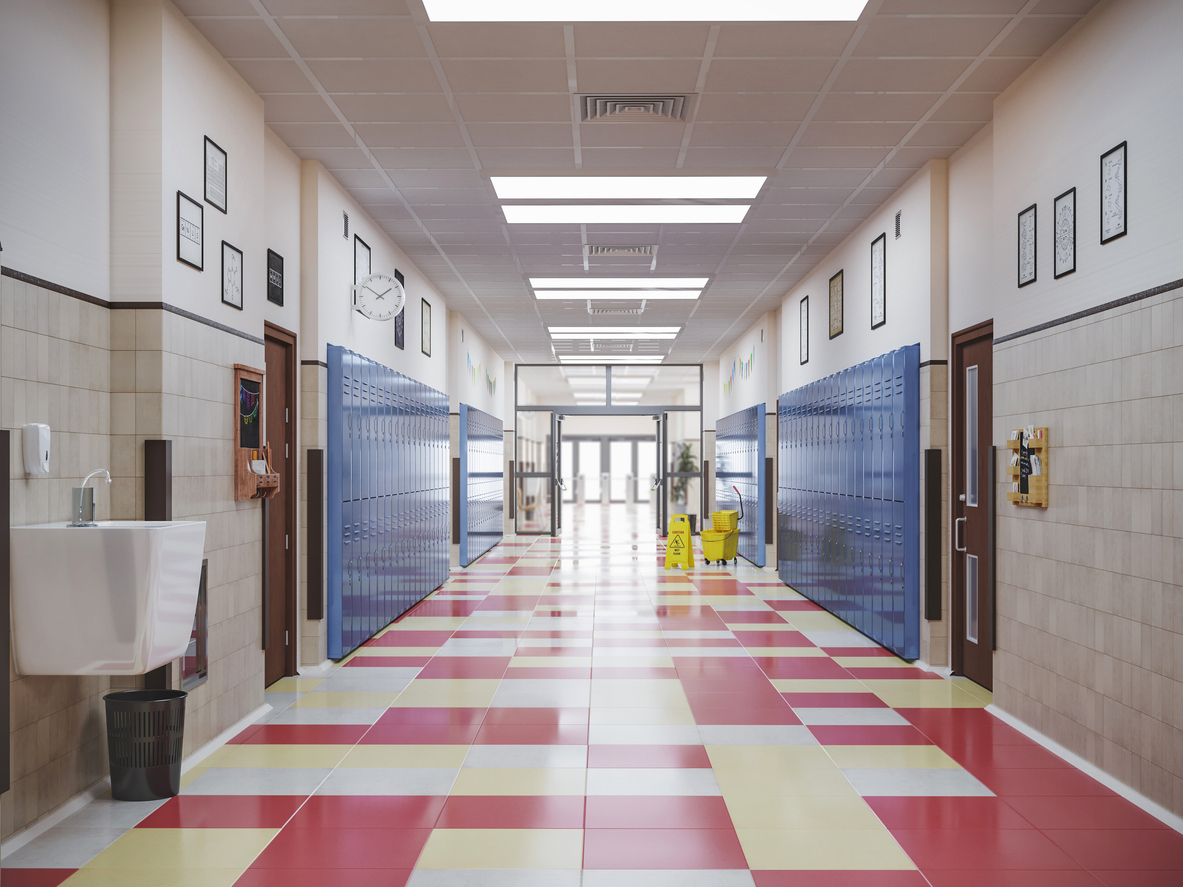
My school building is a 10-story rainbow where we exist together as Stuyvesant HS students but separate ourselves according to race and ethnicity.
‘Wrong Floor!’
When I started as a freshman nearly four years ago, I quickly realized there weren’t a lot of black people. On my first day, a black girl came up to me, introduced herself as a senior and invited me to come up to the 5th floor at any time. She told me that’s where all the black people were. I made my way up there later in the week and found she was right.
There was a group of black and Latino kids sitting around in the hall, laughing and playing cards with the rare glance at a textbook. I learned that there were other floors just like this in the school, each filled with a different race or ethnic background, where students hung out in between classes and during their free periods.
There was the 4th floor for Middle Eastern students, the 5th floor for black and Latino students and the 6th floor for Asian students. The white students hung out on all of the other floors in separate clusters of their own, in a mix of ethnicities and religions. There were no signs labeling each floor, and no one was confined to these floors. It was a choice we all made.
The school administration didn’t encourage it but they didn’t exactly discourage it either. Once I even heard of someone being kicked off a floor based on race-not by a student but an adult. On Chinese New Year last year, some Asian students stayed home to celebrate, so there were fewer Asians on the 6th floor than usual. A few black and Latino students decided to try to “take over” the 6th floor for the day because they thought it would be funny.
While they were hanging out up there, a security officer came by and asked them to leave because, he said, they weren’t on “the right floor.” When I heard the story from another black student, we were both outraged. Still, no one ever questioned the security guard.
A Place to Fit In
I realize that people from other schools might look at our floor system and call us all racists. But I don’t think it’s racism. We don’t use the floors as our separate victory corners where we chant one race’s superiority over another. They are simply small communities.
In a school with more than 3,000 students where the minority population is very small, it’s normal for minority students to want to find a place where we feel comfortable, somewhere we can find people who are somewhat like us. Skin color is one of the first things that we notice, an obvious common ground.
But despite the separate floors, I’ve never confined myself to black friends at school. I’ve met people of all different races in my classes. In fact, I met one of my closest friends in my sophomore chemistry class. She’s white.
Bonding Beyond Race
Most of the time we hung out at dance club after school. But sometimes she’d come find me on the 5th floor. Because she was my friend, no one gave her weird looks or said anything rude.
And once we became seniors this year, we strangely stopped going to our floors as often. Instead, we started coming together as a class. We spend more time at the senior bar, an area on the 2nd floor where most of the seniors hang out, regardless of race.
I think we all mix together more senior year because after three years in the same school, we know and are friends with a lot more people of all different races. By our last year, everyone can hang out comfortably. Senior year we bond as a school, not separately as minority populations in a school. On the 2nd floor, seniors of all different backgrounds complete our 10-story rainbow.
A Floor for Every Race
About These Stories
YC runs intensive nonfiction writing programs for teens in New York City, where they’re mentored by a professional editor to write personal stories about their lives and about issues that affect young people. Their stories are then published and read by thousands of teens, educators, policymakers, and other adults who work with and for young people.