
Hurricane Katrina exposed a glaring weakness in the United States, supposedly the most powerful nation in the world.
While the rich fled New Orleans in their Jaguars and Rolls Royces, poor people were left behind. They didn’t have cars or money to get out of town. To avoid the rising water, some ran up to their rooftops, waving flags to get people’s attention and waiting anxiously to be saved. Many didn’t make it, drowning in their homes.
Since then, Americans have begun to focus more attention on poverty and the huge gap between the rich and poor in this country. I decided to learn more about poverty in New York City, what’s being done to fight it and how teens can help.
I interviewed Noemi Altman, a research and data expert at the Citizens’ Committee for Children of New York (CCC). It’s a non-profit organization that raises awareness about New York’s children and works toward ensuring that every child is “healthy, housed, educated and safe,” according to their mission statement.
Families Are Still Poor
Altman told me that in some ways, children’s lives have improved in recent years in New York City. There’s less overcrowding in housing and fewer kids get exposed to toxic lead paint. Nearly all children have health insurance because of government-funded healthcare programs. But overall, poverty has gotten worse in the city. On average, families have less income than they did a few years ago, more parents are unemployed and more families are applying for public assistance.
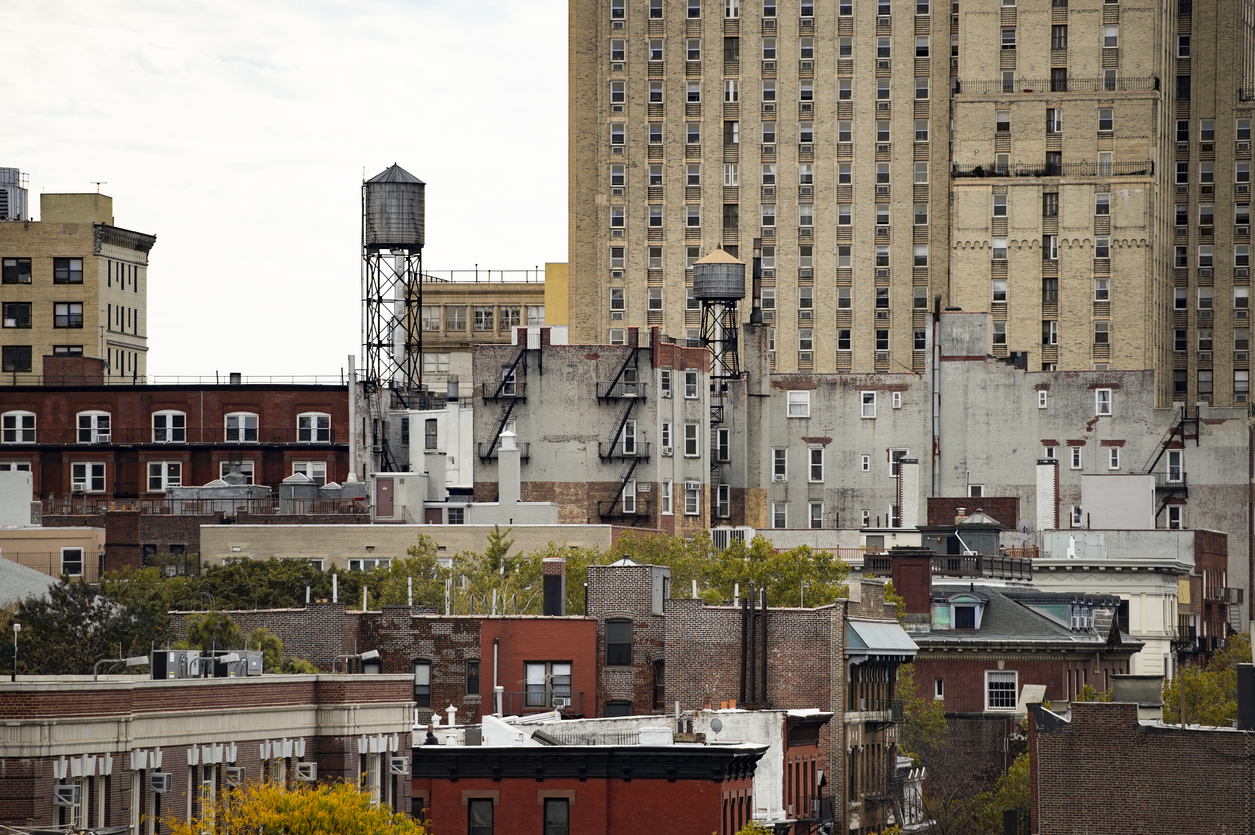
Many neighborhoods are stricken by poverty. Families with children living below the federal government’s poverty level-that’s $16,090 per year for a family of three-are concentrated in the Bronx neighborhoods of Mott Haven, Morrisania, Concourse/Highbridge, Hunts Point, University Heights and East Tremont, and in the Brownsville and Bushwick neighborhoods in Brooklyn.
But in a rich neighborhood like Battery Park/Tribeca, the median family income is $75,000 per year (median means half of the families in the neighborhood have higher incomes than $75,000 and half of them have lower incomes than $75,000).
Teens Drop Out
If we look deeper into the issue, we can see that teens living in poverty are suffering. Compared to wealthier neighborhoods, poor neighborhoods have a higher percentage of teens ages 16 to 19 who’ve dropped out of high school. In Bushwick, 22.3% of teens fall into this category. In Brownsville, the number is also high at 18.5%.
In contrast, Greenwich Village has only a 0.8% dropout rate.
Neighborhoods with a high poverty rate tend to have high teen birth rates, too. In Mott Haven, 18.3% of births in 2001 were to teen mothers. In Morrisania, the teen pregnancy rate was 17.7% and East Harlem’s rate was 17.6%.
Compare that to wealthier neighborhoods such as Battery Park/Tribeca and Murray Hill and surrounding neighborhoods, which both had teen pregnancy rates of 0.4%.
You may wonder what makes some neighborhoods so much poorer than other places around the city. There are several factors, Altman said.
Many Reasons for Poverty
“Until the problems of a lack of quality education, well-paying jobs, affordable housing, and other factors are addressed, poverty will continue to be an issue,” she said. “In some communities in New York City these problems are bigger than in others, and those are communities where we see higher levels of poverty.”
What can you do to help? Speak up! The CCC has a program called YouthAction NYC, where teens learn to advocate for children’s issues. To join YouthAction’s spring session, talk to your school’s community service coordinator or counselor.
There is also help available for teens struggling with dropping out of high school, pregnancy or any other issues.
The New York City Youthline is run by the city’s Department of Youth and Community Development, and it’s staffed by 16-to-24 year olds who can give you advice and information if you call 1-800-246-4646. You don’t need to give your name.
CCC keeps a database of information about poverty, education and other issues, available at online at www.cccnewyork.org.
Teens and Poverty
About These Stories
YC runs intensive nonfiction writing programs for teens in New York City, where they’re mentored by a professional editor to write personal stories about their lives and about issues that affect young people. Their stories are then published and read by thousands of teens, educators, policymakers, and other adults who work with and for young people.