
It’s a hot, humid July day on Manhattan’s Upper West Side, too hot to sit in the house. So my younger sister Ni and I venture out for ices.
The trip across the street to the ices cart isn’t long, so I leave on my white tank top and put on a knee-length denim skirt and flip-flops. Too busy trying to decide whether I want cherry or mango, I fail to notice him leaning against a building next to the cart.
“Damn Ma,” he says.
That’s a Compliment?
What’s that supposed to mean? Is that supposed to be a compliment? I instantly become unfriendly. He has the audacity to think I’m so simple. I roll my eyes as my face becomes rigid and mean.
“That boy’s calling you, Allajah,” says Ni, so innocently.
“Why does he have to say something?” I grunt to myself.
“Why you look so mean?” he says from under his oversized Yankees cap, so low that I almost can’t tell he’s staring at me.
“Do you know him from your school?” Ni asks, puzzled.
“You know why I look so mean? Because I don’t like you,” I say to myself.
I Can See It Coming
I am so weary of the idea that catcalls are an appropriate way to approach a girl on the street.
Catcalls can be tame, like “Pssss, pssss, where you live?” or outright dirty, like “Can you let me hit that?” It can be from one wanna-be-a-player guy on 125th Street or from a group of delusional schoolboys on Madison Avenue.
Sometimes I can see it coming. I can see him looking at me lecherously from halfway down the block and no matter how much I look away, he can’t hold back the comment that rolls off his tongue into my face.
“Damn, can I carry your bag?”
Or a dirty, raspy, “Hey sexy thang!”
And the common, “Can I holla atcha?”
Wanting the Fast Girls
But sometimes they come out of left field and take me by surprise, like the Parkchester police officer who says, “God bless you, girl,” as I pass him by. Street harassment’s becoming more and more a part of my daily life. And the older I get, the more it exasperates me.
Am I supposed to turn around and smile at you, delighted by your observation? Who are you looking for? The girl who turns around. The one whose standards aren’t too high. The one who’s sure to give you her number and go to your house the next day.
Those comments may work with those women, but not with me. I feel uncomfortable when I’m gawked at or commented upon. It’s degrading.
Feels Like I’m a Car Crash
It’s like I’m a car crash on the side of the highway, with men slowly rubbernecking their way past me so they can survey my every detail. I simply don’t respond, hoping they won’t keep bothering me if I ignore them.
My boyfriend attributes the catcalls to the way most of my pants fit. Not that my pants are skin tight, but they are close. Still, even if my pants were painted on, does this give the dirty man in the corner store permission to stare directly at my behind as if I was the last piece of cake on the dessert cart?
Or if my top is cut low, does this give my teacher permission to stare directly down my shirt like he dropped something down there? Just like it’s impolite to stare at the homeless or disabled, men shouldn’t stare at a woman as if she’s a movie poster.
Some Men Blame Us
Some men blame women for their harassment by saying that we dress provocatively and therefore want the stares and crass comments.
But that argument has no merit, because unless a women is walking down the street naked and screaming, “Come sleep with me!” what she wears is not necessarily an indication of what she wants sexually. Women wear tight pants and little shirts because we like them and they’re commonly in stores.
And sometimes women try to outdress each other by wearing sexy outfits. A woman may want to be a sharp dresser in order to feel better about herself and feel attractive, not because she wants to be harassed by men.
Worried About Younger Girls
Besides, we’re still bothered even when we’re not attractively dressed. When it’s -2 degrees outside and I have on a pair of extra large sweat pants, a huge bubble coat, and a fleece hat and scarf wrapped so tight on my head that only my eyes show, some simpleton will still say, “Yo. What up! Can I talk to you for a minute?”
I’m 17 and already feel like the harassment never ends. So I’m troubled when I see younger girls being harassed. I worry about Ni, who’s only 11, and other girls her age because they’re most susceptible to catcalls. They’re often too young to see the lust and disrespect behind the comments and stares.
I think some leftover animal instinct makes men stare, but that’s no excuse for having no self-control. It’s all right to glance at a woman you’re attracted to, but to stare her down is unnecessary.
Sad That Some Welcome Catcalls
It’s unfortunate that some girls and women welcome catcalls. This makes it harder for those of us with a certain level of self-respect.
When I ignore the catcall games, I’m looked at like I’m the crazy one. But this doesn’t faze me much because I don’t want to be friends with someone who harasses women.
Sadly, I don’t think I could stop the daily annoyances unless I shave my head and/or dress like a boy. But why should I have to? I’m not asking for much, just a little consideration.
Advice for Guys
So guys, if you’re attracted to a girl you see on the street, approach her respectfully. Instead of jumping out from an alley and saying, “Yo pants is tiiiiiiggggggghhhhhhht!!” try to approach her when she’s waiting to cross the street.
Say, “Hello, How are you doing?” or “Excuse me, can I have a word with you?” Try to be calm and civilized. Remember, a vulgar comment will often completely reverse your chances of actually talking with the girl you’re interested in.
Think about how you’d feel if the tables were turned and you had to deal with street harassment. I’m sure if, every day, you had to hear a big-bodied woman loudly proclaim to you how she wants to “hit that ass,” you wouldn’t be so quick to tell me the same. If you lived with that on a daily basis, you’d see why street harassment’s so wearisome for women to cope with.
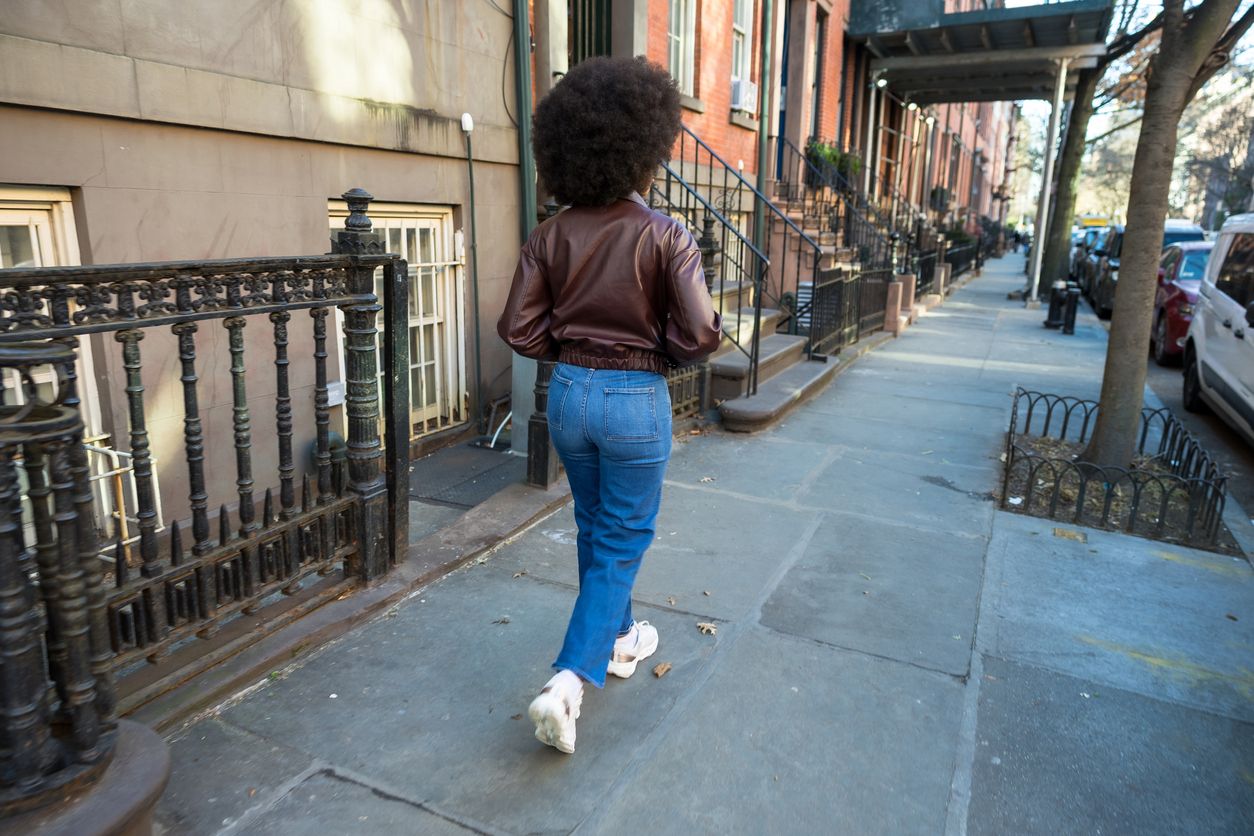
Can I Holla Atcha? No!
About These Stories
YC runs intensive nonfiction writing programs for teens in New York City, where they’re mentored by a professional editor to write personal stories about their lives and about issues that affect young people. Their stories are then published and read by thousands of teens, educators, policymakers, and other adults who work with and for young people.