
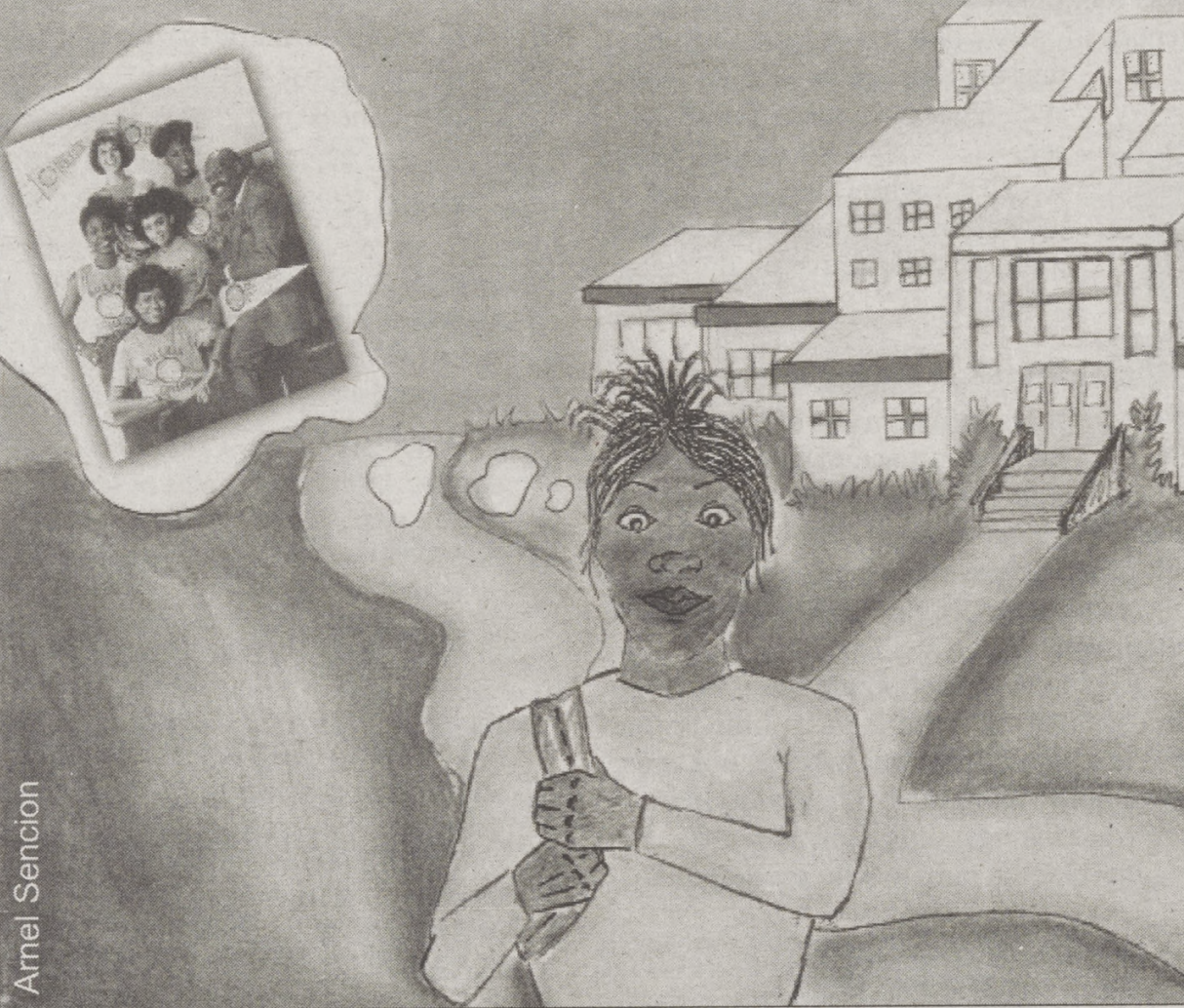
As an African-American high school senior, I’ve been interested in Black colleges for years. During junior high and high school, I remember watching reruns of A Different World, a show based on life at Hillman College, a fictional Black school.
Every time I watched the show, I felt as if I was going on a college tour in my living room.
One of the characters, Kimberly, was a hard-working student with dreams of being a doctor. She was also funny and down to earth. Her attitude reminded me of myself. I began to wonder if I could have a similar experience in college.
The show also showed the cultural differences between African-Americans. For instance, Kim had two very different friends: Whitley was a spoiled, self-centered rich girl, while Freddy was the wacky feminist who fought for everyone’s rights on campus.
I had never met Black girls like this, which made me even more curious about Black college life.
Touring Black Colleges
That’s why during the spring break of my junior year, I went on a week-long tour of Black colleges in the Southeast. Myself and 25 other high school students visited eight colleges, including Spelman, Morehouse, Howard, and North Carolina A&T State.
I enjoyed the college tour immensely. I talked with students at the schools about their classes, how often they party, where they hang out and what goes on in the surrounding areas. I felt comfortable at each one, like I was at home with my brothers and sisters.
I was amazed at the excitement and pride I felt when I walked into a classroom and saw Black young adults working hard learning subjects like psychology and calculus. I don’t see this around Queensbridge, where I live. So many of my peoples are on the street corners, smoking weed and drinking.
Black Colleges Feel Right for Me
After sitting in on their classes and eating in their cafeterias, I felt like a Black college would be right for me. But which one? Oh, my dilemma.
I’m leaning more towards Howard University or North Carolina A&T State University. I want to be a broadcast journalist so I took a tour of their TV and radio stations.
I was in love with both stations, which seemed to be well organized and run professionally. Plus, the students were having a good time on the air, making shout-outs as DJs. It showed they liked their jobs and made me want to be part of the crew.
I also visited Hampton University and Norfolk State University with my family after the college tour. I want to apply to those universities as well because their radio stations also get top ranking among Black colleges.
Counselors Want Me to Apply To White Colleges
But, despite how much I like the image of a Black college, my school counselors and other adults are trying to sway me in the direction of SUNY schools like Oswego or Stony Brook.
They say that I can get scholarships as well as more financial aid there, and they think I should stay close to home so I won’t have to spend a lot of money on airfare when it’s time to see my family.
Keeping their advice in mind, I’ve visited predominantly White colleges, like SUNY Delhi and Oswego, and Temple University. I was impressed with the campuses, but at some of the schools I was like, “Where are the Black people?”
At SUNY Oswego, for instance, only 9% of 7,900 students are minorities. That isn’t enough of a Black student population for me, particularly since Blacks are included with other minorities in that figure.
Don’t Want to Feel Alienated
I’m concerned that I may have a similar experience in college to what I’ve had in high school. My high school is predominantly Latino, and I feel alienated when I walk into the cafeteria and Latino students are speaking Spanish. As a non-Spanish speaker, I don’t feel comfortable interrupting their conversations so that I can join the group.
I almost feel like they are talking about me. Because of this, I’ve stopped myself from getting to know many of the students in my school. That’s not to say that I don’t have Latino friends, but it’s not the same as hanging with my own people.
And it’s hard to feel united with the Black students in my school when there aren’t any Black student organizations for us to join.
So, keeping my high school experience in mind, I’m not that interested in being the minority again in college. The White schools I visited pale in comparison to what I’ve seen of the Black college world both on TV and in the real world.
Regardless of what my counselors say about getting aid from SUNYs, Black colleges have my heart. Even though many of them are under-funded, I will look into financial aid and also apply for outside scholarships. And, just to be on the safe side, I’m going to apply to some traditionally White institutions as well.
SIDEBAR: Blacks On White Campuses
Blacks who go to predominantly White colleges often create a network of support with other Blacks. According to the web site BlackVoices.com, “At most non-historically Black colleges, African-American students segregate themselves socially from non-African-American students and have little interaction with Whites other than in the classroomÉMost African-Americans who join fraternities, sororities or other social clubs join traditionally Black ones.” Jason Quarles, who graduated from the predominantly White Columbia University in 1998, said that most of his friends during his first two years of college were Black. He belonged to the Black Student Organization, Pan-African House and the gospel choir. “Black students were more friendly and inviting to me,” he said. “I was always around Black students on campus to the point I didn’t notice White students.” But Quarles branched out during his last two years of college and made friends of different races. “You shouldn’t separate or limit yourself if you want to receive the best college experience,” he said. Lakesha James, a Black junior at Dowling College, also has friends with different racial backgrounds on the predominantly White campus. She likes it there, and thinks that Black students should try to have an open mind if they attend a White college. “If you go to a [predominantly White college] then be prepared to feel a little out of place at first, but never lose yourself in learning about others,” she said. “Have fun and enjoy but be sensitive to other’s lifestyles and situations.” She also thinks that teens shouldn’t stress too much about White vs. Black colleges. “I think that if you make yourself comfortable wherever you go, it won’t matter what school you attend,” she said.
View the lessons based on this story
- My College, My World Level Up Unit 1 | Session 4