
Last fall, two of my friends got themselves into trouble as a result of bad judgment and flaring tempers.
Monique and Garvin had been going out for two years when Stella came along. She was the last one to come into our group and the first one to be chased from it. Stella took it upon herself to seduce Garvin and they eventually fooled around. Then, she had nerve to tell someone about it. The news came back to Monique and she became enraged.
“If you ever come back over here again, you’re going to regret it,” Monique told Stella. But not even a week had gone by before Stella was bold enough to pass by our hangout spot. Monique felt even more disrespected and did not feel like she could contain the anger that was inside her.
A Crowd Formed
But instead of becoming more enraged by holding it in, she decided to talk to Stella. When she approached Stella, a crowd of people followed her because they all knew what Stella had done and they thought that Monique was going to beat the hell out of her.
The hallway became crowded, and the deans were called. They stopped whatever was about to happen before it started. (I didn’t think that Stella and Monique would fight, but most of the crowd did.)
Monique was now even more upset because she didn’t get a chance to give Stella a piece of her mind. Before she knew it, she and Stella were being taken to the dean’s office and an appointment was set for them to attend peer mediation.
A Chance to Talk it Out
Peer mediation brings students together to talk about their issues before a problem gets worse. Mediation is used to settle differences by having a neutral third party handle arguments between disputing people. In peer mediation, the third party, or mediator, is around the same age as the people involved.
Often, fights or other forms of violence start because teens either don’t know how to talk about what is bothering them or they don’t get a chance to talk about it. So instead of talking it out, they get upset and just start swinging.
“I think we live in a very violent society and the way we deal with conflict is through fighting,” said Daniel St. Rose, a case worker for Good Shepherd Services at John Jay HS. Good Shepherd Services provides individual, family and group counseling for students who are referred to them.
Mr. St. Rose said that when people get angry they often just react. “When the adrenaline pumps you up, the first thing that you want to do is hit,” he said. But other times, kids know they’re mad and don’t even try to talk it out. “I hear kids come into my office and say who they want to fight with,” he said.
Mediation’s History
Many schools started to focus on non-violent methods of dealing with conflict after a surge of teen violence in the 1980s. According to the Philadelphia Daily News, violent crime among 14- to 17-year-olds increased 124% between 1986 and 1991, with much of the violence occurring on school property.
Schools across the nation began to combat the problem by looking at peaceful ways that students could handle their anger. In 1992, the NYC Board of Education began the Comprehensive Conflict Resolution Training Program in all city high schools. Its purpose was to establish mediation centers to allow students to choose talking over fighting.
At my school, Edward R. Murrow HS, peer mediation services have been available for six years. There is always a mediation process available when there is a public conflict between students.
“We try and empower the student,” said Steve Herschman, a dean at Murrow who is also the coordinator of the program. Students are not required to attend if they don’t want to. But if they go to mediation, then the length of their suspension will be shortened or sometimes they don’t get suspended at all.
The mediation process begins when the students involved are referred to Mr. Herschman either by a teacher or when they come to talk to him themselves. Mr. Herschman said that more and more students are coming in compared to when the program first started, but not as often as he would like them to.
He hopes that every time students have a problem, they will come in and ask for mediation before acting irrationally.
Students who choose mediation have a student mediator meet with them in the dean’s office. Before the process begins, all the students involved in the conflict are interviewed by Mr. Herschman to get all sides of the story. They talk it out in front of the mediator.
“Mediators are not counselors. All they do is try to keep the line of conversation open between the students,” he said. If students start to use harsh words with one another like b-ch, the mediator would tell them not to. Sometimes, Mr. Herschman acts as the mediator if the students involved don’t want their peers to know their business.
At the end of the discussion, the students come up with an agreement and sign a contract saying that they won’t break the agreement. Sometimes, things don’t go as smoothly, but they never give up, Mr. Herschman said.
“We continue the mediation process. If that doesn’t work, we involve the parents of the child. If that still doesn’t work, then the student or students are suspended temporarily depending on the situation,” he said.
About 90-95% of the time, there is no further problem after mediation is completed. “We have a very high rate of success,” he said.
Speaking in Peace
When Monique and Stella got into their confrontation, they were hesitant to go to mediation at first because they didn’t feel they needed it, but eventually they gave in. The mediator in Mr. Herschman’s office asked the two of them what the problem was. Monique told the mediator what Stella had done and he told them to talk it out amongst themselves.
“How could you do that to me, Stella?” Monique asked. “My friends and I took you in and you turn and stab me in the back. That is not what a real friend does.”
“If you knew what a real friend was, you would have tried to talk to me instead of telling me not to hang out over there again,” Stella replied.
“What did you expect me to do after I found out? Say ‘OK’ and let you think that I didn’t mind so you can go do it again? Hell no.”
Even though they were both upset and angry, Monique eventually forgave Stella. They decided to remain friends as long as Stella didn’t behave that way again.
They used words instead of fists to solve the problem and, in the end, they were able to repair their friendship. Even though Monique didn’t want the peer mediation at first, it gave her a chance to speak with Stella in peace, so she felt like the mediation was worthwhile.
Look At Other Options Besides Fighting
“Peer mediation is a good way of getting teens to see that there are other options besides physical violence,” Mr. St. Rose said. At John Jay, peer mediation has become a class.
“If they feel they can’t control their anger, they should seek help,” like counseling or talking to an adult, Mr. St. Rose said.
I think that students should incorporate peer mediation techniques into their lives outside of school settings. When any disagreement comes about between two people, the first thing that should pop into both of their minds is: “Talking works, fighting hurts.”
Peer mediation is not always going to be available, so students need to learn how to deal with situations calmly on their own.
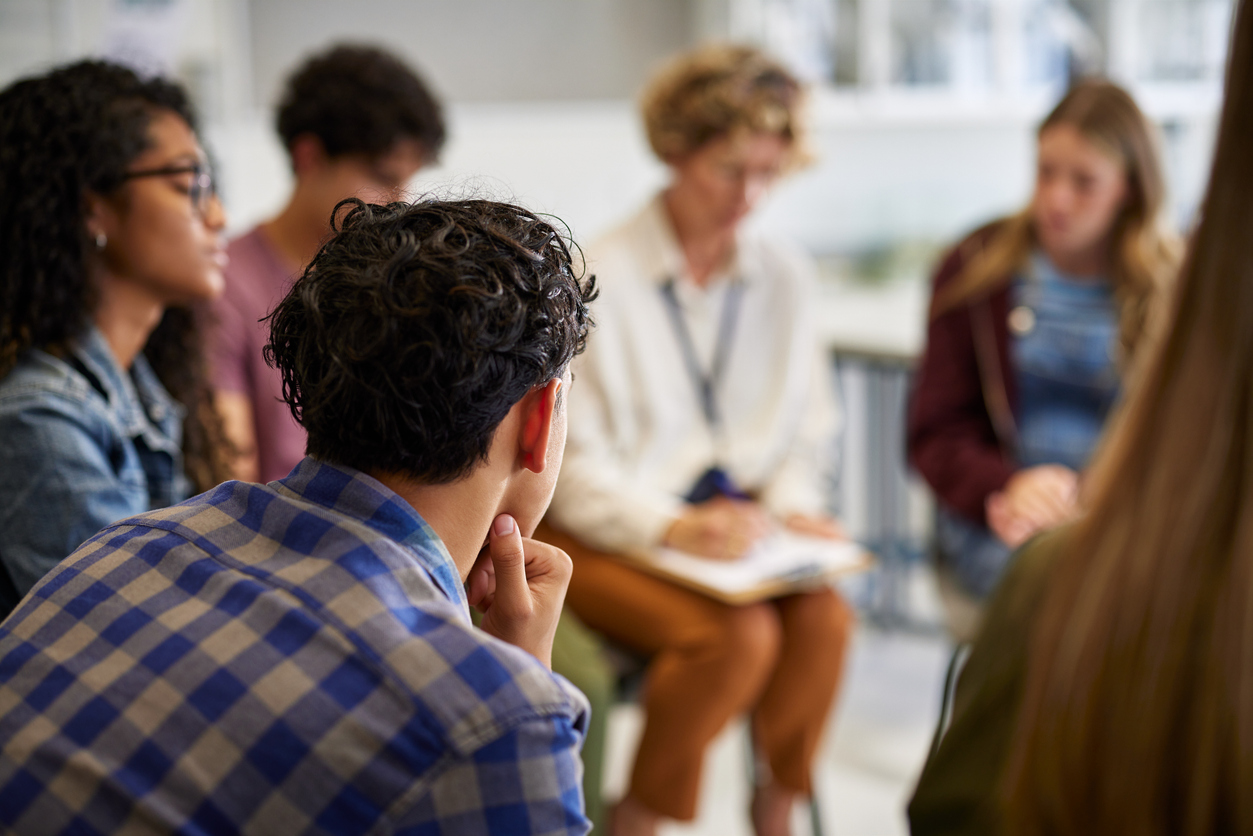
Peers Keep the Peace
About These Stories
YC runs intensive nonfiction writing programs for teens in New York City, where they’re mentored by a professional editor to write personal stories about their lives and about issues that affect young people. Their stories are then published and read by thousands of teens, educators, policymakers, and other adults who work with and for young people.