
“Where are you going?” I asked Shawn. We were in shop class and it was getting boring.
“I’m going to peer mediation. Since I am a peer mediator, I get to mediate whenever there is a fight,” Shawn answered. I watched the teacher give him a pass and Shawn did not return for another two periods.
That’s when I got the idea to join peer mediation. I figured it would be an easy way to get out of class. When I found out that you get some extra points on your transcript, I went to sign up that same day.
But after I joined, I stopped thinking about peer mediation as just a good way to cut class; I realized that it is also a very effective tactic to decrease violence-one that should be used in all schools.
Speaking My Mind Without Shouting in the Hallway
To all the people out there who are saying to themselves, “She is being unrealistic. Who’s going to want to talk to some random students when they’re about to get in a fight?” I understand where you are coming from.
In fact, in the past, if I was about to get into a fight, the last thing I would be thinking about is going to peer mediation.
But peer mediation can work. I know, from personal experience.
A while back, I got into a pretty serious argument with another girl in my class (I’ll call her Vicki), and it was about to lead to a fight.
A boy in my class had called me some names, and I began insulting him back. Then Vicki butted in and said that I should not have said anything to him. I told her to shut up.
I said some more words that I didn’t want to say, and she did the same as well, and soon we were in a shouting match. I think I would have hit her if she was not on the other side of the room.
I was too overcome with anger to stay in the room, so I left and went to the peer mediation office (not because of the fight but because I had to help with some paperwork).
Five minutes after I got there, Vicki came in saying the teacher had sent her down and that we had to get mediated.
Although we did not listen to some of the rules-like no shouting-we did make an agreement not to get in each other’s way. It has been about three months since that has happened, and we have not had any problem since.
So although I did not want to get mediated at the time, it did calm me down a little, and it also gave me the opportunity to explain how I felt without shouting all my business in the hallway.
No Yelling, Cursing or Rude Behavior
In case you don’t know, this is how peer mediation works: If a person gets into a fight or argument with another person, she can go to peer mediation.
Students can go on their own, but in most cases, they are sent there by the deans or teachers.
When they walk into the room, they sit face to face, but a big distance apart (about 8 feet). There are usually two student mediators who sit in between them so if anyone jumps up she can be restrained.
There is also a teacher present, but she usually doesn’t do much. The mediators explain the basic rules (no yelling, cursing or rude behavior) and then one mediator asks who would like to go first.
When I got mediated, I was desperate to go first. I had a lot to say.
First I told Vicki that she sucked as a friend and that she should just stay away from me since she couldn’t keep her mouth closed. I told her that although she had been a very nice person before, she had changed.
Resolve the Conflict, or Else…
I talked for like 10 minutes, while Vicki cried and banged on the desk like she wanted to do something bad. But she hardly said anything-she only talked for a few minutes-probably because I didn’t give her a chance to.
Eventually, the teacher (who only mediated because the mediators were unable to calm us down) began to help us resolve the situation.
I was still quite mad at Vicki, but I had spent so much time yelling and whining that I had also begun to feel a little better.
Ordinarily, when I get into an argument, I leave saying, “I should have said this or that.” But when I got mediation, I had more than enough time to say what I wanted to say.
Once I said what I had to say in a more controlled setting, it did make me feel better.
The teacher then told us we had to come up with an agreement-if we didn’t, we would be suspended. So we agreed to respect each other and stay away from each other. Then we signed it, and we haven’t fought since.
Not 100% Guaranteed
That’s when I decided that peer mediation might actually be a program that worked.
Since I’ve been a peer mediator, I’ve only helped mediate four cases, but I did learn a lot from them. I also sat in on other cases and watched how they were handled.
The training was easy, and I learned both about managing anger and about how my school is run. I learned its policies on fights and what can happen to you if you do fight.
I’m not saying peer mediation works all the time. There are still times when students agree to one thing and don’t stick to it.
Other times two students will come to us with a problem and one of them will leave feeling hopeless because she didn’t get the help she wanted, or afraid she’ll be called a snitch.
But peer mediation does give students a chance to come to their peers and talk about issues they’re having in school that they feel uncomfortable telling an administrator.
Students Come Up With Their Own Solutions
I think all students know the frustration of trying to go get help from staff to no avail.
But peer mediation does not force solutions on anybody. You don’t even have to go if you don’t want to (although, of course, there’s always the threat of suspension to encourage you). And it gives students a chance to come up with their own solutions.
I think that there need to be more programs where students can go sit down and talk about a problem, not only after a conflict, but also whenever they are having a problem but don’t feel like they have anyone who they can really talk to.
If there were more creative programs like that, there’d be fewer fights in school.
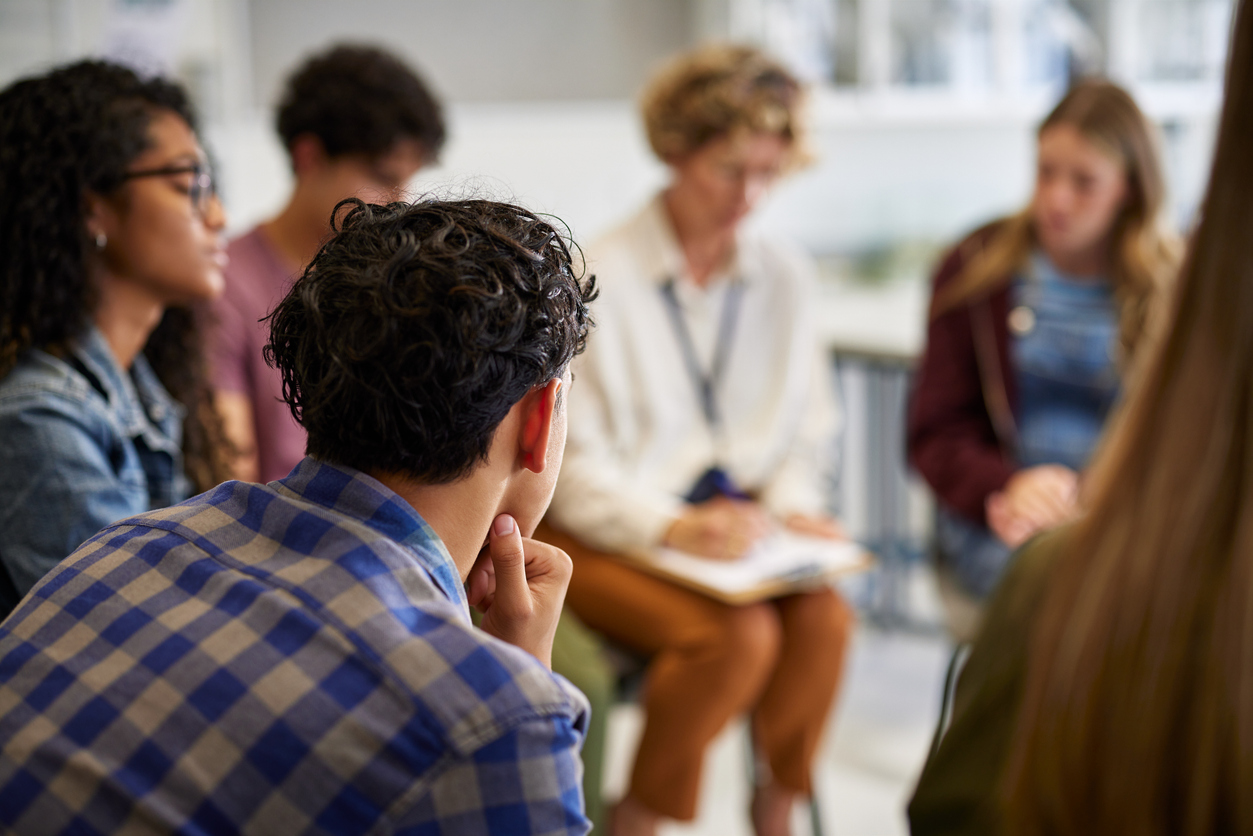
Back Off: Peer Mediation Can Help
About These Stories
YC runs intensive nonfiction writing programs for teens in New York City, where they’re mentored by a professional editor to write personal stories about their lives and about issues that affect young people. Their stories are then published and read by thousands of teens, educators, policymakers, and other adults who work with and for young people.