
Most students interviewed said that their guidance counselors don’t do anything, although others admitted that counselors have helped them from time to time.
All too often, students have nothing to do with their guidance counselors because they hear from their friends that a trip to the counselor’s office is a waste of time.
Eva Richards, 18, of City-As-School HS, said that her guidance counselor was very insensitive to her needs. When she wanted to change her major, he told her about Board of Education rules and regulations that she didn’t understand.
She continued: “I needed only eight credits to graduate and he suggested that I take my GED…He discouraged me instead of encouraging me.”
‘She Was Cold’
Another student, Shirley Ruiz, 17, of August Martin HS, felt that her guidance counselor was never there for her. “She tried to be helpful, but she was real cold about it. She wasn’t really concerned. It was like I was intruding on her time.”
Ruiz claimed that her friends have had similar experiences: “Yeah, they always complain [the guidance counselor] doesn’t have time, she’s always in a rush, or she’s too busy.”
What many high school students don’t realize is that they’re only one of hundreds of students that the guidance counselor has to see.
Sheldon Schwartz, a guidance counselor at Norman Thomas HS, declared: “The state education department feels that counselors should be working with the students at the ratio of 250 to 1. But it is not unusual for counselors to be working with 500 or more in certain high schools. On any given day I see as many as 60 students.”
Suzanne Schwartz [no relation to Sheldon], a guidance counselor at Mabel Dean Bacon HS Annex, said, “We need more counselors that can result in decreasing the caseload.”
Carmine Debetta, director of pupil personnel services at the Board of Education, agreed on that point: “The caseload is very large. We would like to get the necessary funding to reduce that caseload. It is very important for the student to see the counselor. By reducing the number [of students per counselor], it will give the counselor more time with the students.”
What Do Counselors Do?
Another thing that students aren’t clear about is what the guidance counselor’s job responsibilities are. What do counselors do besides making sure that you graduate on time?
According to Sheldon Schwartz, they have many responsibilities: “One-preparing students to get their diploma and keeping students up-to-date on their progress meeting their diploma requirements. Two-helping students to explore what they wish to do after high school in terms of helping them select a college, working [right after high school], or giving them some information about occupations and careers which they show an interest in.”
According to Suzanne Schwartz, students have the most complaints in September, when programs are constantly changing: “Students sometimes have been angry with counselors over a program change which simply arose out of overcrowding in classrooms.”
There are many misunderstandings between students and counselors which damage their relationship.
As Suzanne Schwartz explained: “Students sometimes perceive counselors as coming from a punitive stance. For example, when we call parents, we are trying to involve parents in a positive and constructive way.”
Sheldon Schwartz added, “I think students, especially in the 90s, must take an activist role. If they feel they are not given information which they are entitled to about graduation requirements, career, or college, they must seek out this information.”
Stress of Family Problems
Students also have a tendency to think that guidance counselors are miracle workers. They don’t take into consideration that guidance counselors often have pressures just like students. Teachers, principals, and administrators have high expectations of guidance counselors while the over crowded, mismanaged high school system makes it hard for them to do a good job.
Sheldon Schwartz commented: “The counselor does not work in isolation in the school. A school is part of a community. There is no such thing as instant change and it’s unrealistic of teachers and administrators to expect situations that have taken much time to develop, to be remedied in a very short period of time.”
Another reason guidance counselors aren’t as effective as they used to be is because of the personal and family problems that students have today. Guidance counselors are often called upon to be psycho-therapists.
“I think the problem is in today’s society…with so many things going on, teenagers don’t care, so counselors don’t care either,” said Ruiz.
Sheldon Schwartz had the same insight: “Students today are living in probably one of the most difficult times in New York City’s history.”
He said that many students are failing to get a high school education because of drugs, single parenting, child abuse, and various problems at home. He feels that these factors make learning in a traditional school setting more difficult than in the past.
Because of these pressures, Debetta said, “We have gotten more into human services, more so in the last five years. We serve as a resource and [also] as an advocate for children in their families.”
Debetta’s staff at the Board of Education is also working on how to deal more effectively with homeless students in temporary shelters, with victims of child abuse, and with immigrant students who know very little English.
According to Debetta, further steps are being taken to improve the guidance counselor system. “I meet every month, as director, with supervisors of guidance counselors to update them on new regulations, procedures, and problems. We talk about staff development, child abuse, teen pregnancy, special programs, and student activities.”
Stay Informed, Fight For Your Rights
Sheldon Schwartz advised students to help themselves. “don’t allow yourselves to become victims because it isn’t necessary. Stay informed and fight for what you believe is right.”
Suzanne Schwartz also felt that those students who look out for themselves should be commended: “I’m always impressed by those who are smart enough, and who are not afraid to reach out and take responsibility for what’s happening to them.”
Now that you know that your guidance counselor is only human, you should take the initiative to solve some of your own problems. Stay informed and take control of your high school life. don’t become dependent on guidance counselors, but learn how to get their help when you need it.
[Editor’s note: If you need help in choosing a college and aren’t getting it, see article on page 17 about Options, a free college counseling center in Manhattan.]
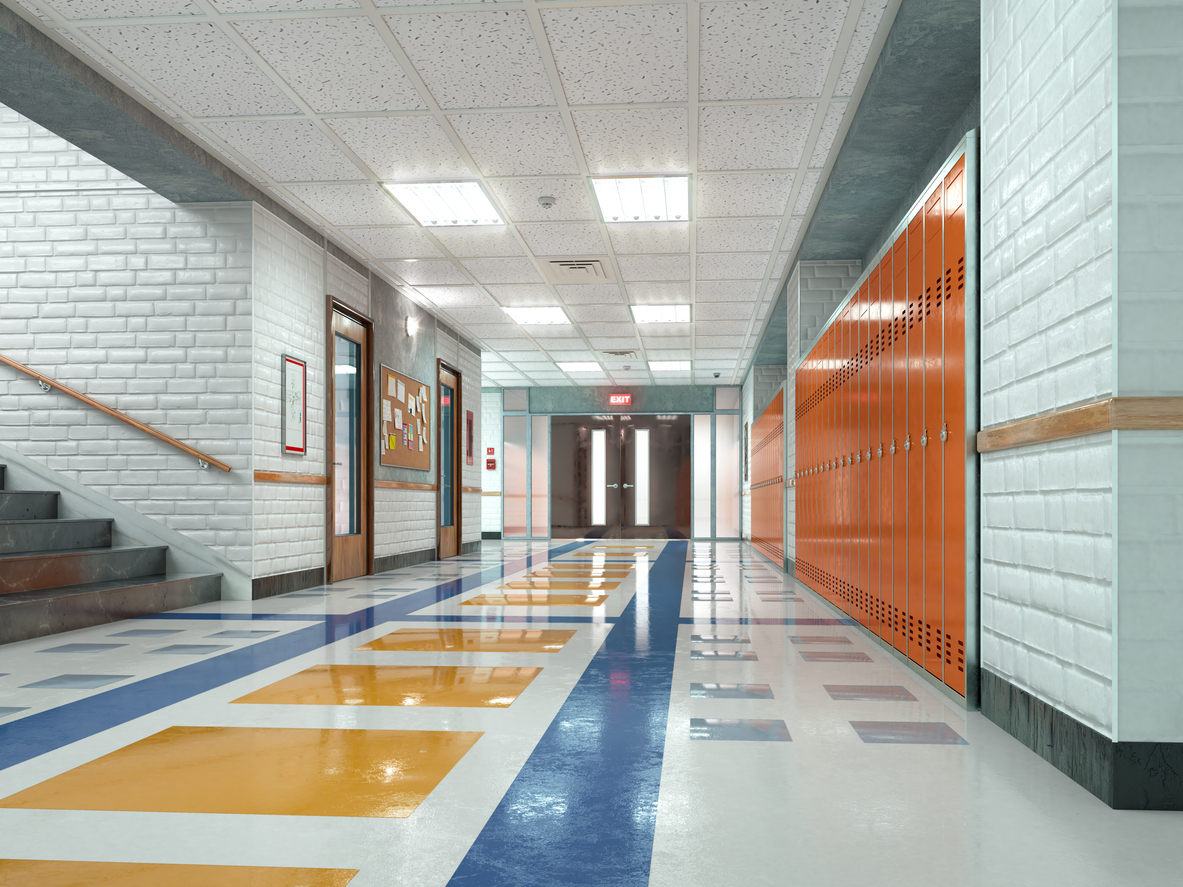
Guidance Counselors Are Often Overworked
About These Stories
YC runs intensive nonfiction writing programs for teens in New York City, where they’re mentored by a professional editor to write personal stories about their lives and about issues that affect young people. Their stories are then published and read by thousands of teens, educators, policymakers, and other adults who work with and for young people.