
Food shopping. Who thinks about it? It is such a common part of our lives that most people consider it instinct to go to the supermarket when they need food.
Instincts, however, can be dangerous. Supermarkets use and abuse the fact that we need food to survive. They use psychological techniques to get us to spend our money on things we don’t need.
How is it that supermarkets and advertisers get you to buy? Both Josephine Swanson, consumer specialist for the Cornell Cooperative Extension, and Alfonso Wyatt, deputy executive director of Manhattan Valley Youth Program, agree that they appeal to a new type of shopper that has appeared.
The Commercial In Your Head
“They want you to hear the commercial playing in your head…You want a store that’s bright, that’s light, that’s airy, that’s cheery,” said Wyatt. He went on to explain that in this way, you just pick up things that look good whether or not you need them. He said this happens “because that’s the nature of people. They buy what they want and not what they need.”
Swanson said that people choose one product over another based on either their experience with the product, or their perception of it. She went on to say that the decision can either be made by emotion or by objective facts such as nutritional value.
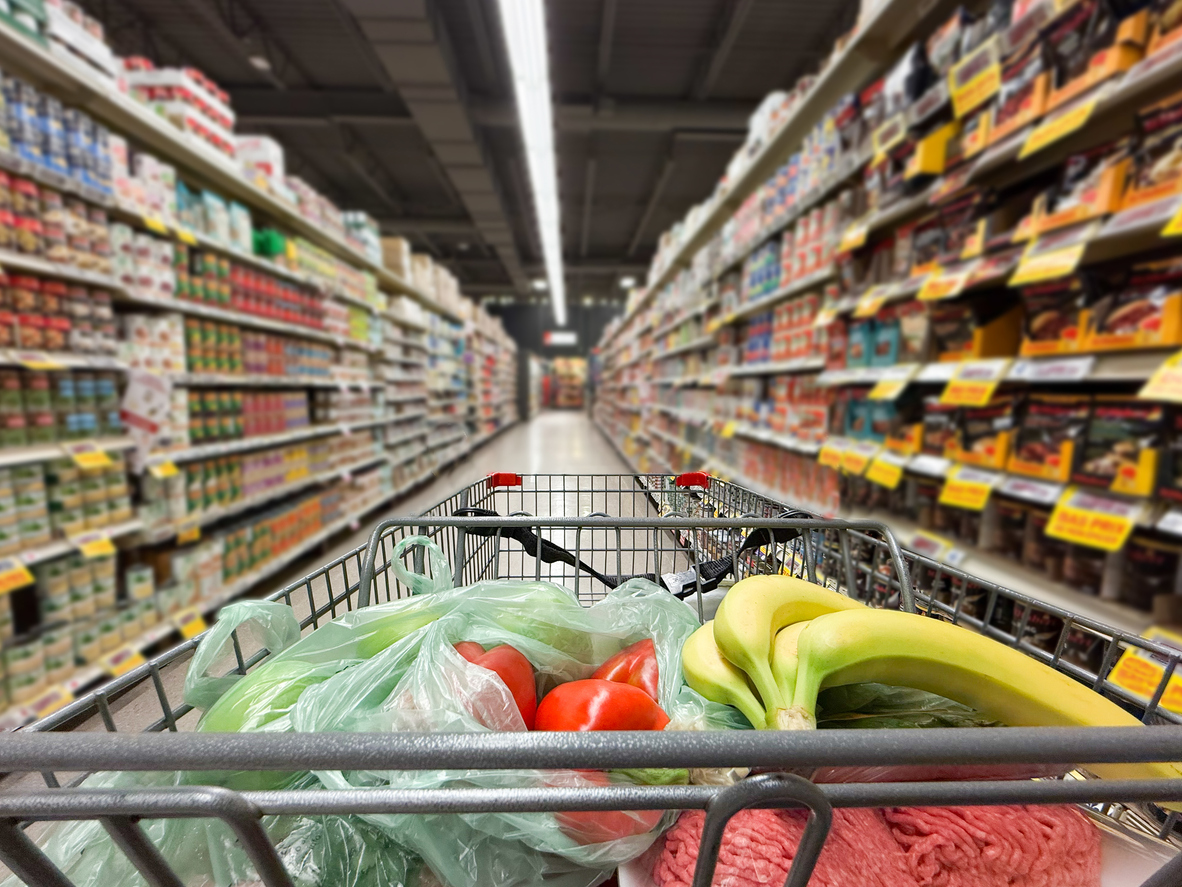
“The game of supermarkets is to get you to go down the aisles,” explained Wyatt. By creating a layout in which shoppers are forced to travel throughout the store, supermarkets profit from the extra purchases made when people see things they hadn’t thought of buying before entering the store.
“The basic items you would want to buy,” said Swanson, “are kind of strung around the outside of the store.” In this way, she said, supermarkets get people to walk through the center of the store where non-essential items are displayed.
Impulse Shopping
According to Swanson, supermarkets are aware of the fact that the “vast majority of shopping decisions aren’t made until you are in the store.” Therefore, having the shoppers walk through the entire store gives them more of an opportunity to “Impulse shop.”
It is for this reason that supermarkets use psychological strategies and advertising techniques to get you to buy. Of course everyone is going to buy the things they need to survive. But supermarkets use techniques to get us to spend our money on the “luxury” items that we could do without.
“Supermarkets work on very narrow profit margins,” said Wyatt. He explained that volume is the key issue for them since sometimes a profit of only pennies per item is made. Supermarkets need to create a way for huge quantities of products to be sold. There are several methods that they use to get people to buy not only the necessities, but the extras as well.
Have you ever noticed that all supermarkets are set up in pretty much the same way? No matter what store you walk into, the produce section will always be the first aisle and the dairy or freezer section will be the last. This is no accident.
Neither is the fact that bottles of salad dressing are located right near the lettuce.
Shelf Space Is Crucial
“Shelf space is real important to a product,” explained Wyatt. For example, if Pepsi makes a deal with a certain store to sell the soda at a lower price, the store will be able to have a sale on Pepsi and draw in customers.
Pepsi, in return, would be getting prime shelf space in the middle of the store. The middle of the store is the best place for a product to be displayed because the customers must pass by the product during their shopping trip.
Swanson pointed out that the highly advertised, and usually less nutritious cereals, which yield the biggest profit, are usually located at eye level, and that healthier, less enticing brands are usually high up or low down on the shelves where they can’t be seen easily.
Another reason for this, according to Wyatt, is that young children are able to recognize the packaging on the boxes located on the same level as the carts they are sitting in.
There are several other methods that the supermarkets use to exploit children and young adults.
Swanson said that children associate [TV] characters with cereal brands to distinguish between them. When children see a character they know, even without being able to read what the product is, they are able to ask for it.
“Kids want everything,” stated Wyatt. “When kids see all that stuff, this is what they want.”
Wyatt criticizes supermarkets for their placement of wine coolers.
“Many supermarkets will put the wine coolers next to the fruit juices,” explained Wyatt. He said that the stores are implying that coolers, although they contain alcohol, are just like juice, and are okay to drink because they aren’t near the beer.
Instilling Brand Loyalty
A part of the store that is especially geared towards kids, according to Wyatt, is the area by the register.
If you’re waiting on line, and you’re bored, he said, you tend to pick up a magazine or a candy bar that you probably would not have bought otherwise. Swanson explained that supermarkets know these items “appeal to impulse shopping.
“Food manufacturers are becoming much more attuned to the fact that teenagers are making more decisions regarding food shopping,” explained Swanson. She said that many companies try to develop brand loyalty in teens that will carry you to their adulthood.
If a person grows up using a certain brand, she usually comes to trust that brand and therefore buys it when she has choices to make. Also, if you happen to use one product a company carries, it is likely that if they introduce a new product you will buy it.
“People have what’s called brand loyalty,” said Wyatt. “People swear by brand loyalty.” He said this is the main reason people choose to pay more money for a product when they can buy a similar product at a lower cost.
Wyatt stated, “Most manufacturers…have distinctive colors, distinctive packaging.” He said that words like home-made, new and improved, 1/3 free, and easy to open, “are words that are designed to make you feel more comfortable with the product.”
When a product is called “new,” the changes are usually not in substance, but in the packaging. Changing the labels on products does not necessarily mean a difference in the product itself.
Manufacturers use color, design, and shape to distinguish their products from other similar ones. The reasons behind choosing one product over another are often based on appearance, not quality.
Supermarkets are able to use various promotions and techniques to lure shoppers because they are able to pay low wages and little or no benefits to their part-time help, according to Wyatt.
If you are aware of the advertising methods used to get you to spend money, your money will be spent more wisely. Next time you’re in a supermarket, look out for the traps lurking in every aisle.
Supermarkets Manipulate Us Every Time We Shop
About These Stories
YC runs intensive nonfiction writing programs for teens in New York City, where they’re mentored by a professional editor to write personal stories about their lives and about issues that affect young people. Their stories are then published and read by thousands of teens, educators, policymakers, and other adults who work with and for young people.